 English
 Español
 عربى
Content
- 1 Start With the Format, Not the Feature List
- 2 What the Numbers on a Bagless Vacuum Label Actually Mean
- 3 Dust Cup Capacity and Runtime: How the Formats Compare in Practice
- 4 Filtration, Sealing and What Buyers Notice After 90 Days
- 5 Corded or Cordless: A Decision Framework by Home Type
- 6 Materials, Motor and Build Quality: What a Manufacturer Controls
- 7 Sourcing Bagless Vacuum Cleaners in Volume: What Importers and Wholesalers Should Check
- 8 A Practical Selection Checklist
- 9 Frequently Asked Questions About Bagless Vacuum Cleaners
- 9.1 Are bagless vacuum cleaners better than bagged models?
- 9.2 How often should a bagless vacuum dust cup be emptied?
- 9.3 Why does my bagless vacuum lose suction after a few weeks?
- 9.4 What dust cup capacity should I look for?
- 9.5 How long should a cordless bagless vacuum run on one charge?
- 9.6 Do bagless vacuums work well on pet hair?
- 9.7 How often do filters need cleaning or replacement?
- 9.8 What certifications should a bagless vacuum have for export?
- 9.9 Can a bagless vacuum be ordered with a private label and custom packaging?
- 9.10 What is the difference between a mite remover and a handheld vacuum?
- 10 Where to Go Next
Ask a returns desk what comes back most often and the answer is rarely "the motor died". It is usually a vacuum that still runs but no longer satisfies anyone: the owner says it "lost suction", the battery "cannot finish the living room", or the dust cup "empties all over the floor". In most of those cases nothing was defective. The buyer simply paired the wrong format of bagless vacuum cleaners with the way the home is actually cleaned, and no amount of extra motor power fixes that.
So here is the conclusion before the reasoning. For a typical apartment with mostly hard floors, a cordless stick model with a dust cup between 0.4 and 0.8 litres and at least 25 minutes of runtime in standard mode will cover daily cleaning. For a family house with wall-to-wall carpet, a corded upright or a high-powered corded household vacuum with a hose still does the deep work better and cheaper, with a cordless handheld handling stairs, sofas and car seats in between. Buyers who order in volume should decide the format first, then lock the battery, filtration and certification details, because those three items cause most of the after-sales conversations.
This guide walks through the formats, the numbers on the label, the parts that wear out after 90 days, and the checks that matter when you buy bagless vacuum cleaners as a retailer, importer or brand owner. It is written from the perspective of Cixi Xiaochao Electrical Appliance Co., Ltd., a manufacturer based in Cixi, Zhejiang, the region often described as China's small appliance capital, with more than twenty years of experience in household cleaning appliances, including household vacuum cleaners, handheld stick vacuums, cordless handheld vacuums, high-powered corded vacuums, mite removers and car vacuums.
Pick the format by home type, then the dust cup and battery numbers, and only then compare brands. Most "lost suction" complaints are format problems, not motor problems.
Start With the Format, Not the Feature List
Bagless vacuum cleaners all work on the same principle: air carries dust into a container, a cyclone or filter separates the dust from the air, and the air returns to the room. What changes between formats is where the motor and battery sit, how much dust the cup holds, and how long the machine can keep working before someone has to stop and empty or recharge it. Those three variables, not the length of the feature list, decide whether the owner is still happy in six months.
Cordless stick vacuums
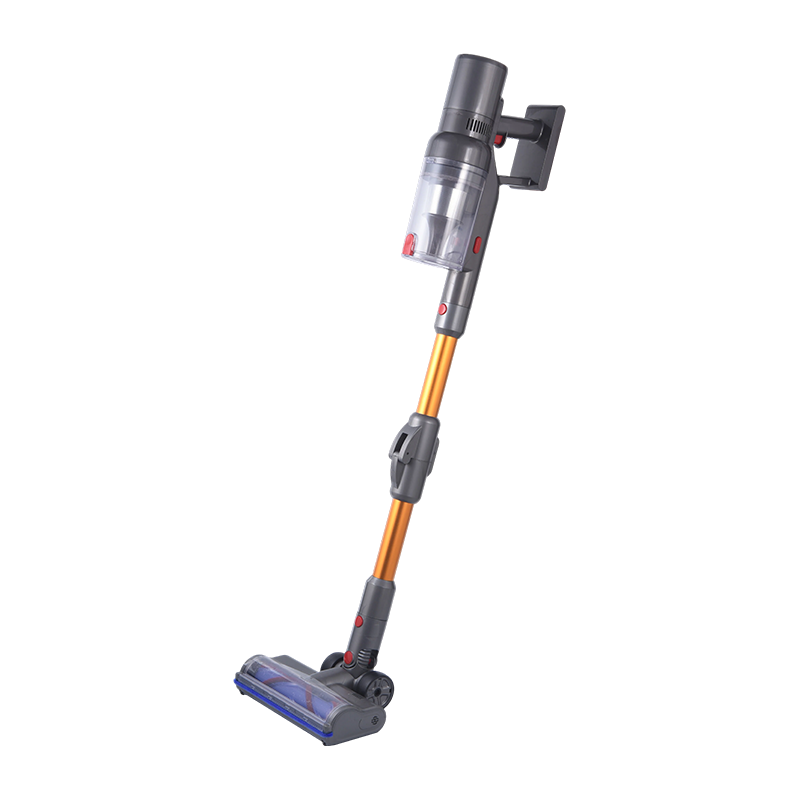
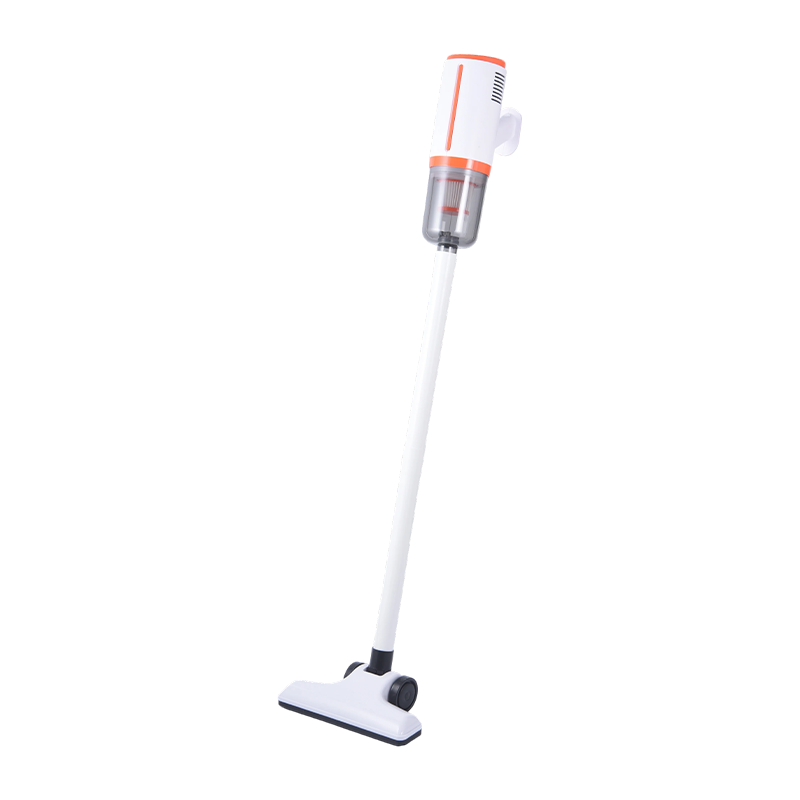
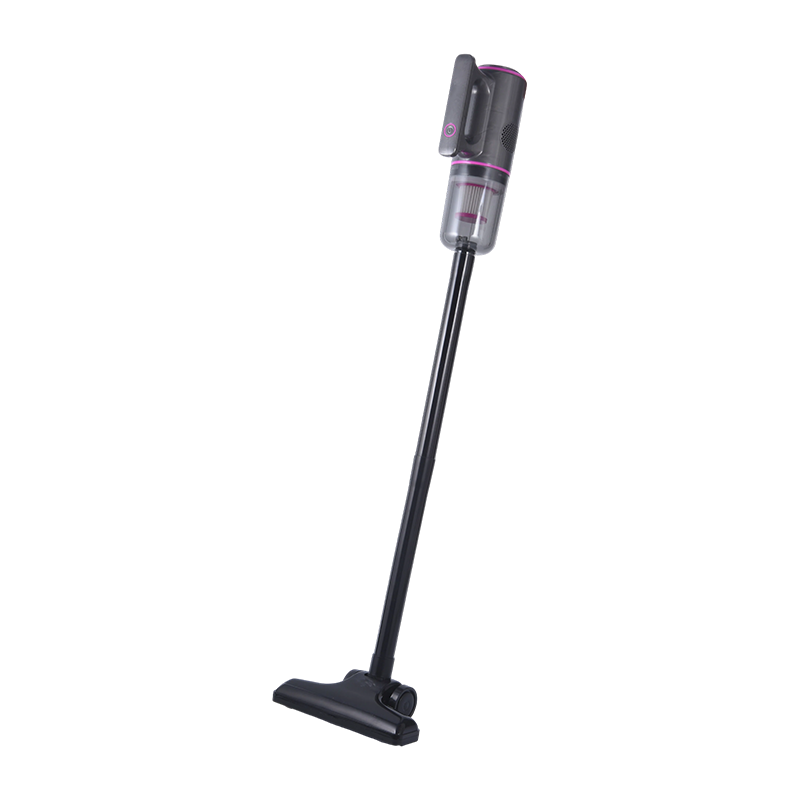
A cordless stick puts the motor, battery and dust cup in one slim body. It is the easiest format to use every day because there is no cable to plug in and no hose to drag around furniture. Typical dust cups run from 0.3 to 0.8 litres and typical runtime from 10 to 45 minutes depending on mode and whether a powered brush bar is running. The trade-off is that boost mode drains the battery quickly, and the battery itself is a wear part with a finite number of charge cycles. For a household with hard floors, rugs and one or two pets, this format covers most cleaning sessions but should not be the only machine in a carpeted house.
Corded stick and upright vacuums
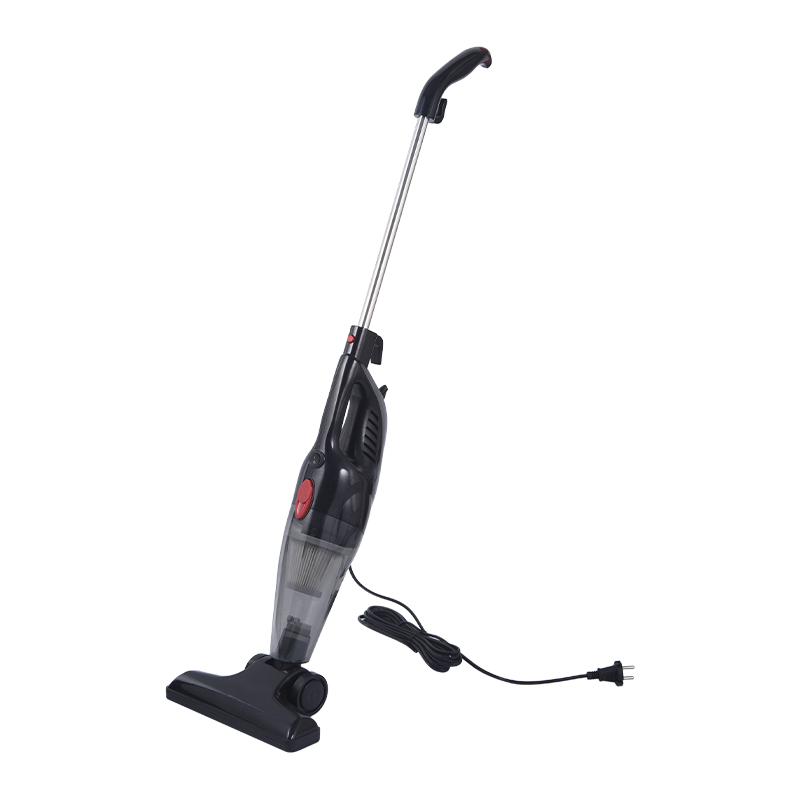
Take the battery out of a stick vacuum and you get a light corded model that never runs out of power. Uprights go a step further, with a larger dust cup, a wider cleaning head and more weight over the brush bar, which helps on carpet. Mains-powered bagless models usually deliver steadier suction because the motor is not limited by battery voltage. The downsides are the cable, a heavier body, and the fact that a corded upright is awkward on stairs. These remain the workhorses for wall-to-wall carpet and for buyers who care more about deep cleaning than convenience.
Canister vacuums
A canister separates the motor body from the cleaning head, connected by a hose and wand. That design makes it the most comfortable format for stairs, car interiors and reaching under beds, and dust cups of 1.5 to 3.0 litres mean far fewer emptying stops. The cost is bulk: a canister takes storage space and the body has to be pulled along behind you. For mixed-floor homes with pets and children, a bagless canister with a good floor head is often the most versatile single machine a family can own.
Handheld and car vacuums
Handhelds are the smallest branch of the bagless family. Dust cups are typically 0.1 to 0.5 litres and runtime is short, often 8 to 25 minutes, because the battery is small. That is fine for the jobs they are built for: crumbs in a car seat, sand on a floor mat, pet hair on a sofa, dust along a skirting board. Buyers who expect a handheld to replace a full-size vacuum are always disappointed, which is why clear usage guidance in the packaging matters as much as the product itself.
Mite removers and specialty handhelds
Mite remover vacuums are handheld units with a high-frequency beating pad and stronger filtration, designed for mattresses, duvets and upholstery. They sit alongside standard handhelds in the product line and share many components, which helps factories keep tooling efficient and spare parts simple. If you sell bedding or home textiles, a mite remover is a natural add-on item, but it should be merchandised as a specialty tool, not as a general-purpose vacuum.
| Format | Power source | Dust cup | Runtime per charge | Typical weight | Best fit | Main trade-off |
|---|---|---|---|---|---|---|
| Cordless stick | Rechargeable lithium battery, commonly 18 V to 25 V | 0.3 to 0.8 L | 10 to 45 min depending on mode | 1.3 to 2.7 kg | Apartments, hard floors, daily touch-ups | Runtime drops in boost mode; battery ages |
| Corded stick | Mains cable | 0.5 to 1.0 L | Continuous while plugged in | 2.0 to 3.5 kg | Small homes, rooms with nearby sockets | Cable limits reach; short hose |
| Upright | Mains cable | 1.0 to 2.5 L | Continuous while plugged in | 5.0 to 8.0 kg | Wall-to-wall carpet, family homes | Heavy, awkward on stairs |
| Canister | Mains cable | 1.5 to 3.0 L | Continuous while plugged in | 4.0 to 8.0 kg plus body | Mixed floors, stairs, car interiors | Bulkier to store; hose management |
| Handheld or car vacuum | Battery or 12 V socket | 0.1 to 0.5 L | 8 to 25 min | 0.5 to 1.5 kg | Car seats, sofas, quick pickups | Small cup, frequent emptying |
A cordless stick plus one corded machine covers more real cleaning situations than any single vacuum, and it is the combination most households should be sold.
What the Numbers on a Bagless Vacuum Label Actually Mean
Specification sheets are written to sell, not to compare. Two machines can print "800 W" and "25 kPa" on the box and behave completely differently in a living room, because the numbers describe different things and are measured under different conditions. Understanding what each figure represents makes it much easier to judge a sample, and much harder for a supplier to hide behind a large number.
Motor power, airflow and sealed suction
Motor power in watts tells you how much electricity the motor draws, not how much dirt it lifts. Airflow, usually measured in litres per second or cubic metres per hour, describes how much air moves through the nozzle. Sealed suction, usually in kilopascals, describes the pressure difference the machine can hold when the inlet is blocked. Cleaning performance needs both: airflow lifts loose debris from hard floors, while suction pulls embedded grit out of carpet pile. A machine with high suction and low airflow tends to stick to the floor without picking much up, which is why air watts, a figure that combines the two, is a more useful headline number when a supplier can document how it was measured.
Battery voltage, capacity and charge time
Voltage alone says little about runtime. A 21.6 V battery pack made of 2,500 mAh cells stores roughly 54 watt-hours; the same voltage with 4,000 mAh cells stores about 86 watt-hours and can run noticeably longer at the same power draw. Cell quality matters as much as capacity, because a pack that loses 20 percent of its capacity in the first year generates warranty claims that no specification sheet predicted. Charge time is the other half of the story: a machine that runs 40 minutes but takes four hours to charge is inconvenient for a large home, while a pack that reaches 80 percent in about an hour keeps the vacuum in rotation.
Dust cup volume and emptying frequency
Dust cup capacity is printed as a maximum, but usable volume is always smaller because the cyclone needs headroom to keep spinning. As a rule of thumb, a 0.5 litre cup holds about 300 to 350 grams of fine dust before performance starts to drop, which is roughly two or three cleaning sessions in a 90 square metre home with a pet. Buyers who hate emptying cups should be steered towards 1.0 litre and above, and anyone with allergies should look for a cup design that can be emptied without reaching inside.
Filtration grades and noise figures
Filtration is usually described by stages: a cyclone, a pre-motor filter, sometimes a HEPA filter, and a post-motor filter. HEPA grades such as H13 are meaningful only if the whole air path is sealed; a HEPA filter behind a leaking gasket changes very little. Noise is normally given in decibels at a stated distance, and a value quoted at three metres cannot be compared with one quoted at one metre. When you evaluate samples, ask for the test distance, the mode and the equipment used.
| Label value | What it actually describes | What to verify on a sample | Risk if ignored |
|---|---|---|---|
| Motor power in watts | Electrical input to the motor | Airflow and sealed suction figures with a stated test method | A large number on the box with average cleaning |
| Sealed suction in kPa | Pressure difference with the inlet blocked | Whether it is measured at the hose, wand or nozzle | Strong suction reading, weak carpet pickup |
| Air watts | Combined airflow and suction output | Mode used and whether the brush bar was running | Values that cannot be compared between suppliers |
| Battery voltage and capacity | Pack voltage and charge capacity; watt-hours equals volts times amp-hours | Cell type, protection board and cycle life statement | Runtime complaints and early battery returns |
| Runtime in minutes | Operating time on one charge in a stated mode | Which mode, with or without the powered brush | Customers who feel misled by the headline figure |
| Dust cup in litres | Maximum container volume | Usable volume below the maximum fill line | Frequent emptying and spills on the way to the bin |
| Filtration stages | Number and grade of filters in the air path | Washable or replaceable, and claimed HEPA grade | Dust smell returning to the room |
| Noise in decibels | Sound pressure at a stated distance | Distance and mode used for the measurement | Complaints in apartments and shared buildings |
Never compare a single number in isolation. Ask for airflow, sealed suction, watt-hours and the mode in which runtime was measured, and the comparison becomes honest.
Dust Cup Capacity and Runtime: How the Formats Compare in Practice
Capacity and runtime are the two specifications that decide how a bagless vacuum feels in daily use. A machine with strong suction but a tiny cup forces the owner to stop repeatedly, and a large cup is useless if the battery quits halfway through the hallway. The chart below puts the typical ranges side by side so the trade-off is visible at a glance.
Typical dust cup capacity by bagless vacuum format
Indicative ranges based on common configurations. Actual values depend on model and cyclone design.
The gap between the smallest and largest cups is roughly thirty times in volume, which is why format choice matters more than any single feature. A handheld with a 0.2 litre cup can be emptied in seconds, but it will need emptying after every car seat or sofa, while a canister with a 2.5 litre cup may go two or three weeks between empties in a small flat. In practice, cordless stick vacuums sit in the middle, and that middle position explains why the format has become the default for daily cleaning in apartments and why it also generates the most complaints about runtime.
When Cixi Xiaochao builds cordless handheld and stick models, the dust cup, cyclone and battery pack are designed together rather than as separate parts, because cup geometry directly affects how much dust the cyclone can separate before airflow falls. A cup that is tall and narrow keeps the cyclone spinning efficiently for longer, while a wide shallow cup holds more dust but loses separation sooner. Buyers rarely see this on a specification sheet, but they feel it in week three, when a vacuum that worked well on day one starts leaving a dust trail behind the brush.
Runtime should be quoted the way the customer will use the machine. A 45 minute figure in eco mode with the brush bar switched off is honest but only tells part of the story; the same machine may run 12 to 15 minutes in boost mode with a powered floor head. Publishing both figures on the packaging and in the listing text removes most of the disappointment that drives returns. Charging behaviour deserves the same treatment: a removable battery pack that can be swapped mid-clean is a genuine convenience for larger homes, while a built-in pack needs a docking station near a socket.
Match cup size and runtime to the size of the home, and quote both boost and standard runtime figures. That single change reduces returns more than any motor upgrade.
Filtration, Sealing and What Buyers Notice After 90 Days
First impressions are made by suction and looks. Long-term satisfaction is made by filtration, sealing and how easily the machine can be maintained. These are the details that decide whether a customer recommends a product or writes a complaint review three months later, and they are exactly the areas where a careful manufacturer earns its reputation.
Cyclone efficiency and filter loading
A well-designed cyclone separates most coarse dust before it reaches the filter, so the filter loads slowly and airflow stays stable. When the cyclone is undersized or the airflow path is too short, fine dust reaches the pre-motor filter quickly, the filter clogs, and the owner experiences the classic "lost suction" symptom even though the motor is fine. Washable pre-motor filters help, but only if the user washes and dries them properly. Providing a spare filter in the box is a small cost that prevents a large number of service calls.
Sealing, gaskets and dust re-release
Every joint in the air path, from the cup lid to the wand connection, is a potential leak. Leaks reduce usable suction and, more importantly, let fine dust escape back into the room, which is the last thing an allergy household wants. Gasket material and compression matter: soft silicone seals that hold their shape after repeated opening and closing keep the system tight far longer than thin, hard seals. A simple seal check on the production line, using a pressure drop test at the cup and wand joints, catches most of these problems before shipping.
Hair wrap, pet hair and brush bar design
Long hair and pet fur wrap around brush bars, and once wrapped they reduce cleaning performance and make an unpleasant noise. Anti-tangle geometry, a removable brush bar and a tool-free access panel turn a frustrating job into a thirty second task. For homes with pets, a powered brush with stiff bristles for carpet and a soft roller for hard floors covers more surfaces than a single all-purpose head, and offering both as standard is a practical selling point rather than a gimmick.
Emptying hygiene and everyday noise
Emptying a dust cup should take seconds and should not require reaching into the container. A bottom-release lid with a wide opening, combined with a cup that can be rinsed, is what buyers mean when they describe a vacuum as easy to live with. Noise matters in the same practical way: in apartments shared with neighbours, a machine that runs below roughly 78 decibels at normal mode is far more likely to be used daily, while a very loud boost mode becomes something people avoid.
Cyclone size, gasket quality and brush bar access decide long-term satisfaction. Spare filters and a washable cup cost little and prevent most complaint reviews.
Corded or Cordless: A Decision Framework by Home Type
The corded versus cordless debate is not about technology, it is about floor area, floor type and how often someone is willing to plug in a cable. Working through these three questions usually settles the choice in under a minute, and it also tells a retailer which model to recommend when a customer describes their home.
- Studio or one-bedroom flat, mostly hard floors: a cordless stick vacuum with a 0.3 to 0.5 litre cup is enough, and a handheld covers the sofa and car.
- Two or three-bedroom flat, mixed floors, one pet: a cordless stick with a 0.4 to 0.8 litre cup plus a corded canister for deep cleans, or a lighter corded stick if storage is tight.
- Family house with carpet in bedrooms and stairs: a corded upright for carpet plus a cordless handheld for stairs and upholstery gives the best results per pound spent.
- Home with allergy sufferers: prioritise sealed filtration and a washable pre-motor filter, and choose a canister or upright where the filter volume is larger.
- Small business, salon or office: a corded canister with a long cable and a large cup keeps working through a full shift without recharging.
- Car detailing and delivery fleets: a 12 V or battery handheld with a crevice tool and a brush attachment, kept in the vehicle, handles most interior cleaning.
There is also a maintenance dimension that buyers do not think about at the till. Cordless models ask for battery care, filter washing and cup emptying; corded models ask for cable inspection and brush bar cleaning. Both are simple, but a machine whose maintenance the owner understands is a machine that performs well for years instead of months. Suppliers who include a clear, illustrated maintenance card in the box see fewer warranty claims, and that card is worth more than an extra accessory that never leaves the box.
Recommend the format by floor type and floor area, not by price tier. A well-matched mid-range vacuum outperforms a mismatched premium one.
Materials, Motor and Build Quality: What a Manufacturer Controls
Suction figures are set during design, but durability is set during production. The parts that most often determine whether a bagless vacuum survives daily use for five years are the housing, the seals, the motor and the battery electronics, and all four are decided long before the machine reaches a shelf.
Cixi Xiaochao operates an 18,000 square metre facility equipped with 28 injection moulding machines and 8 modern production lines, which allows components to be produced and assembled in one place, from raw part to finished vacuum. In-house moulding matters for consistency: wall thickness, ribbing and material grade are controlled directly, so a dust cup released to production matches the prototype that passed testing. Housing materials such as ABS and polycarbonate blends are selected for impact resistance and cleaning agent compatibility, because a cup that cracks after being rinsed with a household spray becomes a warranty case rather than a repeat purchase.
Motor selection is a balance between cost, life and noise. Brushed motors remain common in corded models because they are simple and inexpensive, while brushless motors in cordless stick vacuums deliver more runtime per watt-hour and last substantially longer. Whichever type is used, protection against overheating and over-discharge is essential: a battery management board that cuts power before the cells are damaged is what separates a pack that lasts four years from one that fades in eight months.
Assembly details decide how the machine feels in the hand. Grip geometry, the balance point of the body, the click force of the dust cup release and the weight of the wand all come from tooling and process control, and they are why two vacuums with similar specifications can feel completely different. Dimensional tolerances between the cup, cyclone and lid are usually measured in tenths of a millimetre; too loose and the machine loses suction, too tight and the customer needs two hands and a firm push to empty it. A manufacturer that controls those tolerances in-house can adjust them without waiting for an outside supplier, which shortens both development and problem solving. The company holds ISO 9001 quality management certification, and its products carry certifications including GS, CE, ROHS, CB, EMC, LVD, ERP and CCC, which are the documents retailers in Europe, the Americas, Japan, Korea and Southeast Asia need in order to sell the product legally.
Durability is created by tooling tolerance, sealing pressure and battery protection, not by the rated motor power. Ask how those three are controlled in production.
Sourcing Bagless Vacuum Cleaners in Volume: What Importers and Wholesalers Should Check
Ordering bagless vacuum cleaners for a retail chain, a marketplace storefront or a private label brand is a different exercise from buying one machine for a home. The product has to be repeatable across thousands of units, compliant in every market it is sold into, and supported with spare parts years after the first shipment. Working with a manufacturer that already runs OEM and ODM programmes shortens that path considerably, because tooling, certification files and packaging templates usually exist in a form that only needs adjusting rather than rebuilding.
Define the specification before the price conversation
Start with the format, dust cup volume, battery configuration and filtration target, then agree on the test method used to confirm suction and runtime. Suppliers who quote a price before the specification is fixed will always quote against the cheapest interpretation of the brief. A written specification sheet, signed by both sides, with target values and acceptable tolerances, is the single most useful document in the project.
Validate certification scope against the shipped configuration
Certificates are issued for a specific model, voltage, plug type and battery pack. A certificate that covers a 22.2 V model does not automatically cover the 25.2 V version, and a CE file for a European plug does not cover a UK or Australian variant. Ask for the certificate scope pages, confirm that the model number on the certificate matches the packing artwork, and keep copies in the order file for customs.
Plan packaging, labelling and spare parts together
Packaging does two jobs: it survives a drop from a pallet stack and it communicates in the customer's language. Multilingual labels, energy or noise information where required, and a clear illustration of the dust cup release are all worth confirming on the first production sample rather than after printing. Spare filters, spare batteries, gaskets and brush bars should be defined as service items from the beginning, because a filter that cannot be reordered turns a satisfied owner into a former customer.
| Risk | Why it usually happens | Practical control |
|---|---|---|
| Runtime complaints after launch | Marketing uses boost mode figures only | Publish both standard and boost runtime, with the mode stated |
| Filter clogging and dust smell | Pre-motor filter too small or not washable | Confirm filter area, washability and a spare filter in the box |
| Battery fade inside the warranty period | Cells or protection board below the cycle life target | Request cell specification, over-discharge protection and cycle test data |
| Hair wrap on the brush bar | No anti-tangle design and no tool-free access | Test with long hair; require a removable brush bar |
| Certification mismatch at customs | Certificate does not cover the shipped voltage or plug type | Match model number, voltage and plug on certificates, artwork and invoice |
| Transit damage on arrival | Drop performance not validated for the chosen carton | Review drop test records and inner packing design before mass production |
| Spare part shortages in year two | Filters and batteries treated as accessories, not service parts | Agree a service parts list and replenishment lead time in the contract |
OEM and ODM cooperation usually runs in stages: sample validation, small trial order, packaging and artwork sign-off, then volume production with inspection at defined points. Keeping a golden sample sealed at the factory and with the buyer removes most arguments later, because both sides can compare the shipped unit against the approved unit. For buyers who sell through marketplaces, a short video of the actual production unit being used also reduces returns, because expectations are set before delivery rather than after.
Fix the written specification, seal a golden sample and confirm certificate scope before production. Those three steps prevent the majority of volume-order disputes.
A Practical Selection Checklist
The checklist below works for a single retail purchase and for a wholesale evaluation, with only the depth of each step changing. Working through it in order takes a few minutes and answers most of the questions that would otherwise appear after delivery.
- Confirm the floor mix: hard floor, low pile carpet, deep pile carpet or a combination, and note the approximate floor area.
- Choose the format based on that mix, rather than starting from a price point or a feature list.
- Check the usable dust cup volume below the fill line, not the maximum printed volume.
- Confirm runtime in both standard and boost mode, with the powered brush running where applicable.
- Check the battery configuration: voltage, watt-hours, cell type and whether the pack is removable.
- Ask about charge time, and whether the battery can reach most of its capacity within an hour.
- Review filtration stages and whether the pre-motor filter is washable, replaceable or both.
- Inspect the seals and gaskets at the cup lid, wand and floor head joints for compression and fit.
- Test the emptying action: one hand, no reaching inside the cup, no dust cloud.
- Check brush bar access and whether hair can be removed without tools.
- Confirm noise level and the distance at which it was measured.
- For volume orders, review certification scope, packaging artwork, spare part list and warranty terms together.
Most of these points cost nothing to verify on a sample and everything to discover after a container has shipped. A supplier that welcomes the questions is usually a supplier that already controls the answers.
Verify the twelve points on a physical sample before ordering. Sample-stage questions are free; container-stage problems are not.
Frequently Asked Questions About Bagless Vacuum Cleaners
Are bagless vacuum cleaners better than bagged models?
They solve two problems well: there is no ongoing cost for bags, and the dust level in the cup is visible, so the owner knows when to empty it. Bagged models still have an advantage in hygiene for allergy sufferers because dust is sealed inside the bag when it is removed. For most households, the deciding factors are convenience and running cost, and bagless designs usually win on both. For allergy-focused buyers, a bagless machine with sealed filtration and a washable filter is a good compromise.
How often should a bagless vacuum dust cup be emptied?
Empty it when the dust reaches the maximum fill line, or after every second or third cleaning session in a typical home. Waiting longer reduces airflow, forces the motor to work harder and pushes more fine dust towards the filters. As a practical guide, a 0.5 litre cup in a 90 square metre home with one pet usually needs emptying every two to three sessions, while a 2.5 litre canister cup may last two weeks or more.
Why does my bagless vacuum lose suction after a few weeks?
In most cases the filters are loaded, the dust cup is overfilled, or hair has wrapped around the brush bar. Check those three items first. If suction is still weak after cleaning, inspect the seals at the cup lid and wand joints, because a worn gasket leaks air and reduces pickup. A machine with a well-sized cyclone and washable filters usually holds its performance far longer than one where fine dust reaches the pre-motor filter quickly.
What dust cup capacity should I look for?
For a small flat with hard floors, 0.3 to 0.5 litres is workable. For a family home with pets, look for 0.8 litres or more in a cordless stick, or a canister with 1.5 litres and above. Larger cups mean fewer interruptions, but they also add weight, so the right balance depends on who will carry the vacuum up and down stairs.
How long should a cordless bagless vacuum run on one charge?
For an apartment, 20 to 30 minutes in standard mode is generally enough to cover the whole floor. For larger homes, look for 40 minutes or more, or a model with a removable battery that can be swapped mid-clean. Always check the runtime figure in the mode you will actually use, because boost mode can reduce running time by more than half.
Do bagless vacuums work well on pet hair?
They do, provided the brush bar and airflow suit the surface. Pet hair on carpet needs a powered brush with firm bristles or a dedicated pet tool, while hair on hard floors lifts more easily with a soft roller and strong airflow. Anti-tangle geometry and a tool-free removable brush bar turn hair removal into a quick task instead of a chore.
How often do filters need cleaning or replacement?
Washable pre-motor filters are typically rinsed every two to four weeks in normal use and replaced every six to twelve months, depending on how much fine dust the home produces. Post-motor filters usually last longer. Always dry a washed filter completely before refitting it, because a damp filter encourages odour and restricts airflow.
What certifications should a bagless vacuum have for export?
For European markets, CE marking with the relevant EMC and LVD documentation is standard, along with ROHS for material restrictions and ERP for energy-related requirements. GS is often requested by retailers in Germany and neighbouring markets, CB reports support multi-country acceptance, and CCC applies to the domestic Chinese market. Buyers should confirm that each certificate covers the exact model, voltage and plug configuration being shipped.
Can a bagless vacuum be ordered with a private label and custom packaging?
Yes. Manufacturers with OEM and ODM experience typically offer customised housing colours, logo printing, packaging design, accessory sets and manuals in the buyer's language, along with the compliance documentation needed for the destination market. A written specification, a sealed golden sample and an agreed inspection plan keep custom projects predictable.
What is the difference between a mite remover and a handheld vacuum?
A mite remover is a handheld vacuum built around a beating pad and stronger filtration, designed for mattresses, duvets and upholstery where dust mites collect. A standard handheld is aimed at crumbs, sand and quick pickups on seats and floors. They share many components, which keeps spare parts simple, but they are merchandised differently because the jobs and the buyers are different.
Almost every bagless vacuum complaint traces back to cup size, filter care or mode expectations. Answering these questions clearly at the point of sale prevents most of them.
Where to Go Next
Bagless vacuum cleaners reward a little homework. Decide the format from the floor type, match the dust cup and runtime to the size of the home, then check filtration and sealing before you compare prices. If you are buying in volume, the same order applies, with certification scope and spare parts added to the list, because those are the items that decide whether a shipment sells through or comes back.
Cixi Xiaochao Electrical Appliance Co., Ltd. is a household appliance manufacturer based in Cixi, Zhejiang, producing household vacuum cleaners, handheld stick vacuums, cordless handheld vacuums, high-powered corded vacuums, mite removers and car vacuums, with OEM and ODM support covering product, packaging and compliance for buyers in Europe, the Americas, Japan, Korea and Southeast Asia.
Explore more from Cixi Xiaochao
Choose the format first, verify the specification on a sample, and confirm certification scope last. That sequence keeps both retail buyers and volume buyers out of trouble.