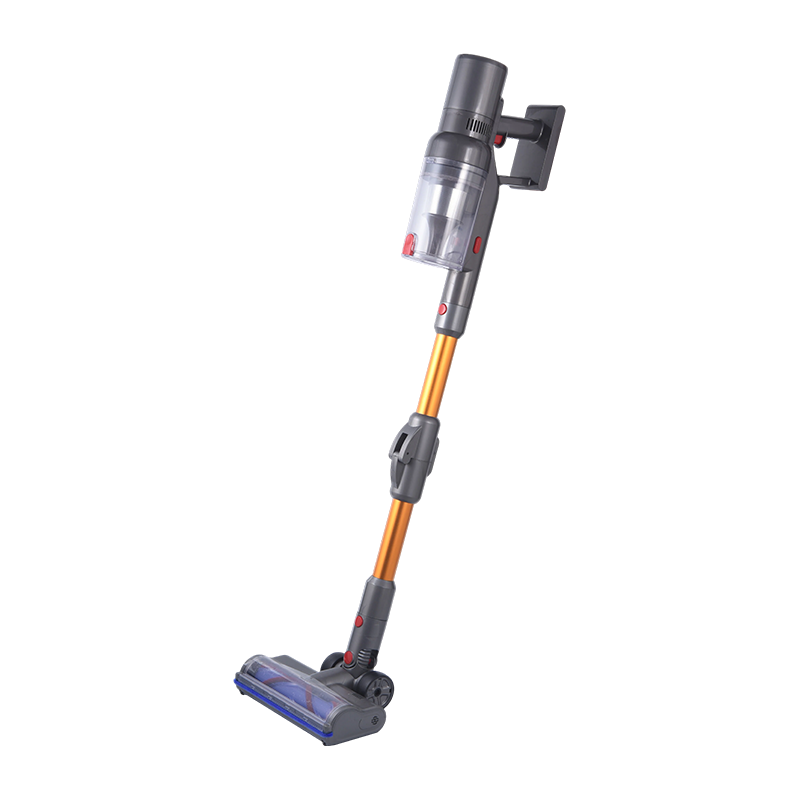
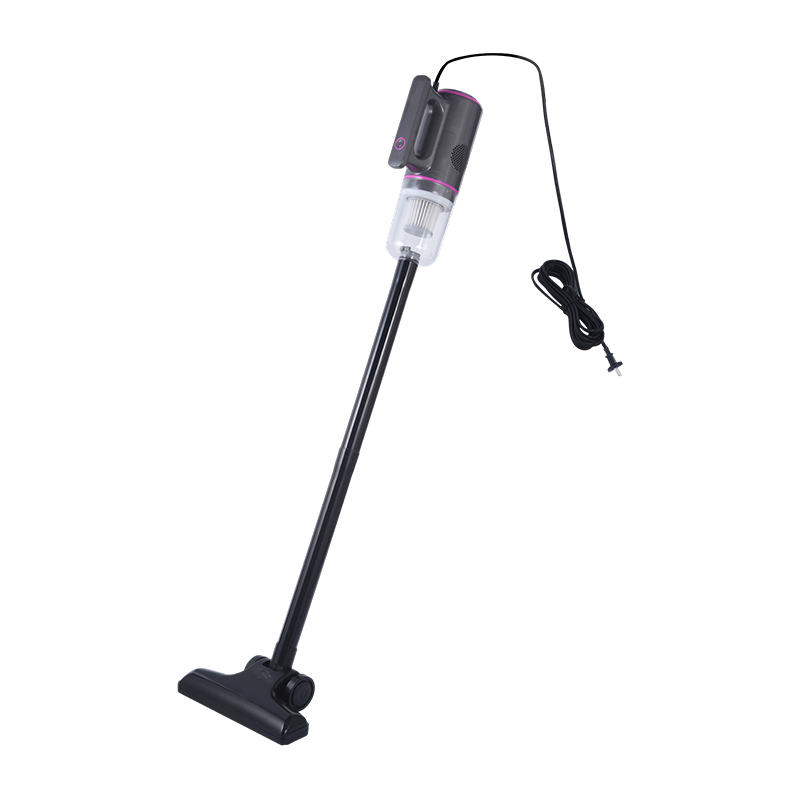
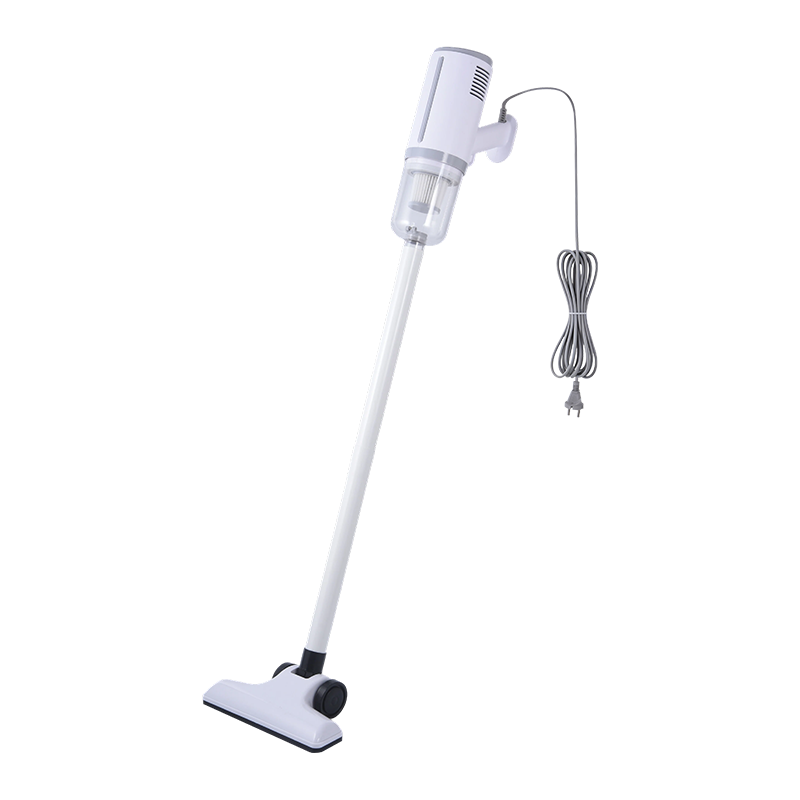
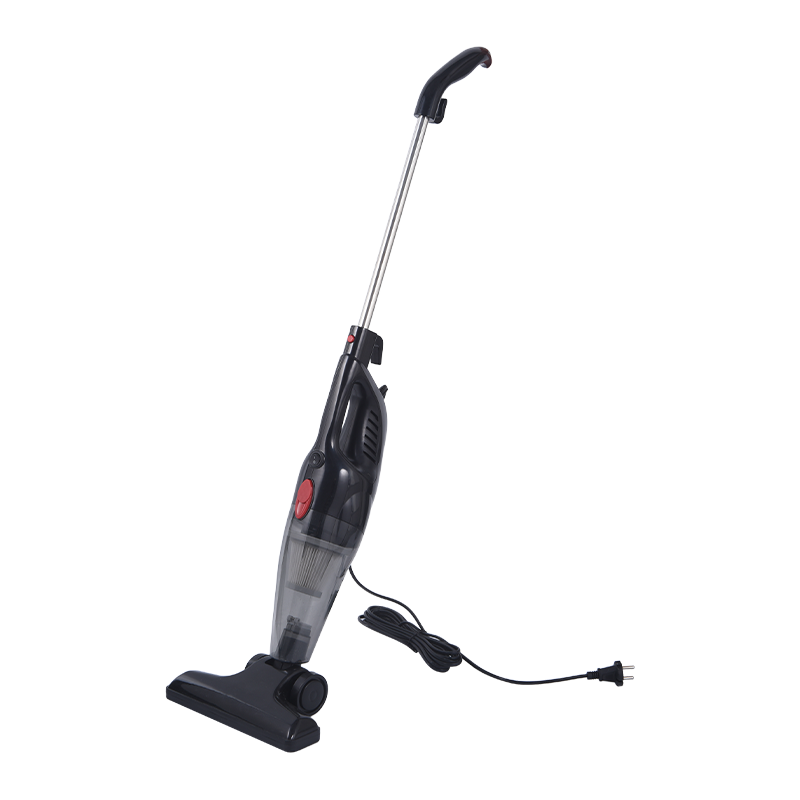
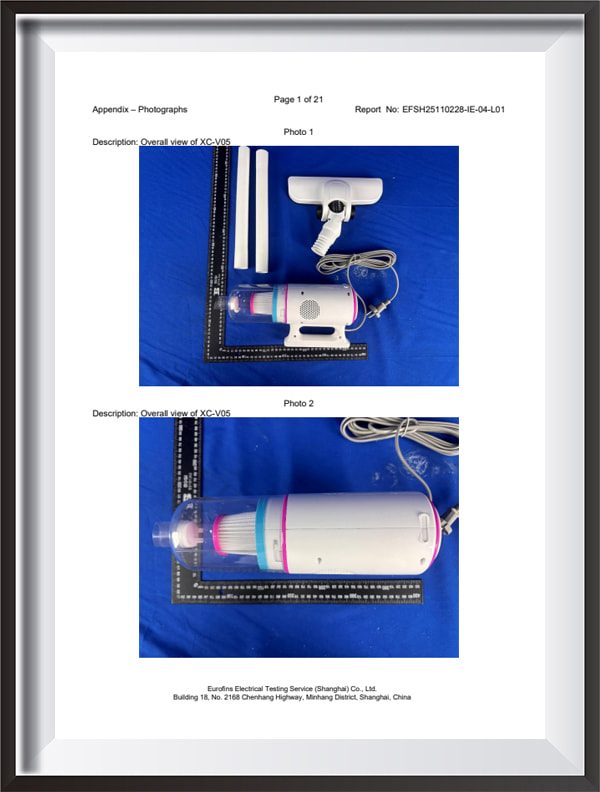
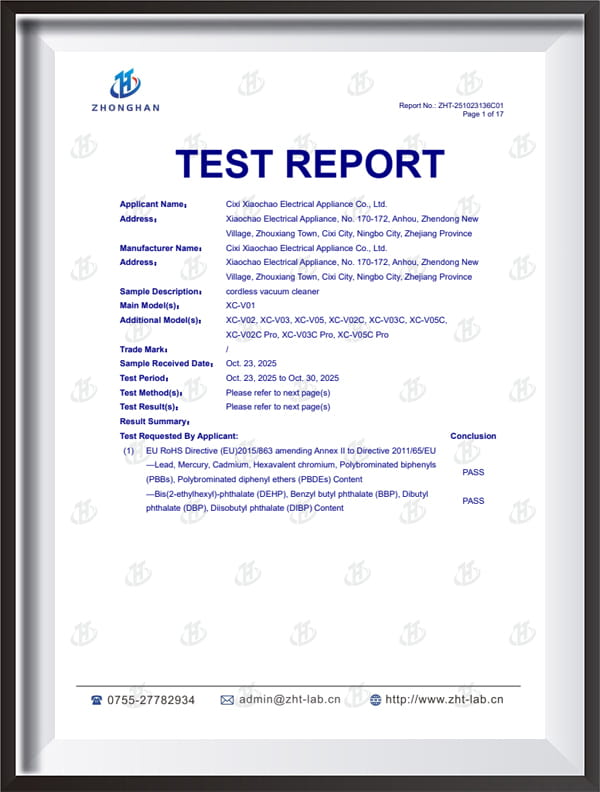
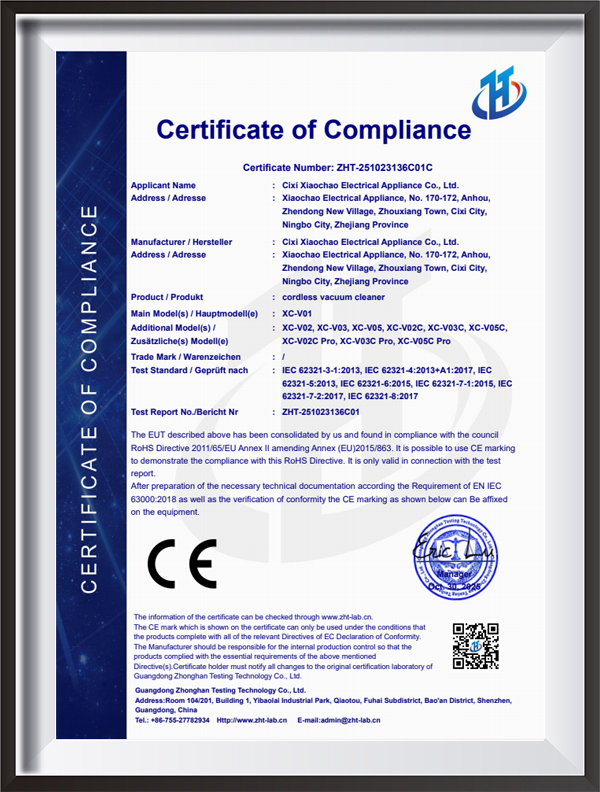
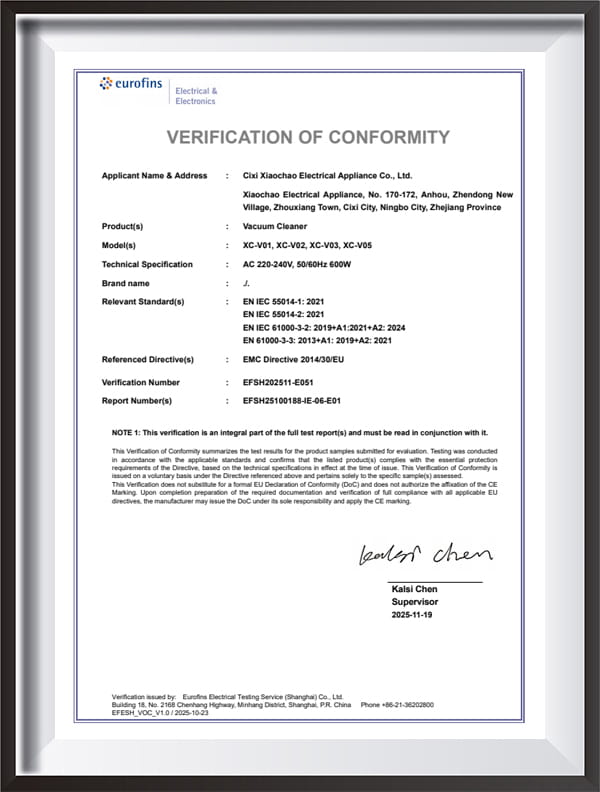
Household handheld stick vacuum cleaner: A mainstream cordless home cleaning device that combines handheld and stick modes, allowing for quick disassembly and switching between modes. Stick mode efficiently cleans hardwood floors, tiles, short-pile carpets, and other hard-to-reach surfaces throughout the house; detach the stick to switch to handheld mode, and with various specialized attachments (crevice tool, mattress brush, soft brush, etc.), easily tackle hard-to-reach areas such as sofa crevices, mattress dust mites, curtains, car interiors, and high corners. Most models feature a brushless motor + cyclone separation + HEPA filtration system, effectively trapping fine dust and pet dander, reducing secondary pollution; the lightweight body and ergonomic design prevent hand fatigue during extended use; the corded design allows for convenient wall mounting, saving home space, making it a highly adaptable choice for everyday cleaning in ordinary households, pet-owning families, and families with children.
About Us
Cixi Xiaochao Electrical Appliance Co.,Ltd.
Cixi Xiaochao Electrical Appliance Co.,Ltd., rooted in Cixi City, Zhejiang Province, known as the "Capital of Small Household Appliances" in China, is a comprehensive household appliance manufacturer with over two decades of development history, integrating R&D, manufacturing and sales. The company is a China Upright Stick Vacuum Cleaner Manufacturer and OEM/ODM Handheld Vacuum Cleaner Factory, committed to providing efficient, convenient and intelligent cleaning solutions and small household appliances for global users.
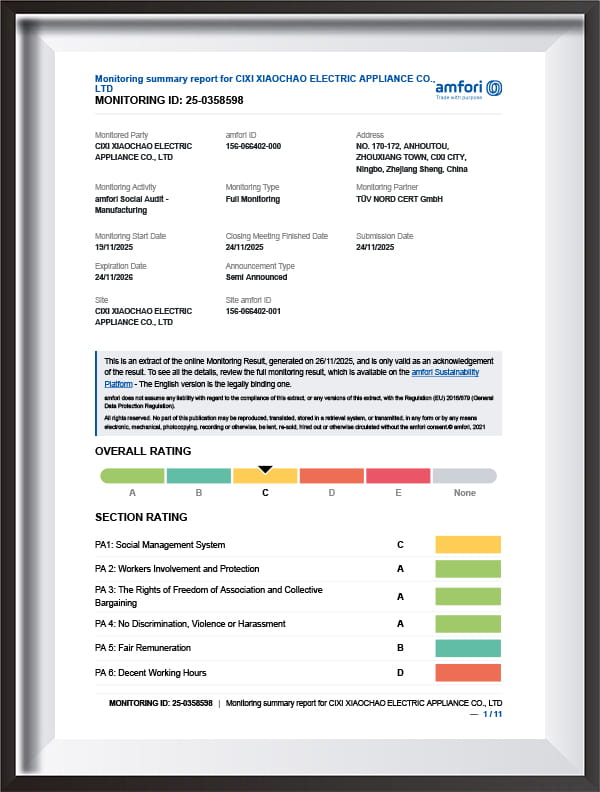
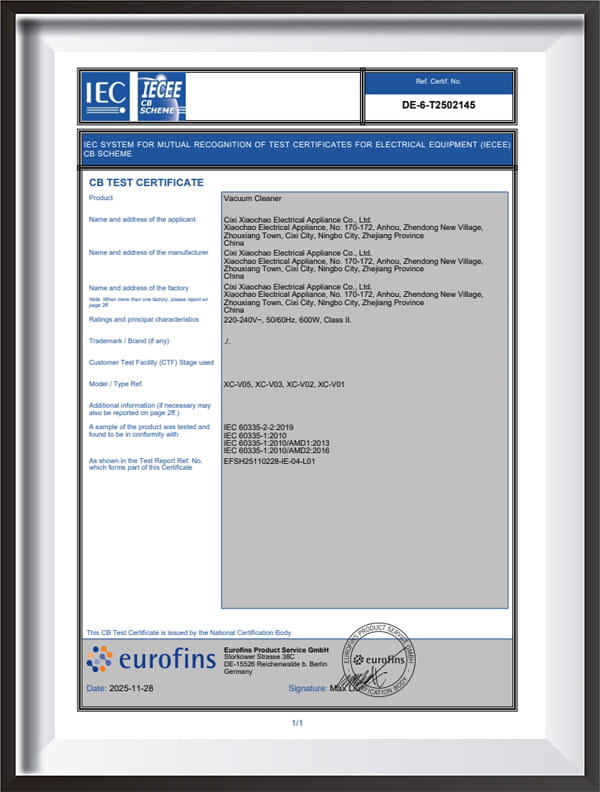
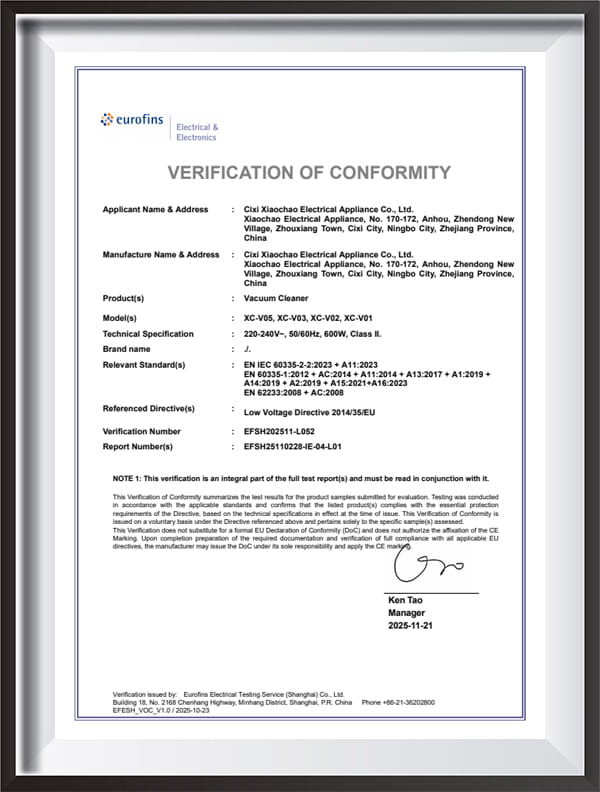
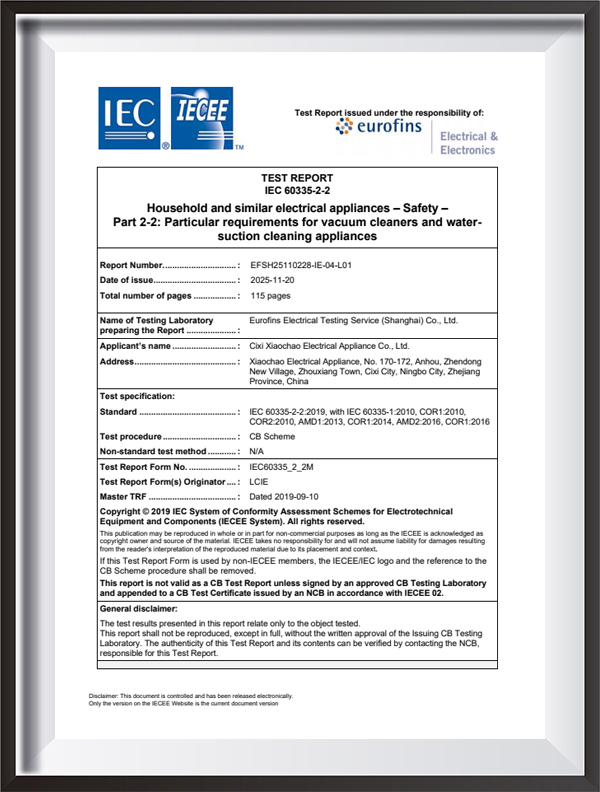
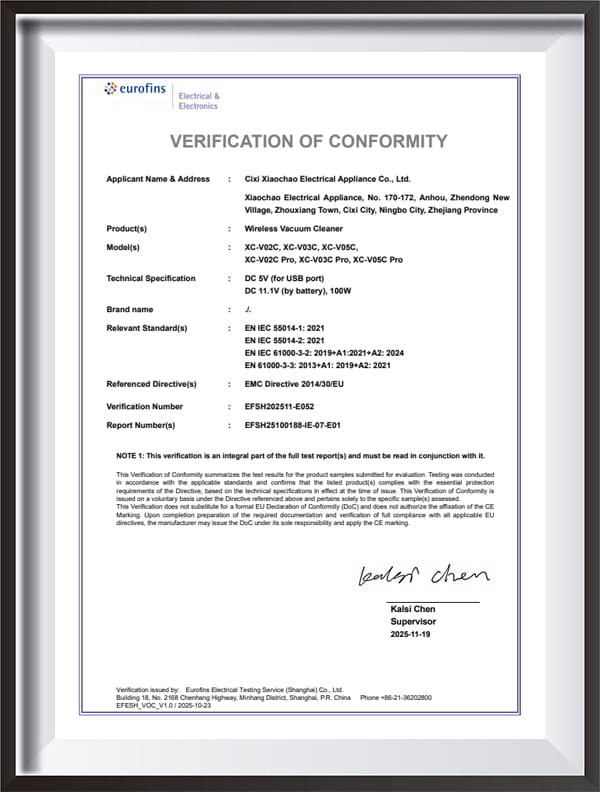
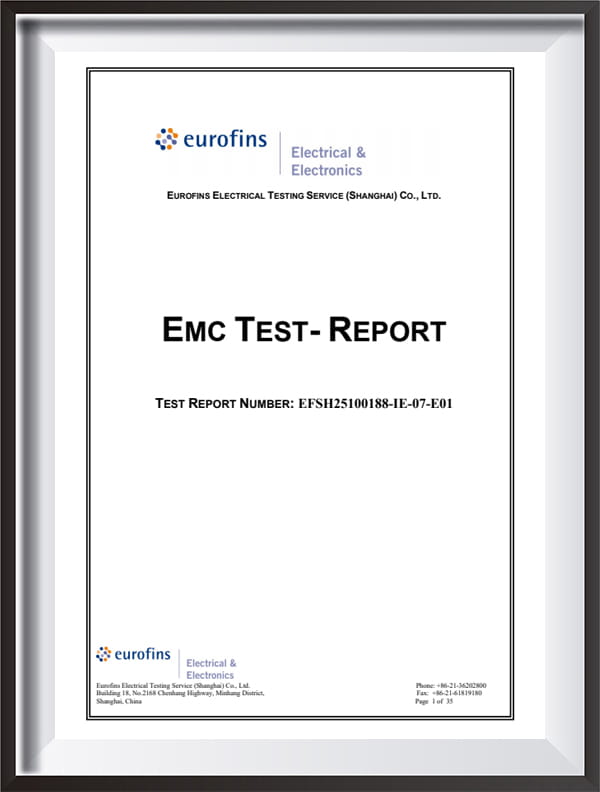
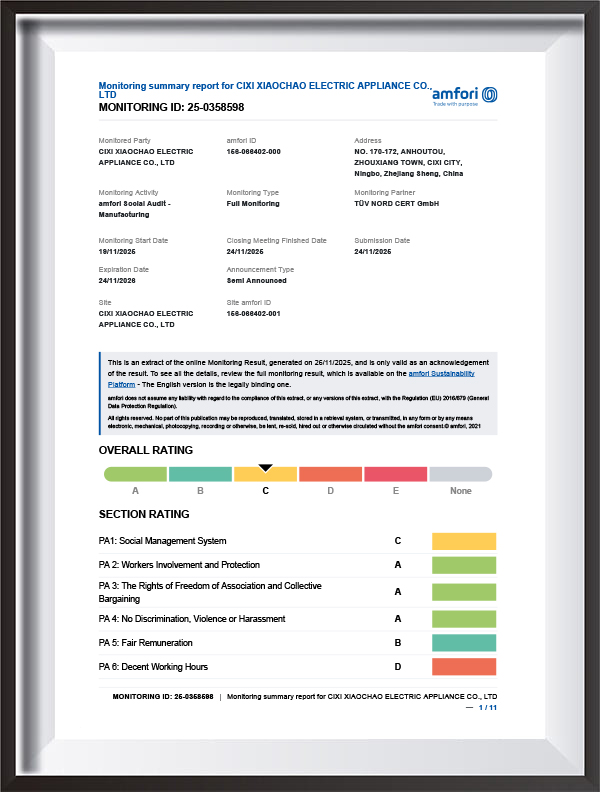
As a enterprise specializing in the R&D, production and sales of portable handheld vacuum cleaners, the company's cleaning product line covers household vacuum cleaners, car vacuum cleaners, cordless vacuum cleaners, mite removers and various multi-functional cleaning devices. The product range also extends to various table lamps, ultraviolet disinfection lamps, mini fans and other small household appliances, widely applicable to various life scenarios. The company covers an area of 18,000 square meters, equipped with 28 types of injection molding machines and 8 modern production lines, ensuring the independent and large-scale production from components to finished products. It has professional OEM and ODM cooperation capabilities and can provide flexible one-stop production solutions for customers. The company has passed the ISO9001 quality management system certification, ensuring the standardization and refinement of the production process. All products have passed multiple international and domestic certifications such as GS, CE, ROHS, CB, EMC, LVD, ERP and CCC, with reliable quality and compliance with global market access standards. With outstanding product quality and innovative design, the company's products are exported to many countries and regions around the world, including Europe, America, Japan, South Korea and Southeast Asia, and are deeply trusted by domestic and foreign markets and consumers.
With the mission of "Innovation-driven, Clean Future", the company adheres to the principles of lean manufacturing and customer first. Through continuous technological iteration and product innovation, it constantly improves the user experience, aiming to become a leading brand in the global cleaning field and striving to create a cleaner and more beautiful life!
Ask a returns desk what comes back most often and the answer is rarely "the motor died". It is usually a vacuum that still runs but no longer satisfies anyone: the owner says it "lost suction", the b...
Wipe a finger along any baseboard three days after mopping and you will still pick up a thin grey film. A vacuum cleaner exists to take that film out of the room before it goes back into the air. If ...
A Rechargeable Handheld Vacuum Cleaner is a practical addition to a home cleaning appliance range when the goal is fast, close-range cleanup of sofas, car seats, stairs, desks and bedding. It is not b...
When a distributor in Eastern Europe opened the first batch of warranty claims after selling a line of cordless stick vacuums, the pattern was easy to read. Brush rolls had flattened after four month...
Imagine you are a purchasing manager for a regional wholesaler, and three different factories send you cordless vacuum samples with almost identical spec sheets. One machine picks up pet hair cleanly...
A household handheld stick vacuum cleaner combines two cleaning modes in a single cordless unit, letting a household switch between full length stick cleaning for floors and compact handheld cleaning for furniture, car interiors, and tight corners. This dual configuration removes the need for separate devices for floor care and detail cleaning, which is why the format has become a common choice across ordinary households, pet owning families, and homes with young children. This article explains how the stick and handheld modes work together, what filtration and motor components matter most, how attachments extend cleaning coverage, and what to review when comparing an upright stick vacuum cleaner manufacturer for sourcing or partnership purposes.
How Stick And Handheld Modes Work Together
The defining feature of a household handheld stick vacuum cleaner is its ability to convert between two physical configurations without needing separate tools or a full disassembly process. In stick mode, the extended tube and floor nozzle allow the unit to reach across hardwood floors, tile, and short pile carpet throughout a home in a standing posture, which reduces bending and supports coverage of larger floor areas in a single pass. Detaching the extension tube converts the same motor and dust chamber unit into a compact handheld device suited to sofa crevices, mattress surfaces, curtains, car seats, and elevated corners that a standing posture cannot reach comfortably.
This conversion typically takes only a few seconds without tools, which supports the kind of frequent short cleaning sessions that many households prefer over a single lengthy weekly cleaning routine. Because both modes share the same motor and filtration system, suction performance generally remains consistent between the two configurations, differing mainly in nozzle shape and reach rather than underlying cleaning power.
Common cleaning scenarios matched to stick and handheld mode attachments
Mode
Typical Surface
Common Attachment
Stick Mode
Hardwood floor, tile, short pile carpet
Floor nozzle
Handheld Mode
Sofa crevices, mattress surface
Crevice tool, mattress brush
Handheld Mode
Curtains, upholstery
Soft brush
Handheld Mode
Car interior, high corners
Crevice tool
Motor Filtration And Dust Separation Systems
Most current household handheld stick vacuum cleaners rely on a combination of three core components working together, a brushless motor for airflow generation, cyclone separation for initial dust and debris capture, and a HEPA filtration stage for fine particle trapping before exhaust air is released back into the room.
This bar chart compares the relative contribution of three filtration stages within a typical household handheld stick vacuum cleaner, expressed as an index of particle capture efficiency rather than absolute laboratory measurement. The cyclone separation stage handles the initial and largest share of debris removal, spinning incoming air to fling heavier dust, hair, and larger particles into the collection chamber before air proceeds further into the system. HEPA filtration scores highest on this comparison because its dense fiber structure is specifically engineered to trap very fine particles, including pet dander and fine dust that cyclone separation alone would not fully capture, a design principle broadly consistent with filtration standards referenced by the United States Environmental Protection Agency for high efficiency particulate air filters. Motor airflow contributes indirectly by determining how much air passes through the system per unit time, which affects both suction strength and how effectively particles reach the filtration stages in the first place. Together these three components function as a layered system rather than independent parts, since weak performance at any single stage reduces the effectiveness of the overall cleaning result. This layered approach explains why manufacturers position brushless motor, cyclone separation, and HEPA filtration as a combined system rather than marketing any single component in isolation.
Suction Consistency Across A Cleaning Session
A common question when evaluating a household handheld stick vacuum cleaner is whether suction performance holds steady as the dust chamber fills during a cleaning session.
This line chart represents a general suction consistency pattern as the dust chamber of a household handheld stick vacuum cleaner fills during a cleaning session, expressed as a relative performance index against chamber fill level. Suction remains close to its starting level while the chamber is mostly empty, since airflow resistance from accumulated debris is minimal at this stage. As the chamber approaches roughly half full, a gradual decline becomes noticeable, reflecting increased airflow resistance as more dust and debris occupy the collection space. The decline becomes steeper as the chamber nears full capacity, which is why manufacturers generally recommend emptying the dust chamber before it reaches maximum fill rather than waiting until suction becomes noticeably weaker. This pattern is consistent with general vacuum cleaner performance behavior discussed in consumer appliance testing literature, where dust chamber fill level is identified as a key variable affecting sustained suction. Understanding this curve helps households build a habit of periodic emptying during longer cleaning sessions rather than treating the dust chamber as a single use container per session.
Where Handheld Attachments Get Used Most
Because a household handheld stick vacuum cleaner ships with multiple attachments, understanding which attachments see the most frequent use helps explain design priorities within the product category.
This donut chart illustrates a general distribution of attachment usage frequency for a household handheld stick vacuum cleaner across common cleaning tasks in a typical home. The floor nozzle used in stick mode represents the largest share since regular floor cleaning across hardwood, tile, and short pile carpet occurs most frequently in daily household routines. The crevice tool follows closely, reflecting its role in reaching sofa crevices, car interior gaps, and narrow corners that a floor nozzle cannot access. The mattress brush and soft brush together account for a meaningful portion of usage, particularly in households focused on reducing dust mites on bedding or gently cleaning curtains and upholstered furniture. The remaining smaller segment covers occasional use cases such as high corner cleaning or specialized surfaces that come up less frequently than daily floor and furniture care. This distribution supports why manufacturers continue to bundle multiple attachments with a single unit rather than selling the floor nozzle as a standalone product, since real household cleaning needs span several surface types within the same week.
Comparing Design Priorities Across User Groups
Different household types tend to prioritize different attributes when selecting a household handheld stick vacuum cleaner, and comparing these priorities side by side helps clarify why certain design choices matter more in some homes than others.
This radar chart compares pet owning households, shown in the outer yellow shape, against households with young children, shown in the inner orange shape, across four attributes commonly weighed when choosing a household handheld stick vacuum cleaner. Pet owning households tend to place higher priority on filtration performance and attachment range because pet dander and hair benefit from strong HEPA capture combined with specialized brushes for upholstery and pet bedding. Households with young children often weigh light weight design and compact storage more heavily, since a smaller, easier to lift unit supports frequent quick cleanups of spills and crumbs without requiring significant physical effort from the person handling it. Neither profile suggests one household type needs a fundamentally different product category, since a single well designed unit with wall mountable corded storage and multiple attachments can generally serve both sets of priorities within the same home. This comparison illustrates why manufacturers design flexible attachment sets and lightweight ergonomic bodies as standard features rather than offering separate product lines for each household type.
Ergonomic Handling During Extended Cleaning Sessions
Comfort during use is a practical concern for a household handheld stick vacuum cleaner, particularly during longer cleaning sessions that cover multiple rooms in stick mode.
This gauge chart represents a general ergonomic comfort index for lightweight household handheld stick vacuum cleaners during extended cleaning sessions, based on common product design evaluation practices referenced in home appliance ergonomics discussions. Comfort scoring tends to improve as body weight decreases and as the center of gravity sits closer to the handgrip, reducing wrist and shoulder strain during sustained stick mode use across multiple rooms. Ergonomic handle shaping also contributes meaningfully to this figure, since a grip that matches natural hand positioning reduces fatigue compared with a straight cylindrical handle used over the same duration. Balance between the motor unit and battery placement affects how the weight feels during use, with a well distributed design feeling lighter than its actual total weight might suggest. This index is intended as a general comparative reference rather than a precise clinical measurement, since individual comfort perception varies by user strength and cleaning habits.
Inside The Unit: Structural Overview
A household handheld stick vacuum cleaner generally follows a modular internal layout that supports its conversion between stick and handheld configurations.
This isometric style schematic shows the general modular layout of a household handheld stick vacuum cleaner, moving from the floor nozzle through the extension tube, main body housing the motor and filtration system, and finally the handheld grip section. The floor nozzle attaches to the extension tube for stick mode cleaning, drawing debris upward into the main body where cyclone separation and HEPA filtration process the airflow before clean air exits the unit. Detaching the extension tube exposes the main body directly at the handheld grip, allowing attachments such as the crevice tool, mattress brush, or soft brush to connect directly for close range cleaning tasks. The main body houses the brushless motor and dust chamber, keeping these core components shared between both operating modes rather than duplicating them across separate configurations. The handheld grip section is shaped for one handed control, supporting the quick mode switching that defines this product category, and this general modular structure is common across most household handheld stick vacuum cleaner designs regardless of specific brand.
What To Look For In An Upright Stick Vacuum Cleaner Manufacturer
Buyers and business partners evaluating an upright stick vacuum cleaner manufacturer for sourcing or private label production typically review several practical factors beyond a single product specification sheet.
Production capability across injection molding and assembly to support consistent unit quality at scale.
Flexibility to support OEM and ODM customization for private label cleaning appliance programs.
Range of complementary small household appliances that can be sourced from the same manufacturing partner.
Export experience across multiple international markets with varying certification requirements.
Consistency of filtration and motor component sourcing across production batches.
Cixi Xiaochao Electrical Appliance Co., Ltd., based in Cixi City, Zhejiang Province, operates as a China upright stick vacuum cleaner manufacturer and OEM or ODM handheld vacuum cleaner factory, with production facilities spanning eighteen thousand square meters equipped with twenty eight types of injection molding machines and eight modern production lines supporting independent component to finished product manufacturing.
Industry Direction For Handheld Stick Cleaning Devices
Household cleaning appliance design continues to move toward lighter weight bodies, improved brushless motor efficiency, and refined HEPA filtration stages that better trap fine dust and pet dander without significantly increasing airflow resistance. This direction reflects broader home appliance industry patterns favoring convenience oriented products that fit into shorter, more frequent cleaning routines rather than a single lengthy session, a trend consistent with general consumer appliance design discussions referenced by organizations such as the Consumer Technology Association. Wall mountable corded storage solutions have also become a more standard feature, allowing households to keep a household handheld stick vacuum cleaner readily accessible without occupying closet or cupboard space. This combination of design trends supports the continued adoption of dual mode stick and handheld vacuum cleaners across a wide range of household types, from ordinary families to pet owning households and homes with young children.
About Cixi Xiaochao Electrical Appliance Co., Ltd.
Cixi Xiaochao Electrical Appliance Co., Ltd. is rooted in Cixi City, Zhejiang Province, known within China as the capital of small household appliances. The company brings over two decades of development history integrating research and development, manufacturing, and sales, operating as a China upright stick vacuum cleaner manufacturer and OEM or ODM handheld vacuum cleaner factory serving global customers.
The company specializes in the research, production, and sales of portable handheld vacuum cleaners, with a product line covering household vacuum cleaners, car vacuum cleaners, cordless vacuum cleaners, mite removers, and various multi functional cleaning devices, alongside table lamps, ultraviolet disinfection lamps, mini fans, and other small household appliances. Its facilities cover an area of eighteen thousand square meters, equipped with twenty eight types of injection molding machines and eight modern production lines, supporting independent and large scale production from components to finished products with flexible OEM and ODM cooperation capability. Products from Cixi Xiaochao are exported across Europe, America, Japan, South Korea, and Southeast Asia, reflecting the company's continued focus on innovation driven cleaning solutions for households worldwide.
Frequently Asked Questions
What makes a household handheld stick vacuum cleaner different from a standard upright vacuum
A household handheld stick vacuum cleaner converts between a full length stick configuration for floor cleaning and a compact handheld configuration for furniture and detail cleaning, while a standard upright vacuum typically remains in a single fixed configuration.
How does the HEPA filtration stage help with pet dander and fine dust
HEPA filtration uses a dense fiber structure designed to trap very fine particles that pass through initial cyclone separation, reducing the amount of fine dust and pet dander released back into the room during cleaning.
Can the same unit clean both floors and car interiors
Yes, detaching the extension tube converts the unit into handheld mode, and attachments such as the crevice tool allow the same device to clean car interiors, sofa crevices, and other tight spaces beyond regular floor cleaning.
Why does suction sometimes feel weaker later in a cleaning session
Suction gradually declines as the dust chamber fills because accumulated debris increases airflow resistance, which is why periodic emptying during longer cleaning sessions helps maintain consistent performance.
Is a corded wall mounted design common for this product category
Many household handheld stick vacuum cleaners include a corded wall mount for charging and storage, which helps save space and keeps the unit readily accessible for frequent short cleaning sessions.
What should a business consider when working with an upright stick vacuum cleaner manufacturer
Key considerations typically include production capacity, OEM and ODM customization flexibility, export experience across international markets, and consistency of core components such as motors and filtration systems across production runs.

 English
 Español
 عربى
عربى