 English
 Español
 عربى
Content
- 1 What Separates the Best Battery Powered Vacuum Cleaners From the Rest
- 2 The Specification Sheet That Predicts Customer Satisfaction
- 3 Battery Packs: Where Cheap Cordless Vacuums Quietly Fail
- 4 Reading Suction Claims Without Being Fooled
- 5 Runtime Math: Turning Watt-Hours Into Cleaning Minutes
- 6 Matching Vacuum Type to Sales Channel
- 7 Charging, Docks and Power Around the Vacuum
- 8 Filtration, Dust Cups and Allergen Claims
- 9 Noise, Weight and the Details That Drive Returns
- 10 Certifications Buyers Ask For, Market by Market
- 11 The OEM and ODM Path From Brief to Container
- 12 Where the Money Goes in a Cordless Vacuum
- 13 Sourcing Mistakes That Cost More Than the Unit Price
- 14 Working With the Right Vacuum Cleaner Supplier
- 15 FAQ: Battery Powered Vacuum Cleaners for Wholesale Buyers
- 15.1 Which battery powered vacuum cleaners are best for pet hair?
- 15.2 How long should a cordless vacuum run on one charge?
- 15.3 Is a replaceable battery worth the extra cost?
- 15.4 What is a realistic minimum order quantity for a private label cordless vacuum?
- 15.5 Which certifications should a wholesale buyer request first?
- 15.6 Can a supplier combine vacuum cleaners and portable power products in one shipment?
Two cordless handheld vacuums leave the same assembly line with the same 25 kPa printed on the carton, and only one of them still pulls rice out of a car footwell after eight minutes of work. The other fades at four minutes and comes back to the seller as a one-star review about weak suction. Nothing on the packaging explained the difference, but the gap was decided long before assembly: the battery pack, the airflow path, seal tolerance, and how honestly the suction figure was measured.
So here is the short answer this guide works from. The best battery powered vacuum cleaners are not the models with the largest printed number. They are the models where the pack, motor, airflow and filtration were designed as one system for a clearly defined cleaning job, and where the manufacturer can show test data instead of a slogan. For a buyer ordering in bulk, that is often the difference between a product line with a 2 percent return rate and one that runs at 12 percent.
This article comes from the manufacturing side of that market. Cixi Xiaochao Electrical Appliance Co., Ltd., based in Cixi, Zhejiang, the city widely described as China's small home appliance capital, has more than twenty years of development behind it and runs an 18,000 square meter plant with 28 injection molding machines and 8 production lines. Its cleaning range covers household vacuum cleaners, household handheld stick vacuum cleaners, convenient cordless handheld vacuum cleaners for home use, high-powered household vacuum cleaners with cord, car vacuums and mite removers, supplied to importers, distributors and private-label brands as an OEM and ODM vacuum cleaner manufacturer. That background shapes every checklist in the sections below.
What Separates the Best Battery Powered Vacuum Cleaners From the Rest
When buyers ask which cordless vacuum is best, the honest reply is that it depends on the cleaning job and the channel. A 60 AirW handheld sold into a car-care range is a good product. The same unit sold as a family floor cleaner is a bad product, no matter how well it is made. Matching performance to use case comes before comparing brands or prices.
Five factors decide most purchase decisions, and each one is measurable:
- Pack quality: cell type, capacity spread between cells, and whether the battery management board protects against deep discharge and overheating.
- Suction under load, not just at the nozzle on day one. Sealed suction and working suction can differ by 30 percent once a brush bar and filter load are involved.
- Runtime at usable power. A claimed 45 minutes at low speed is meaningless if the brush stops turning unless the unit is in maximum mode.
- Serviceability: a battery that can be replaced with two screws can extend product life by years and reduce warranty claims.
- Compliance and paperwork: the certifications, battery transport documents and packaging registration needed for each destination market.
Everything else, from color to dock shape, can be customized without changing the fundamentals. The fundamentals are what should be locked into the purchase specification before tooling starts, because changing them later usually means new molds or a new pack design.
A cordless vacuum is only as strong as its weakest subsystem, so suction, runtime, filtration and the battery pack have to be specified together, never one at a time.
The Specification Sheet That Predicts Customer Satisfaction
Most sourcing disputes start with a vague brief. Writing the numbers down before sampling removes most of that risk, and it also gives the factory a clear target to design around. The table below shows the parameters worth fixing in writing, with ranges that reflect typical cordless handheld and stick vacuum classes rather than guaranteed figures.
| Parameter | What to ask for | Typical range | Risk if left vague |
|---|---|---|---|
| Rated suction | AirWatts or kPa, with test method stated | 40-200 AirW depending on class | Marketing numbers that fail third-party testing |
| Runtime at full power | Minutes with brush bar running | 8-25 minutes | Returns and reviews mentioning short battery life |
| Battery capacity | Watt-hours, cell model, cell brand tier | 25-90 Wh | Inconsistent runtime between production batches |
| Charge time | Minutes to 90 percent, charger output | 2.5-5 hours | Support tickets about overnight charging |
| Dust cup volume | Litres, with fill line visible | 0.3-0.8 L | Frequent emptying complaints in long cleaning jobs |
| Filtration | Cyclone stages plus filter grade | Washable HEPA class filter | Dust blow-back and allergen marketing problems |
| Weight | Complete unit with battery and brush | 1.1-2.5 kg | Fatigue complaints in handheld use |
| Noise | Sound pressure at one metre | 72-82 dB(A) | Difficult retail positioning in apartment markets |
| Battery access | Replaceable pack, tool type stated | Removable with common screws | Whole-unit replacement claims instead of battery swaps |
| Cycle life | Capacity retained after 300 cycles | 80 percent or better | Warranty costs in year two and three |
The right-hand column is where the money sits. A dust cup that is 0.1 litre smaller than the competitor rarely loses a sale, but a pack that drops to 60 percent capacity after a year of daily use turns into warranty cost and negative reviews that persist for years.
It also helps to specify tolerances, not just targets. A plus or minus 10 percent tolerance on suction across production batches is realistic for this category, and a supplier who cannot state a tolerance is usually not testing at all. Ask for the sampling plan, not only the sample.
Write the specification with tolerances and test methods, because a target without a tolerance cannot be inspected or enforced.
Battery Packs: Where Cheap Cordless Vacuums Quietly Fail
The pack is usually the most expensive single component in a cordless vacuum and the one most often squeezed during cost negotiations. Two 18650 or 21700 packs can look identical on the outside and behave completely differently in use.
What matters is not just milliamp-hours. High-drain cells with lower nominal capacity often deliver more usable runtime in a vacuum than high-capacity cells with modest discharge ratings, because voltage sag under load wastes energy as heat. A pack built from cells with a 20 amp discharge rating will hold suction longer than a pack built from 5 amp cells of the same capacity. Cell sorting matters too: mixing cells with a 10 percent capacity spread causes the weakest cell to be pushed hardest, and that is the cell that fails first.
Assembly details are equally decisive. Spot welding current, nickel strip width, insulation between parallel groups, and the routing of the management board all affect resistance and heat. A well-built pack also protects itself against over-discharge, over-current and short circuit, and it stops charging when the pack is hot. On the test bench this shows up as fewer cells drifting out of balance after a few hundred cycles.
Battery discipline is not limited to one product family. The same catalogue includes a that demonstrates the same cell sorting, welding and management board work that keeps a vacuum pack stable, and a supplier who builds packs of that kind usually has the equipment to test vacuum packs properly rather than soldering loose cells by hand.
Cycle testing is the cheapest quality insurance available. A 300-cycle test at one hour per cycle, run on ten units in parallel, takes about two weeks and reveals whether the pack design holds its capacity. Ask for that data in the quotation stage, before tooling is paid for.
Cell discharge rating, sorted capacity and pack assembly quality decide real runtime far more than the milliamp-hour number printed on the label.
Reading Suction Claims Without Being Fooled
Suction is the number buyers compare first and the number most easily distorted. Comparing a sealed suction reading with a working suction reading is like comparing the top speed of a car measured downhill with a tailwind against one measured on a flat road. The chart below shows typical performance bands by product class, and where each class tends to sit in real use.
Typical suction bands by cordless vacuum class (AirWatts)
Premium multi-cell stick vacuum, 400 W class
160-200 AirW
Mid-tier cordless stick vacuum with powered brush
120-150 AirW
Value cordless stick vacuum, single brush
80-110 AirW
Bed and mite vacuum, handheld body
60-90 AirW
Entry car vacuum, 12 V or 16 V class
40-60 AirW
These bands are useful for positioning, not for winning arguments. A 90 AirW handheld that is light, quiet and easy to empty can outperform a heavier 130 AirW stick in a car interior, because the nozzle reaches the footwell and the operator does not get tired. The reverse is true on a carpeted staircase, where airflow through a powered brush matters more than peak nozzle suction.
For buyers, the practical step is to request the same test conditions across suppliers: standardised airflow measurement, stated filter condition, charged pack, and the brush bar running or not clearly declared. Any factory that can supply that data consistently is also likely to control production variation, which is what protects the reviews after launch.
Insist on one test method for every supplier, because suction figures only mean something when the conditions behind them are identical.
Runtime Math: Turning Watt-Hours Into Cleaning Minutes
A buyer can estimate runtime before a sample ever arrives. Multiply pack voltage by amp-hours to get watt-hours, then divide by the power drawn at the setting being used, with an allowance for losses in the motor, the board and the airflow path.
The working formula is: runtime in minutes equals watt-hours multiplied by 60, divided by watts drawn, multiplied by an efficiency factor of roughly 0.85. Three examples show how widely the answer can move:
- A 25.2 V pack with 2,000 mAh cells in seven series gives about 50 Wh. If the unit draws 300 W in maximum mode, runtime is roughly 8.5 minutes. In the 60 W low mode, the same pack gives about 42 minutes.
- A 14.4 V handheld with 2,500 mAh cells gives about 36 Wh. At 120 W it runs near 15 minutes, which is a sensible target for car interiors and small touch-ups.
- A 21.6 V pack with high-drain 3,000 mAh cells gives about 65 Wh. At 250 W it runs near 13 minutes, but voltage sag is lower, so the last three minutes still clean rather than just spin.
The efficiency factor is where marketing claims usually break down. A pack that is warm after use has converted stored energy into heat, and a dust-loaded filter does the same. Two models with identical watt-hours can differ by five minutes of usable time purely because of airflow design and filter surface area.
For a private-label programme, it is worth publishing two runtime figures on the specification: maximum mode and normal mode with the brush running. That single step removes most of the confusion that leads to negative reviews and returns.
Runtime claims should always be quoted per mode with the brush running, because that is the only figure a customer can actually verify at home.
Matching Vacuum Type to Sales Channel
Different channels pull different products, and building a range around the channel usually beats building a range around a single hero model. The cleaning products described here break down into five practical families.
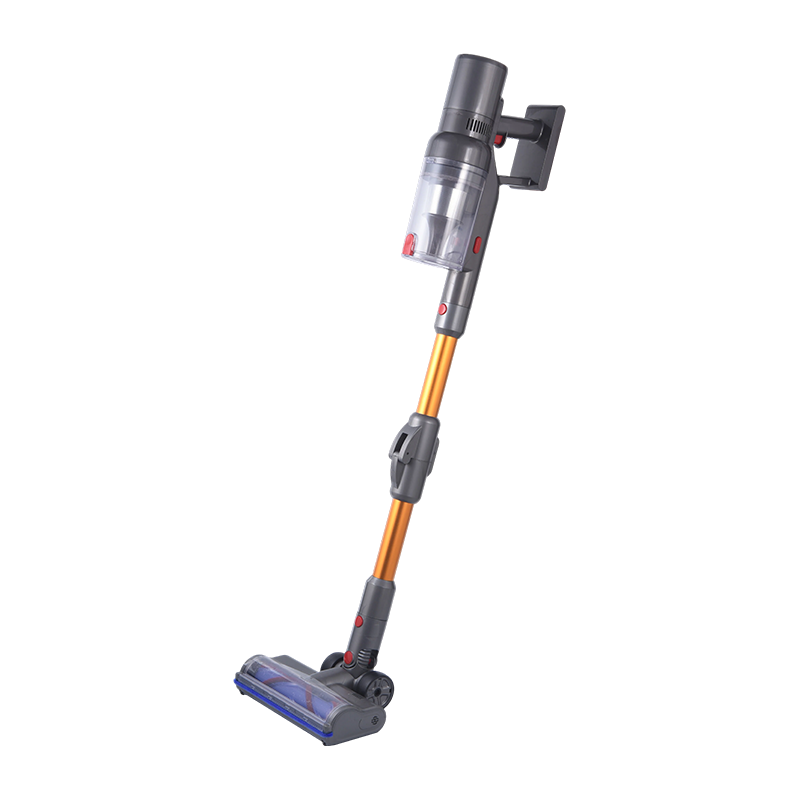
- Household handheld stick vacuum cleaners: the volume driver for home appliance retailers and online marketplaces, usually with a powered floor brush, a wall dock and a 25 to 45 minute claimed runtime.
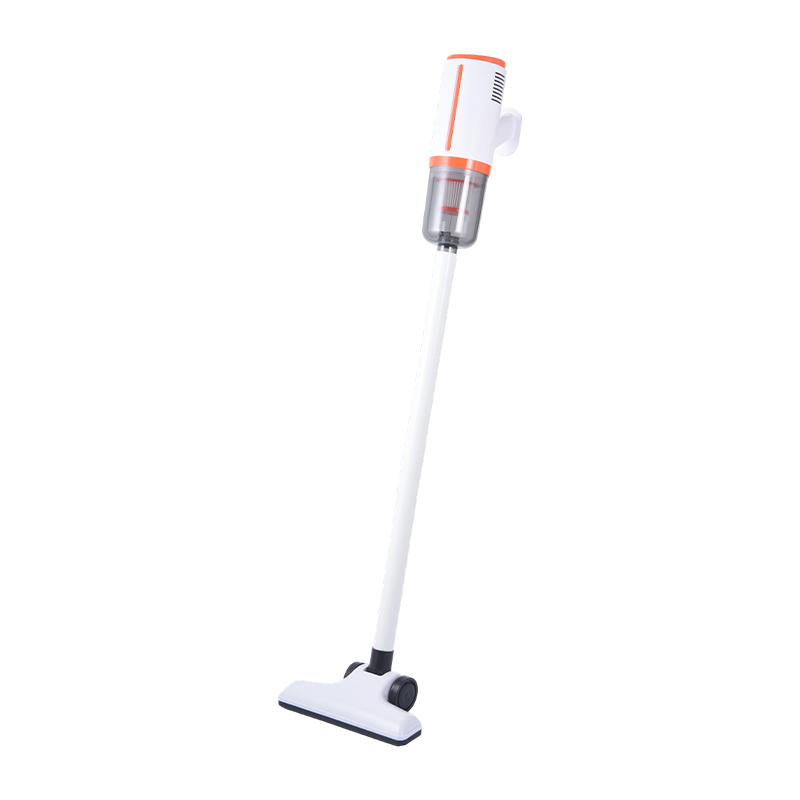
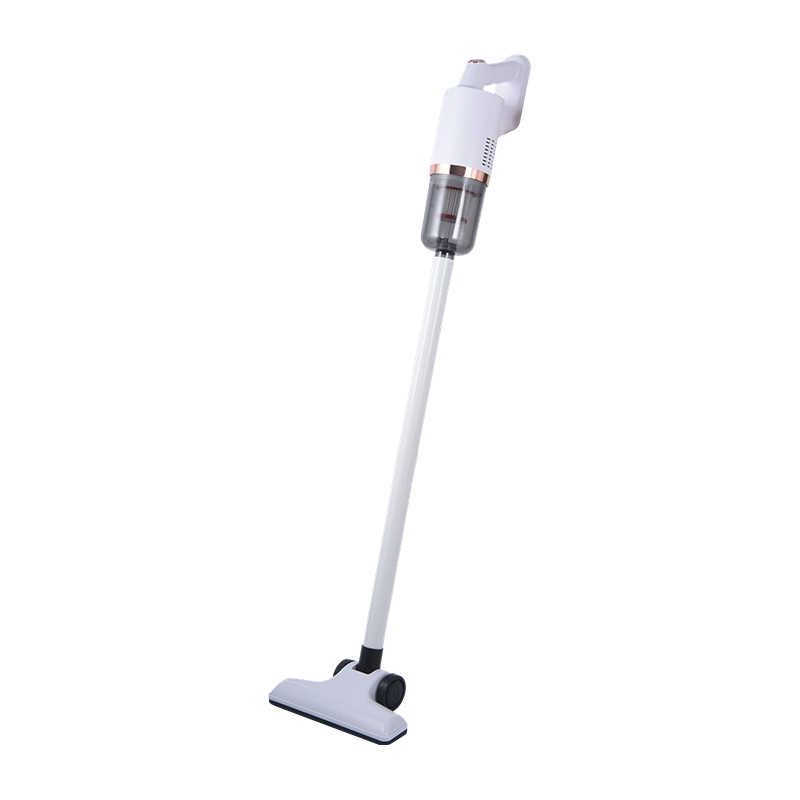
- Convenient cordless handheld vacuum cleaners for home use: compact bodies for stairs, sofa seams, keyboards and kitchen counters, priced for impulse purchase and often sold in multi-packs.
- Car vacuums: 12 V plug-in and cordless versions with long crevice tools, sold through automotive accessory wholesalers, fuel retail and detailing businesses.
- Mite removers with UV treatment: positioned as bedding care, with strong appeal in markets where dust sensitivity is a common purchase reason.
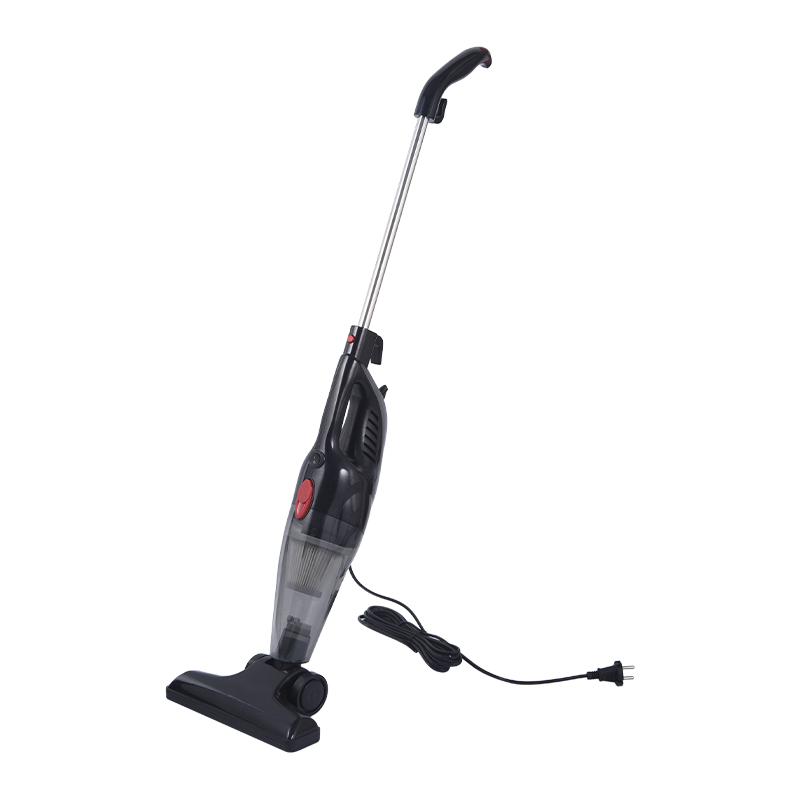
- High-powered household vacuum cleaners with cord: still steady sellers where continuous suction and unlimited runtime matter more than portability, and often the entry product for a first-time brand.
A distributor usually wants two or three of these families rather than one, because the same buyer who orders a stick vacuum will often add a car vacuum for the same shelf. That is also how tooling costs get spread: shared motors, shared filters and shared chargers across models reduce the total investment in a range.
Build the range around what the shelf or the marketplace listing needs, and share components across models to keep tooling and inventory costs down.
Charging, Docks and Power Around the Vacuum
Charging is the part of the ownership experience that generates the most quiet frustration. A vacuum that must be charged for four hours to run for twelve minutes is inconvenient in a home, and unusable in a vehicle or at a job site, where there may be no mains socket at all.
The charging system should be specified as carefully as the pack. Wall-mounted docks are convenient but need a fixing kit and a clear installation sheet. Desktop cradles take more shelf space but avoid drilling. Contact charging through a dock removes the plug-in step but adds two contact points that must survive humidity and dust. A charger rated for 100 to 240 V input with the right plug family is essential for cross-border sales, and a USB-C option at 20 V or above can be attractive for younger buyers.
Where cleaning happens away from mains power, such as roadside detailing, campsites, outdoor events or building maintenance, a portable power source becomes part of the kit rather than an accessory. A high-capacity unit such as this can run chargers, lights and small tools from the same battery, which is a natural bundle for automotive and outdoor channels. Bundling is not about adding items for the sake of it; it is about removing a reason the customer cannot use the product.
For fleet and commercial buyers, the same logic applies at a larger scale. Cleaning crews that work across multiple properties need charging points in vehicles, and a portable supply avoids rewiring a van for a single appliance.
Specify charge time, charger input range and dock type early, because charging convenience is what turns a first purchase into a repeat purchase.
Filtration, Dust Cups and Allergen Claims
Filtration is where a good vacuum is separated from a vacuum that simply moves dust around. The airflow path should carry debris through at least one cyclone stage before reaching the filter, so that the filter collects fine particles rather than filling with hair and grit. A washable filter with a stated grade is easier to support than a disposable filter with no specification.
Dust cup design also deserves attention. A 0.5 litre cup that is easy to empty without touching the contents is more pleasant to own than a 0.7 litre cup with a narrow opening. Transparent housings with a visible fill line reduce overfilling, and overfilling is one of the most common causes of lost suction in service.
Health-related claims need care in every market. In the European Union, statements about allergens and air quality fall under advertising rules that require evidence, and unsupported claims are a real commercial risk. It is safer to describe what the product does, such as retaining fine dust through a multi-stage system, than to promise a health outcome. The same restraint applies to ultraviolet treatment features on mite removers: describe the treatment function and the tested operating time, and avoid medical language.
Describe filtration performance in measurable terms and keep product claims away from medical promise language, especially for allergen and UV features.
Noise, Weight and the Details That Drive Returns
After suction and runtime, the two reasons cordless vacuums come back are weight and noise. A 2.5 kg stick becomes uncomfortable after ten minutes of overhead cleaning, and a unit that measures 85 dB(A) at one metre is difficult to use in an apartment at night.
Both issues are design decisions, not accidents. A smaller motor running at higher efficiency, a lighter battery pack, a balanced centre of gravity near the grip, and a cushioned handle can each remove a few hundred grams of perceived effort. On noise, motor mounting, airflow turbulence and housing resonance matter more than motor size. A 75 dB(A) target is realistic for a mid-tier cordless stick and much easier to advertise in markets with close neighbours.
Small details also decide whether the product feels considered. A brush bar that can be removed without tools, a crevice tool stored on the body rather than in the carton, a dust cup release that works with one hand, and a clear battery level indicator all reduce support calls. None of them adds much cost when they are designed in from the start.
Weight, noise and one-hand usability are the details that show up in reviews months after launch, so they belong in the original brief, not in a later revision.
Certifications Buyers Ask For, Market by Market
Compliance is the least glamorous part of sourcing and the most expensive to fix late. If a shipment lands without the right documents, it can be held, returned or destroyed, and the cost usually lands on the importer. Certification planning should begin at the sampling stage, before packaging artwork is printed.
| Market | Commonly required | Practical notes |
|---|---|---|
| European Union | CE marking covering EMC, LVD and RoHS, plus ErP and packaging registration | WEEE and battery registration may fall on the importer |
| Germany | CE plus voluntary GS for retail confidence | GS testing is often requested by larger retailers |
| United Kingdom | UKCA marking and separate plug configuration | Plan a dedicated SKU and carton artwork |
| United States | FCC declaration for wireless charging, voluntary UL or ETL listing | Proposition 65 labelling may be requested by chains |
| Japan and Korea | PSE or KC approval for the charger, radio approval for wireless features | Local agent details are usually needed |
| Battery transport | UN38.3 test report, MSDS, IEC 62133 cell and pack safety | Required for air and sea freight of lithium packs |
| China domestic | CCC for applicable categories | Also useful as an internal quality benchmark |
A manufacturer holding an ISO 9001 quality system and a broad certification portfolio can usually shorten this list of tasks, because test reports and factory audit documents already exist and only the product-specific testing needs to be repeated. Cixi Xiaochao's cleaning appliances carry GS, CE, RoHS, CB, EMC, LVD, ErP and CCC certifications and are exported to Europe, the Americas, Japan, Korea and Southeast Asia, which means the paperwork for those destinations is a routine process rather than a first attempt.
Still, confirm responsibilities in writing. State clearly who owns the test cost, who holds the certificate, and which legal entity appears as the manufacturer on the label. These three questions prevent most customs surprises.
Decide certification ownership and cost during sampling, because compliance discovered after production is the most expensive defect of all.
The OEM and ODM Path From Brief to Container
A typical private-label cordless vacuum project runs through a predictable sequence. Knowing the sequence helps buyers plan launch dates and avoids the common mistake of ordering packaging before the product is frozen.
- Brief and target price: cleaning job, target retail price, destination market, required certifications and expected annual volume.
- Design review: the factory proposes an existing platform or a modified design, with a bill of materials and a suction and runtime estimate.
- Tooling and samples: mold changes, color matching and functional samples, normally two to three rounds before approval.
- Certification testing: product-specific testing for each destination market, run in parallel with sample approval where possible.
- Pilot run: a small batch to verify assembly fixtures, packaging line and quality checks before mass production.
- Mass production and inspection: inline checks plus a pre-shipment inspection using the agreed specification and sampling plan.
- Packaging, documents and shipping: carton artwork, manuals, battery transport documents, and the agreed incoterm.
Two items deserve early attention. First, minimum order quantity is usually tied to tooling and to the injection molding setup, so a smaller first order on an existing platform is far cheaper than a custom housing. Second, packaging is a compliance item as much as a marketing item in several markets, so recycling registration and label content should be settled before printing.
The company's stated OEM and ODM capability includes product, packaging and compliance customization, which means an importer can arrive with a logo and a target price and leave with a full retail-ready product. For a wholesaler or distributor building a house brand, that end-to-end route is usually faster than assembling separate suppliers for the unit, the charger, the packaging and the documents.
Freeze the product before you print packaging, and choose an existing platform for the first order to keep tooling cost and lead time under control.
Where the Money Goes in a Cordless Vacuum
Understanding the cost structure helps a buyer negotiate without breaking the product. The percentages below are typical for a mid-tier cordless stick vacuum and move with specifications.
- Battery pack and charger: roughly 20 to 28 percent, and the first target of cost pressure.
- Motor and drive electronics: roughly 12 to 18 percent, including speed control and protection.
- Injection molded parts: roughly 15 to 22 percent including tooling amortisation in the first order.
- Filtration, brush bar and mechanical accessories: roughly 8 to 12 percent.
- Assembly labor and testing: roughly 8 to 12 percent.
- Packaging, manuals and compliance: roughly 5 to 9 percent.
- Factory overhead and margin: the balance.
When a quotation drops far below the market, the reduction almost always comes from the pack, the motor or the testing budget. Cheaper cells with a low discharge rating, a motor without proper thermal protection, or a skipped cycle test will surface as returns within a year. A better negotiating route is to change features that customers notice less, such as dock design or accessory count, while protecting the pack and the motor.
Volume planning also matters. Injection molding runs are most efficient in the thousands, and a buyer who can commit to a full container typically gets better unit pricing than one ordering pallets at a time, even on the same platform.
Protect the battery pack and the motor in any cost negotiation, and take savings from accessories or packaging instead.
Sourcing Mistakes That Cost More Than the Unit Price
Most problems in this category repeat across buyers, and almost all of them can be avoided with a short checklist.
- Comparing quotations without comparing the battery specification, which makes the cheapest offer look better than it is.
- Approving packaging artwork before the product is frozen, then paying for a reprint after a late change.
- Ignoring runtime in maximum mode and only quoting the low-power figure on the box.
- Skipping cycle testing on the first batch to save two weeks of schedule.
- Assuming the supplier handles import registration in the destination market, when that duty usually falls on the importer.
- Choosing an unfamiliar platform for a first order instead of adapting an existing, tested design.
- Leaving replacement battery availability out of the contract, then being unable to support customers in year two.
A short pre-production meeting covering these seven points costs an hour and regularly saves a full container of rework. It also builds the kind of working relationship where a factory raises problems early instead of shipping them.
Most expensive sourcing mistakes are scheduling and specification mistakes rather than manufacturing defects.
Working With the Right Vacuum Cleaner Supplier
Two decades in Cixi, the small home appliance cluster in Zhejiang, means access to component suppliers, molding capacity and testing services within a short drive. That is the practical advantage of working with a factory inside the cluster: fewer delays when a design change needs a new mold insert, and faster troubleshooting when a certification test needs a fix.
The plant covers 18,000 square meters with 28 injection molding machines and 8 production lines, and the quality system is certified to ISO 9001 with products carrying GS, CE, RoHS, CB, EMC, LVD, ErP and CCC approvals. For a wholesaler, distributor or brand owner, the useful starting point is a conversation about the cleaning job and the target price, not a catalogue.
Start With the Cleaning Job, Not the Catalogue
Send the target market, the cleaning use case and the price point, and the team can propose a platform, a battery specification and a certification plan in one reply.
Visit the Cixi Xiaochao home pageChoose a supplier who asks about the cleaning job and the destination market before quoting a price.
FAQ: Battery Powered Vacuum Cleaners for Wholesale Buyers
Which battery powered vacuum cleaners are best for pet hair?
Models with a powered brush bar, airflow above roughly 100 AirW, and a dust cup of at least 0.4 litres handle pet hair best. Hair wraps around the brush, so a tool-free removable brush bar matters as much as suction.
How long should a cordless vacuum run on one charge?
In maximum mode, 8 to 20 minutes is normal for handheld and stick units. In normal mode with the brush running, 20 to 40 minutes is a reasonable expectation. Always quote both figures separately.
Is a replaceable battery worth the extra cost?
Usually yes. Replaceable packs reduce warranty claims and extend product life, and they also create a spare-parts revenue stream for the distributor after the original sale.
What is a realistic minimum order quantity for a private label cordless vacuum?
On an existing platform, orders are often counted in hundreds of units. A new housing with dedicated tooling usually requires a few thousand units to justify the mold cost, so most first orders use a standard body with custom color and packaging.
Which certifications should a wholesale buyer request first?
Start with UN38.3 and IEC 62133 for the battery, then CE for the European Union or UKCA for the United Kingdom, plus GS if a large German retailer is involved. FCC or UL documentation may be needed for the United States.
Can a supplier combine vacuum cleaners and portable power products in one shipment?
Yes, and it often makes sense for automotive and outdoor channels. Lithium batteries appear in both product families, so transport documents can sometimes be consolidated, which simplifies freight paperwork.
Ask about battery certification, runtime per mode and replaceable packs before you compare prices, because those three answers reveal how the factory really works.
The best battery powered vacuum cleaners for your business will be the ones matched to a defined cleaning job, backed by a specification with tolerances, and supported by a factory that tests packs rather than assembling them. Suction figures, runtime claims and certification lists can all be verified. Start with those, and the rest of the sourcing conversation becomes considerably simpler.