 English
 Español
 عربى
Content
- 1 Why Vacuum Cleaner Classification Matters
- 2 The Four Core Dimensions of Vacuum Cleaner Classification
- 3 How to Classify Vacuum Cleaners in a Given Category List Step by Step
- 4 Sample Classification Framework for Vacuum Cleaners
- 5 Common Mistakes When Classifying Vacuum Cleaners
- 6 Visual Overview: Product Mix and Classification Granularity
- 7 Frequently Asked Questions about Vacuum Cleaner Classification
- 7.1 What is the correct HS code for a vacuum cleaner?
- 7.2 How do I classify a cordless vacuum cleaner if the category list only says “vacuum cleaner”?
- 7.3 Does a robot vacuum fall under the same category as a traditional vacuum cleaner in a given category list?
- 7.4 Which trademark class covers vacuum cleaner parts and accessories?
- 7.5 Can the same vacuum cleaner have two different category codes for different purposes?
- 7.6 Do I need a separate category for a vacuum cleaner with HEPA filtration?
- 8 Manufacturer’s Advice for Buyers and Wholesalers
You open a product master file and see a column named “Category.” Your vacuum cleaner can be a stick vacuum, a canister, an upright, a cordless model, a car vacuum, or a mite remover. Which one goes into the category list you were given? The answer depends on the context. A customs tariff list uses different logic from a trademark register, and a retail assortment uses a different logic from a sourcing specification.
In this guide, you will learn how to classify vacuum cleaners in the given category list without guesswork. We apply classification principles used by an export-oriented vacuum cleaner manufacturer and OEM supplier, where every product must fit into customs codes, buyer catalogs, and internal engineering documents at the same time. We begin with a clear conclusion: first determine the governing category system, then use product type, power source, intended use, and applicable code to reach a defensible classification.
Why Vacuum Cleaner Classification Matters
Classification is not an administrative formality. It determines the import duty rate, the sales tax treatment, the product certification path, and even the legal protection for your brand. A vacuum cleaner correctly categorized for customs may still be wrongly categorized for a trademark application, because each system was designed for a different purpose.
When a buyer or a customs broker asks how to classify vacuum cleaners in the given category list, they usually mean one of these three scenarios:
- Customs and trade compliance: assigning a Harmonized System (HS) code to calculate tariffs and prepare export documents.
- Industrial statistics and business registration: using SIC, NAICS, or equivalent industrial codes to register a business, apply for a license, or file statistical reports.
- Trademark and brand protection: selecting the correct Nice class for a vacuum cleaner trademark application, which in most jurisdictions is Class 7 for cleaning machines including vacuum cleaners and their parts.
Each scenario has a different rule for the same product. For example, a robot vacuum cleaner with some floor-washing capability might still be classified as a vacuum cleaner under HS 8508 if its primary function is dry suction, but a trademark examiner may look at the broader “cleaning apparatus” language in the class and accept a similar description. Understanding the goal of the category list prevents you from copying a random classification from another industry.
There is also a commercial side. Retailers and e-commerce platforms organize product categories by consumer expectations. On a platform like Amazon, shoppers search "cordless vacuum" or "car vacuum", not HS codes. For a wholesaler or a private label buyer, the category list determines which suppliers appear in the catalog. If your product is placed in the wrong category, it will be invisible to the people who want to buy it. Thus, mastering classification helps you avoid compliance rejections, overpaying duties, losing trademark priority, and missing distribution opportunities.
From a manufacturer's standpoint, correct classification also affects component sourcing and quality testing. A cordless stick vacuum with a high-voltage lithium battery is treated differently from a low-power hand vacuum in transport regulations, even when they share the same retail category label. As a supplier, we classify each model at the start of the project so that the target market's import regulations are aligned with the bill of materials and battery pack design.
Therefore, before opening the category list, ask a simple question: What action will be taken based on this classification? Once you know the action, you can choose the right dimension to apply.
The Four Core Dimensions of Vacuum Cleaner Classification
In most category lists, vacuum cleaners are broken down by one or more of four dimensions. When a given category list is ambiguous, use all four dimensions to narrow the correct slot.
1. Product Type and Structure
The physical design is usually the first layer of classification in retail catalogs and trade listings. Manufacturers and buyers frequently use the following product-type names in category lists:
- Handheld vacuum: compact body, designed for one-hand operation; suitable for car seats, keyboards, couches, and small spills.
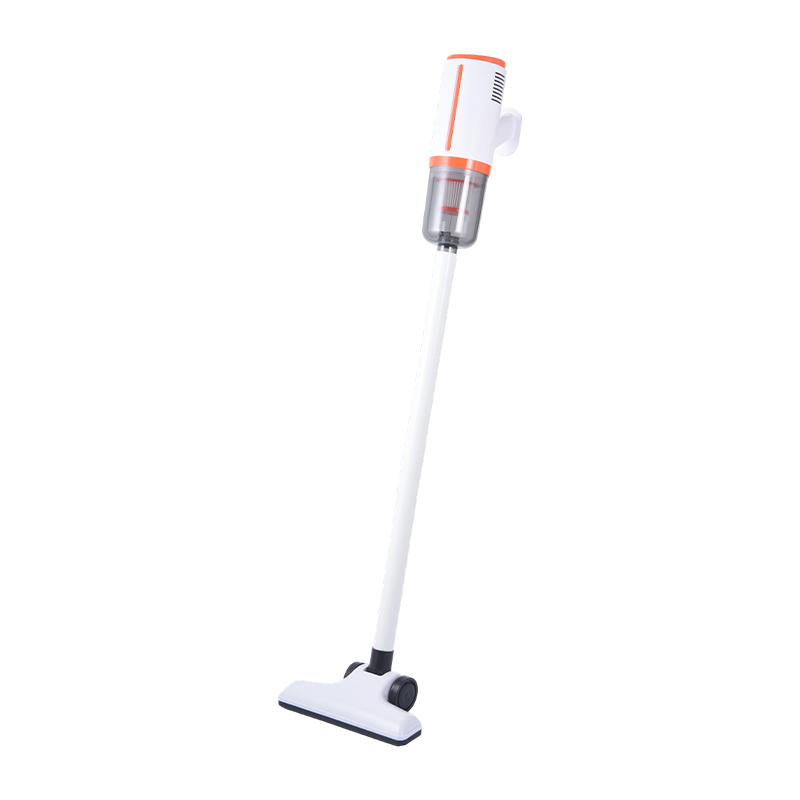
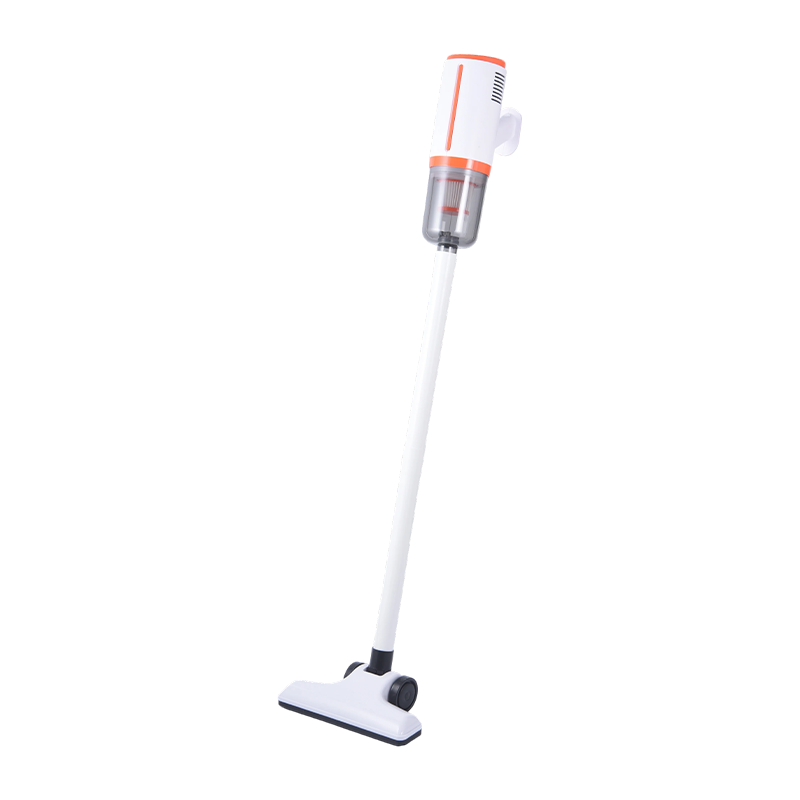
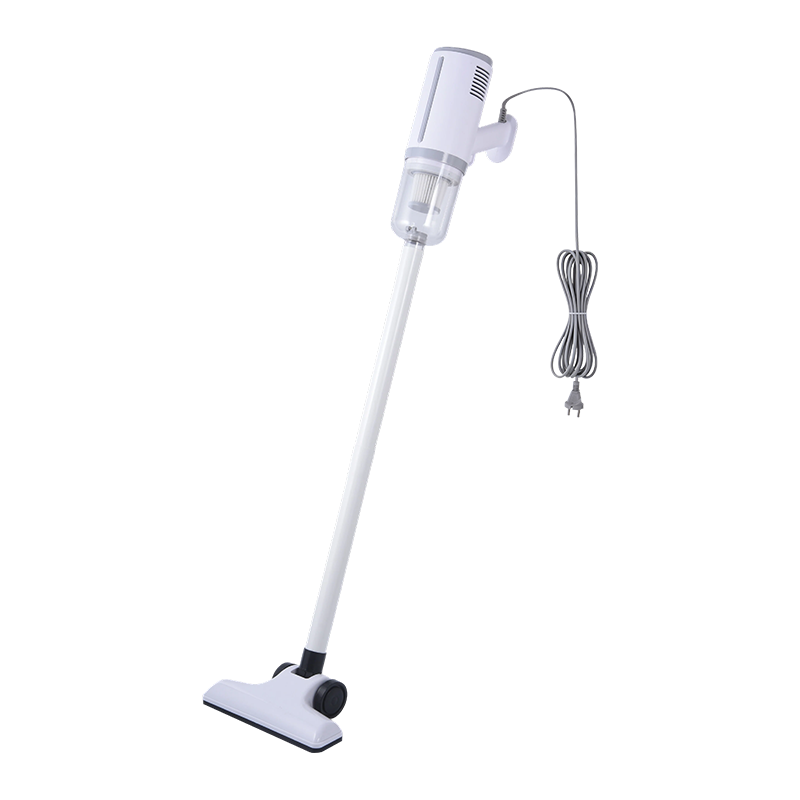
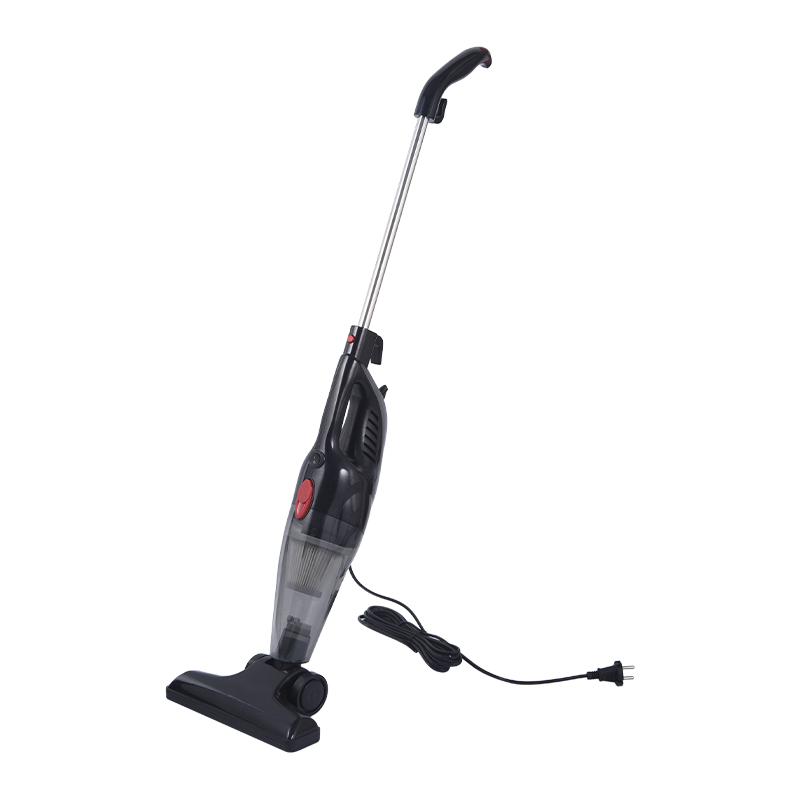
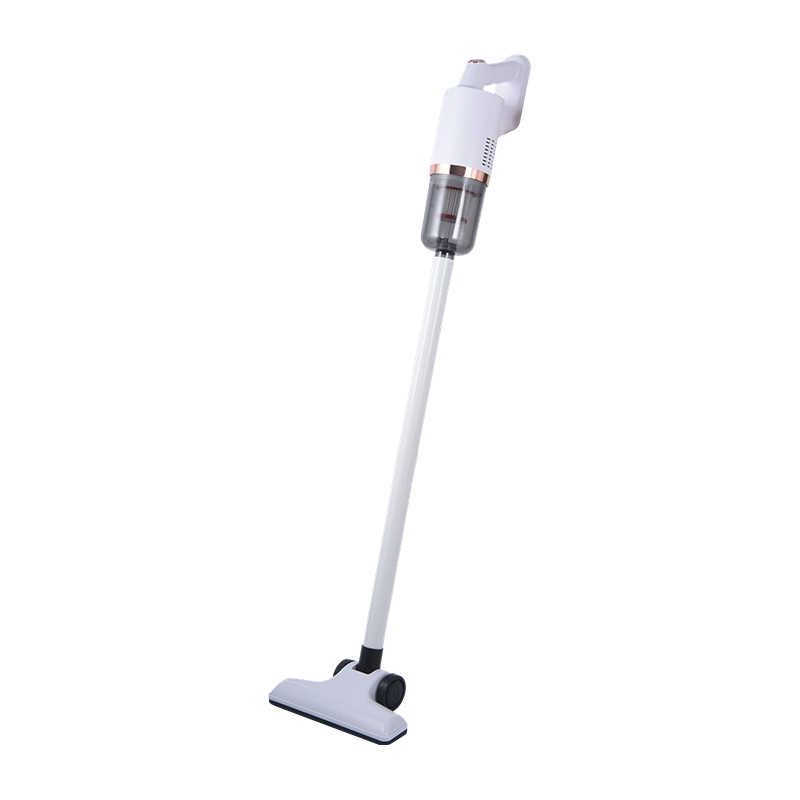
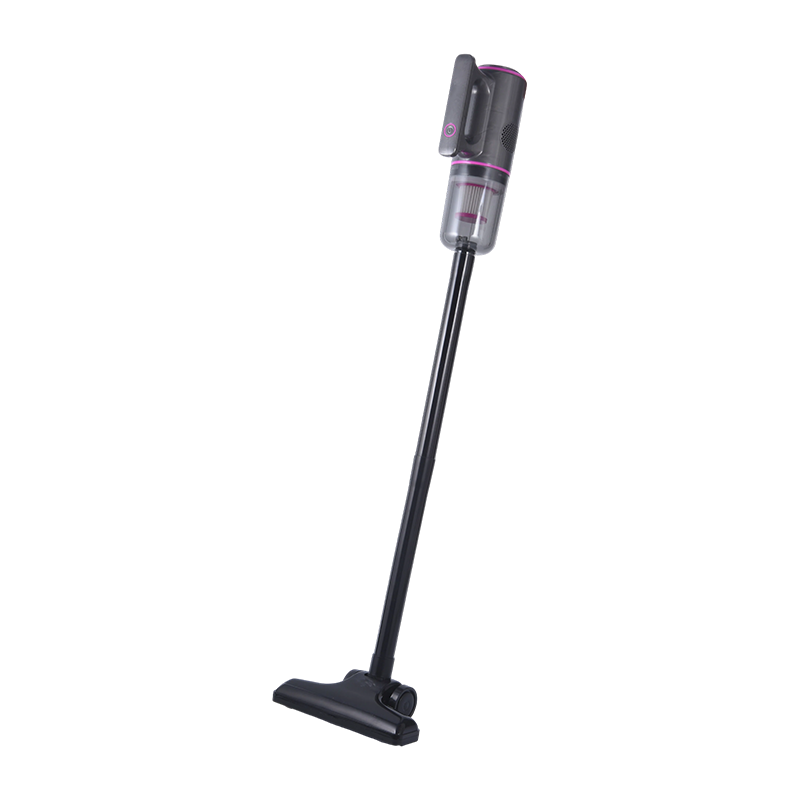
- Stick vacuum: long wand with a floor head; often cordless, sometimes corded; popular for daily quick floor cleaning.
- Upright vacuum: a self-standing machine with a rotating brush; common in carpet-dominant markets.
- Canister/barrel vacuum: a body with wheels and a separate hose; flexible for stairs, curtains, and hard-to-reach corners.
- Drum/dry-wet vacuum: industrial-strength container capable of sucking liquids and debris; widely used in workshops.
- Robot vacuum: autonomous device that navigates and maps rooms; often includes floor-mapping sensors.
- Car vacuum: low-voltage unit powered by a 12V or 24V socket; designed for in-vehicle cleaning.
- Mite remover: specialized hand-held unit with a UV lamp and vibrating brush for beds and sofas.
- Backpack vacuum: worn on the operator’s back; used by commercial cleaning staff for large areas.
Some category lists combine several of these types under “household vacuum cleaners.” Others separate them into distinct nodes. When the list is flat, the most important question is whether the machine uses a wand, a hose, a body that is moved manually, or an autonomous navigation system.
2. Power Source
The power source is the second key dimension because it changes motor design, battery regulations, and usage patterns. Common power-source categories include:
- Corded electric (AC): powered by mains electricity at 100-120V or 220-240V; rated input power usually 400W to 2,500W.
- Cordless battery (DC): powered by a rechargeable battery pack; nominal voltages typically 7.2V, 14.4V, 18V, 21.6V, or 28V.
- Car-powered (DC): powered through a 12V or 24V cigarette-lighter socket; no independent battery pack in most models.
- USB-rechargeable handheld: small vacuum cleaners that charge via USB-C or micro-USB, often with a built-in Li-ion cell.
- Hybrid power: machines that can run on both AC power and an internal battery; rare but present in specialty commercial models.
In customs classification, power source is not always visible in the HS subheading description, but it can influence the product's voltage declaration and battery certificate. In retail category lists, “cordless” is often placed as a separate attribute from the physical form. Therefore, a cordless stick vacuum appears under both “stick vacuum” and “cordless vacuum” if the category list uses faceted navigation.
3. Application and Intended Use
Application is the third dimension, and it directly affects compliance requirements and trade restrictions. Category lists may distinguish between:
- Household/domestic: for normal cleaning in homes, apartments, and small offices; usually the target for consumer products.
- Commercial/professional: for hotels, restaurants, schools, and janitorial services; often built with sturdier materials and longer runtime.
- Industrial: for factories, construction sites, and workshops; may have higher dust capacity, metal housings, and wet/dry capability.
- Automotive: for cars, trucks, and RVs; compact and low-voltage.
- Specialty: mite removal, pet hair removal, allergy control, or vacuum sealing attachments.
If a category list contains an “other” class for non-household types, the intended use must be supported by the product manual, marketing copy, or test standard. In some jurisdictions, an industrial vacuum may be subject to different motor efficiency rules or explosion-proof requirements.
4. Customs and Industry Codes
The fourth dimension is the formal coding system that governments and trade organizations use. The most common systems are:
- HS (Harmonized System) Code: internationally standardized customs code used in over 200 countries. Vacuum cleaners fall under HS heading 8508. The six-digit subheadings further separate by power, dust capacity, and other characteristics. For example, HS 8508.11 refers to vacuum cleaners with a power not exceeding 1,500 W and a dust bag or receptacle capacity not exceeding 20 liters.
- SIC (Standard Industrial Classification): the old US statistical code. Household vacuum cleaners belong to SIC 3633.
- NAICS (North American Industry Classification System): the current North American industry classification. Vacuum cleaner manufacturing is often mapped to NAICS 333412, which covers electrical appliance manufacturing including small appliances.
- Nice Classification for Trademarks: the international trademark classification system. Vacuum cleaners are protected under Class 7, which includes cleaning machines and their parts, including trash holders, hoses, and brushes.
- UNSPSC (United Nations Standard Products and Services Code): a product-centric system used in procurement and e-procurement, where vacuum cleaners appear under cleaning equipment sections with numeric codes.
These codes are not interchangeable. A business that reports SIC 3633 does not automatically have a correct HS code for a shipment. The customs code must be determined at the transaction level using the national tariff schedule of the destination country. For trademark applications, the Nice class is the only system that matters for legal protection.
How to Classify Vacuum Cleaners in a Given Category List Step by Step
Now that the dimensions are clear, we can apply them to an actual category list. The method below works whether the list is a customs tariff schedule, a trademark registry manual, a business code table, or an online retail taxonomy.
Step 1: Identify the Purpose of the List
Ask who created the list and what action is triggered by the classification. If you are filing an import declaration, the governing document is the HS tariff schedule of the importing country. If you are registering a trademark, the list is the Nice classification. If you are building an e-commerce category tree, the list is a commercial taxonomy. Each list has its own hierarchy, notes, and exclusions.
We can display the four typical list contexts side by side to make the difference clear. Use the horizontal cards below to compare them practically.
- Customs Tariff List
Used for import duty, export declaration, and trade compliance. Hierarchical HS codes with legal notes. - Trademark Nice Class List
Used for brand protection and registration. Class 7 covers vacuum cleaners and parts. - Industry Code Table
Used for statistics, licensing, and company registration. SIC/NAICS categories are based on production activity. - Retail Category Tree
Used for online catalogs and store shelves. Grouping is based on shopper intent and search behavior.
Step 2: Collect the Full Product Specification
A classification decision cannot be made from the product name alone. Prepare a specification sheet with the following minimum information:
- Model number and marketing name
- Physical type (handheld, stick, canister, upright, robot, car, mite remover, etc.)
- Power source and cord length, if any
- Motor input power in watts, or battery nominal voltage and capacity
- Dust receptacle type and capacity in liters
- Attachment list (hose, brush, crevice nozzle, etc.)
- Manufacturer’s declared intended use (household, commercial, industrial)
- Any integrated functions (UV light, water tank, mopping, HEPA filter)
- Certifications already obtained (CE, RoHS, GS, CCC, etc.)
For customs classification, the key attributes are usually power, capacity, and whether the machine is designed for household or industrial use. For trademark classification, the key attribute is simply that the product functions as a vacuum cleaner or cleaning machine. For retail classification, the key attribute is how consumers search for the product.
Step 3: Read the Category List’s Structure and Notes
Every category list follows a hierarchy. You need to read the section, heading, subheading, and any explanatory notes before deciding. HS tariff schedules contain legal notes and General Interpretative Rules that determine the correct code when two subheadings could apply. Nice classification has an alphabetical list of goods and explanatory notes for each class. Retail taxonomies often have parent-child relationships and synonyms.
In the HS system, the classification is based on the essential character of the article. A vacuum cleaner with an integrated floor-washing water tank may still be classified under HS 8508 if its essential character is dry vacuuming. But if the product is clearly a washing appliance with a secondary vacuuming function, it could fall under a different heading. Always consult the current national tariff schedule because some countries apply derogations or require additional customs codes.
Step 4: Match the Product Against Candidate Categories
Using the collected specifications, shortlist two or three candidate categories. Compare each category’s text with the product’s primary function and construction. For example, if the list contains “handheld vacuum,” “stick vacuum,” and “upright vacuum,” decide whether the handle is removable, whether it can stand on its own, and whether the main body is carried or pushed. These mechanical details are decisive.
In industrial code tables, if the business manufactures multiple product types, the classification may follow the primary economic activity. A manufacturer that produces both household vacuum cleaners and small appliances might be placed in the “household appliance manufacturing” sector rather than a specific vacuum cleaner code. The physical product may be classified under one code, while the company’s industry code is another.
Step 5: Verify with an Authoritative Source
When the financial or legal consequence of an error is high, obtain a binding answer. Custom authorities issue advance rulings that state the correct HS code for a described product. Trademark offices allow applicants to search official class descriptions and consult examiners in many jurisdictions. For e-commerce platforms, you can use the seller dashboard to inspect similar listings and their categories.
As a manufacturer and supplier, we also verify internal process codes because every part number must correspond to a production routing and a certification folder. The same product family can be sold under different category codes in different countries, so we maintain a cross-reference table for our wholesaler and distributor clients.
Step 6: Document the Rationale
Even after classification, record the reasons in writing. For customs, keep a product datasheet with the chosen HS code and supporting notes. For trademark, keep the description of goods and the class number. For retail, record the category path and any synonyms. This documentation helps future orders, avoids duplicate analysis, and protects you during audits or product disputes.
Sample Classification Framework for Vacuum Cleaners
To make the classification method practical, the table below summarizes how different category lists approach the same vacuum cleaner family. It is not an official legal table, but a working framework that a supplier can use to plan product development.
| Dimension | Main Categories | Distinguishing Criteria | Typical List Use |
|---|---|---|---|
| Product type | Handheld, stick, canister, upright, robot, car, mite remover, backpack | Body structure, handle, wheel, navigation system | Retail catalogs, e-commerce category trees, buyer specifications |
| Power source | Corded AC, cordless battery, car 12V/24V, USB rechargeable, hybrid | Mains plug, battery pack, voltage, charging port | Product datasheets, importer documentation, battery safety rules |
| Application | Household, commercial, industrial, automotive, specialty | Rated runtime, dust capacity, brush material, intended environment | Market registration, certification selection, warranty policies |
| Industry code | HS 8508, SIC 3633, NAICS 333412, Nice Class 7, UNSPSC | Legal system definitions, statistical classification, trademark scope | Customs clearance, tax filing, business registration, trademark filing |
The table shows that “the same” product can have several valid categories depending on the user and the list. A robot vacuum is a “robot vacuum” in a retail list, but in the HS system it is still a vacuum cleaner under HS 8508 if its principal function is dry suction. In the Nice Class list for trademarks, it is covered by the general term “vacuum cleaners” in Class 7. The category list you are given dictates which label is correct at that moment.
Common Mistakes When Classifying Vacuum Cleaners
After years of manufacturing and exporting, we see the same errors repeated by both buyers and even some freight forwarders. Avoiding these mistakes saves time, duty overpayment, and legal trouble.
- Using a retail category for customs: The term “stick vacuum” is not accepted by customs. The HS code must be selected from the national tariff schedule, not from Amazon’s browse tree.
- Copying the competitor's HS code: A competitor’s product may have different motor power or dust capacity. The HS subheading can change solely because the power exceeds 1,500 W or the capacity exceeds 20 liters.
- Ignoring the “parts” distinction: A vacuum cleaner hose, brush, or filter can fall under a different HS subheading than the complete vacuum cleaner. Some category lists separate complete machines from parts, and the trademark application may require separate descriptions.
- Assuming “household vacuum” covers all cordless models: If a battery-powered vacuum has workplace safety approvals, it may need to be declared as “industrial use” for customs or CE marking. The primary intended use should be stated in the user manual.
- Confusing vacuum cleaner with floor washing machine: A product that uses water spray and wet mopping as its main process, with suction only to collect dirty water, does not belong in the same subheading as a dry vacuum cleaner. Customs authorities assess essential character carefully.
- Not checking national amendments: HS codes are international at the six-digit level, but many customs administrations add national subheadings beyond six digits. A code valid in one country may be invalid in another.
- Ignoring batteries in transport classification: For air and sea freight, the lithium battery inside a cordless vacuum may need a separate dangerous goods declaration. This is not a “category list” in the tariff sense, but it is a classification list for shipping.
- Using one trademark class for all cleaning products: A trademark for vacuum cleaners must be filed in Class 7. If your brand also sells detergents or cleaning liquids, those may need separate registration in Class 3. Many applicants incorrectly file everything in one class and weaken their protection.
These mistakes occur because each list has its own legal consequences. The best mitigation is to create a classification matrix at the product-development stage. The engineering team, sales team, and compliance team should all agree on the target-market category before mass production.
Visual Overview: Product Mix and Classification Granularity
Before looking at the chart, it helps to understand how a vacuum cleaner manufacturer arranges its product portfolio. Our factory in Cixi, China, builds several series in different body styles and power systems. Every order requires a distinct category path. The chart below shows the approximate share of model types in a typical export-oriented product mix, based on common allocation among OEM/ODM requests from wholesalers and private-label buyers. This mix explains why a category list needs multiple subcategories under vacuum cleaners. The percentages illustrate the product diversity that any classification system must address.
The chart reflects a clear trend toward cordless and compact models in export markets. Cordless stick vacuums are the leading product type because they combine the reach of an upright with the convenience of a handheld device. Handheld compact vacuum cleaners hold the second position because they serve quick-cleaning needs in vehicles and homes. Corded canister models remain important in markets where battery cost is a concern and long runtime is mandatory. Car vacuums appear as a separate category because buyers often list them as a distinct SKU when sourcing from a manufacturer. Mite removers are becoming more common in Asian and European markets, especially after the pandemic increased awareness of household allergens. The small share of upright and robot models reflects the higher development cost and stricter mapping requirements for autonomous navigation. From a classification perspective, the chart shows why a flat list with only “vacuum cleaner” is insufficient. A wholesaler needs to identify the exact body style, power source, and intended use before sending an inquiry. Manufacturer product lines are similarly segmented because each type uses a different motor, mold, and assembly line. If your category list does not yet distinguish these types, there is a high probability that market analysis and pricing will be inaccurate. The recommended approach is to include at least six subcategories: cordless stick, handheld, corded canister, car vacuum, mite remover, and robot/upright. Therefore, the visual overview reinforces our earlier conclusion: classification is not a single answer but a well-structured decision process.
Frequently Asked Questions about Vacuum Cleaner Classification
Below are the questions that buyers, brand owners, and junior compliance staff ask most often when they need to classify vacuum cleaners in a given category list.
What is the correct HS code for a vacuum cleaner?The international HS code for vacuum cleaners is heading 8508. The full code will be six digits, such as 8508.11 or 8508.19, depending on power and dust capacity. National tariff schedules may add longer codes, so always confirm the code in the destination country’s customs tariff database. |
How do I classify a cordless vacuum cleaner if the category list only says “vacuum cleaner”?If the list has only a single “vacuum cleaner” line, you should still identify the cordless attribute in the product description, battery specification, and packaging. For customs, the HS code may be the same, but the battery affects dangerous goods rules. For retail, you should add a separate attribute or facet for “cordless” so customers can find the product. |
Does a robot vacuum fall under the same category as a traditional vacuum cleaner in a given category list?In most official lists, yes. A robot vacuum is still a vacuum cleaner because its primary function is suction-based floor cleaning. In HS 8508, it is classified under the vacuum cleaner heading. In retail category lists, it may also appear under “robot mops” if it has a mopping function, but the main category remains vacuum cleaner in global product classification. |
Which trademark class covers vacuum cleaner parts and accessories?In the Nice Classification, vacuum cleaners are covered in Class 7. This class includes cleaning machines and parts, such as trash holders, vacuum cleaner hoses, and brushes. If you sell a filter or a micro-textile bag separately, list it clearly in the class description so that the trademark protects the actual goods. |
Can the same vacuum cleaner have two different category codes for different purposes?Yes. For example, a household vacuum cleaner may have SIC 3633 for a US business license application, HS 8508 for customs clearance, and Class 7 for a trademark application. None of these codes are wrong if they are applied to the correct procedure. The danger is mixing them, such as sending an HS code to a trademark office. |
Do I need a separate category for a vacuum cleaner with HEPA filtration?Usually not. HEPA filtration is a technology feature, not a different product category. In a retail category tree, you can add an attribute or filter for “HEPA” to help allergy sufferers, but the product remains the same vacuum cleaner type under the list’s main hierarchy. In technical standards, HEPA may affect testing and certification but not the tariff heading. |
Manufacturer’s Advice for Buyers and Wholesalers
When you source vacuum cleaners from an OEM/ODM supplier, always ask for the classification-ready specification sheet. A reliable manufacturer should be able to give you the HS code candidates, the power and capacity figures, and the intended-use description in the product documentation. This data protects you from customs delays and helps you plan certifications.
If you are a wholesaler or distributor, create your own internal category tree based on the buyer’s language. Do not mix the product type with the commercial code. For example, you may sell a “cordless car vacuum” that is technically a handheld vacuum with a 12V adapter. In functional categories, place it under car vacuum. In customs declarations, use the handheld vacuum heading because its power and capacity fit that subheading.
Suppliers can also support classification by keeping a product matrix that maps every model to the following fields: model number, power type, motor power, dust capacity, product type, application, HS code candidates, SIC/NAICS sector, Nice class, and certification status. This matrix should be updated whenever the model changes. For long-term relationships, a buyer should request this matrix during the quotation stage instead of waiting until shipment.
Finally, do not treat classification as a one-time task. Tariff schedules, trademark class descriptions, and retail taxonomies are updated periodically. A product launched under one set of rules may need to be reclassified in later years. By building a habit of documentation, you keep your cleaning products visible and compliant across every channel.
Classifying a vacuum cleaner in a given category list is not about memorizing codes. It is a structured process that starts with the purpose of the list and ends with a documented, verifiable decision. Whether you are completing a customs declaration, filing a trademark, registering a business, or building an e-commerce catalog, the four dimensions of product type, power source, application, and formal codes will guide you to the correct category.
As a vacuum cleaner manufacturer and supplier, we apply this process on every export order. It keeps our wholesaler clients safe from duty discrepancies, helps private-label owners protect their brand, and allows our sales team to speak the same language as procurement managers in different countries. When you understand how to classify vacuum cleaners in the given category list, you turn an administrative chore into a strategic advantage.