 English
 Español
 عربى
Content
- 1 Start with the Right Type: A Vacuum Cleaner Buying Guide Overview
- 2 Suction Power Is a Combination, Not a Single Number
- 3 Filtration: Allergens and Fine Dust Should Not Escape
- 4 Battery Life and Runtime: Cordless Models Need Realistic Numbers
- 5 Accessories and Brush Design That Actually Matter
- 6 Matching the Vacuum to the Home Size, Flooring, and Purchasing Channel
- 7 Maintenance: Five Practices That Keep a Vacuum at Peak Performance
- 8 Frequently Asked Questions for Vacuum Cleaner Buying
- 8.1 Is a cordless vacuum as strong as a corded vacuum?
- 8.2 What is the ideal suction power (kPa) for home use?
- 8.3 Should I pay more for HEPA filtration?
- 8.4 How do I verify a vacuum supplier's engineering capacity before placing a large order?
- 8.5 Will a robot vacuum replace a stick vacuum in the future?
Imagine you are a purchasing manager for a regional wholesaler, and three different factories send you cordless vacuum samples with almost identical spec sheets. One machine picks up pet hair cleanly on the first pass, one leaves a thin dust film on hardwood, and the third stops halfway through a 120 square-metre apartment. The numbers do not explain the difference; the design does. After more than a decade of manufacturing vacuum cleaners and other small household appliances, we have seen where budget units fail and where premium engineering pays off. The conclusion from our experience is simple: a vacuum cleaner buying guide is only useful when it pushes you toward measurable tradeoffs, not vague claims. Instead of searching for the "best" vacuum with the highest price tag, define your floor types, cleaning routine, and business needs first, and then match the machine to those constraints.
Choose a vacuum cleaner based on airflow, filtration, brush design, and runtime — not on a single wattage figure.
Start with the Right Type: A Vacuum Cleaner Buying Guide Overview
Before comparing suction power or filter grades, decide which form factor fits the space you are cleaning. The table below summarizes the tradeoffs among the most common household configurations, which is the same classification we use when advising wholesale buyers on private-label lineups.
| Type | Best For | Strength | Limitation |
|---|---|---|---|
| Upright | Carpets and large homes | Strong suction, wide brush roll | Heavy, harder to maneuver under furniture |
| Canister | Hardwood, stairs, mixed floors | Lightweight wand and hose, low noise | Casing needs to be pulled along |
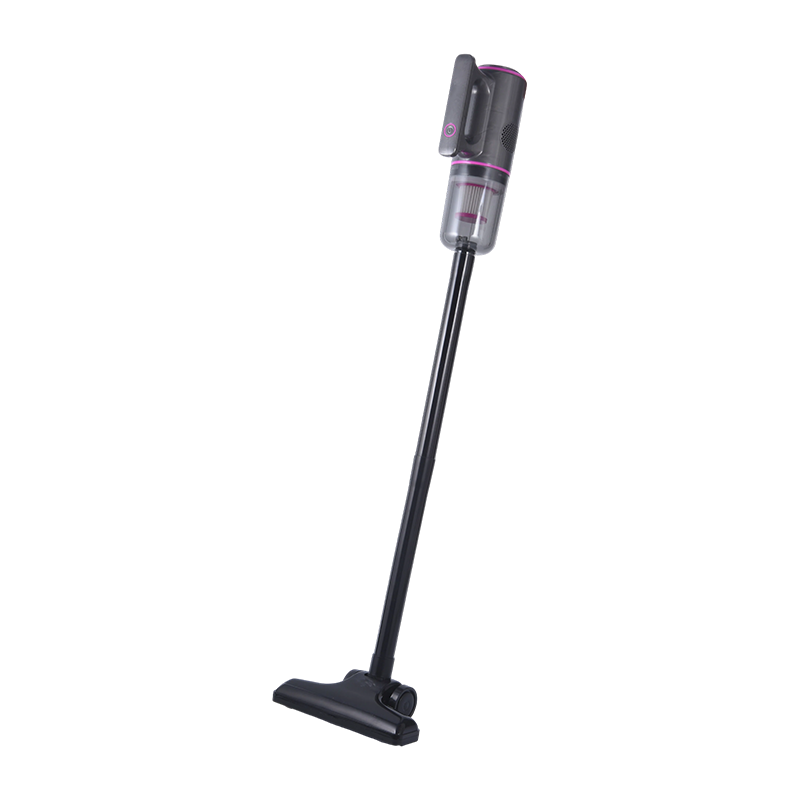
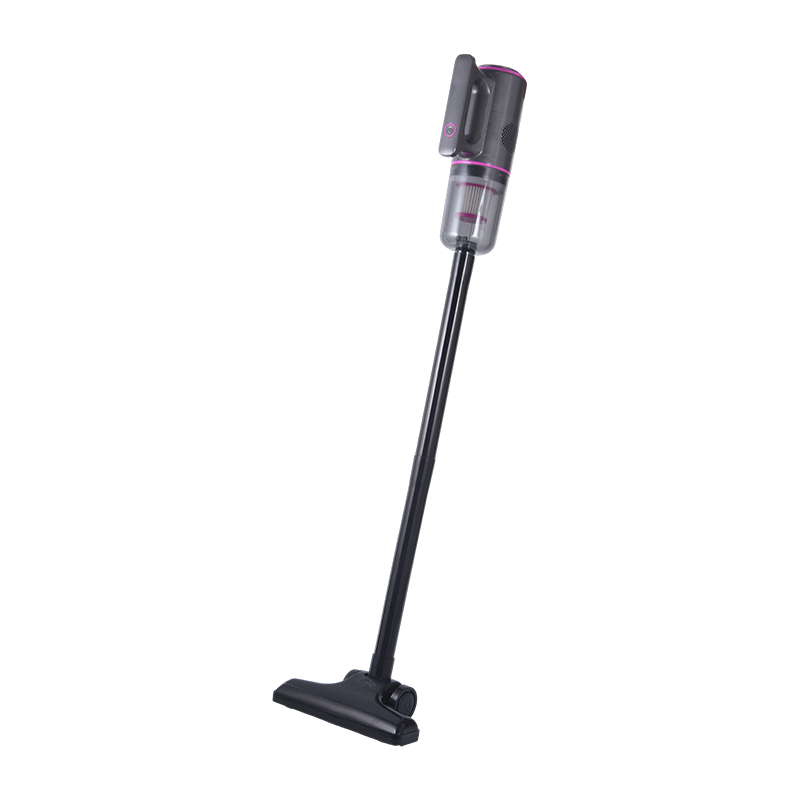
| Stick / cordless | Daily quick cleaning, hard floors | Light, easy to grab, zero cord management | Shorter runtime and lower raw suction |
| Handheld | Cars, crevices, small messes | Portable and compact | Small dust capacity, limited power |
| Robot | Automatic daily maintenance | Hands-free sweeping | Weak edge cleaning, requires clear floor |
| Wet-dry / commercial | Workshops and retail environments | Handles liquid and large debris | Bulkier and not designed for indoor living rooms |
For a typical home, a cordless stick vacuum with a removable battery covers most quick-cleaning needs. If you also have large carpets, a corded canister or upright gives stronger deep-cleaning performance for the same budget. Retail buyers should stock two complementary ranges — one corded for deep cleaning, one cordless for convenience — because consumer demand rarely settles on a single type.
The type of vacuum determines the whole design envelope; settle the type before you evaluate specs.
Suction Power Is a Combination, Not a Single Number
When you read "1200 W motor" or "25 kPa" on a box, you are only seeing part of the system. Airflow moving through a sealed path, a correctly shaped brush chamber, and a filter that does not clog too quickly are equally important. In our own production line, we see identical motor suppliers produce very different cleanability once we change the cyclone geometry or brush roll material. That is why buyers should focus on three measurable values: motor input wattage, suction pressure (kPa), and air flow rate (m3/min). To show how configuration changes real-world effectiveness, the chart below compares the typical cleaning efficiency we observe across common vacuum formats.
Corded upright and canister models typically deliver the strongest airflow and are the benchmark for deep carpet cleaning. Cordless stick vacuums have improved but still settle into a comfortable middle ground for mixed floors. A good canister model should combine at least 18-20 kPa and 1.8-2.2 m3/min at the nozzle when new. Handheld units are ideal for spot cleaning, though their small motors cannot handle full-house deep cleaning. Robot vacuums are excellent for daily maintenance, but their lower power makes them less effective on high-pile carpet. Notice the gap between cordless stick and corded models: that gap reflects less on motor wattage than on power management inside the battery-driven platform. When a supplier or retailer lists high motor power for a cordless unit, ask for the runtime under normal suction mode as well. For a private-label buyer, the practical takeaway is to test the actual pick-up performance on a reference carpet rather than trusting printed watts. You can easily measure it with a standard tuft-height carpet and a pre-weighed amount of sand. A good machine should pick up at least 80% of the debris in one pass. If you are sourcing in bulk, ask the manufacturer for airflow and pressure curves, not just the motor brand. These curves tell you how the vacuum behaves when the filter starts to load. A machine with a stable curve will maintain suction longer between cleanings, which is often more important than the peak number.
Compare airflow plus pressure, and always verify cleaning performance with a real carpet test, not just motor wattage.
Filtration: Allergens and Fine Dust Should Not Escape
The vacuum's job is not only to lift visible debris; it should also trap fine particles so they do not blow back into the room. A cheap machine can pass dust straight through the motor exhaust, which is dangerous for allergy sufferers and can even shorten motor life. This is where filtration quality becomes a purchasing benchmark.
Look for a multi-stage system: cyclone separation, a pre-motor filter, and a true HEPA H13 exhaust filter. In a sealed vacuum, the air leaving the machine should meet the HEPA standard of filtering at least 99.95% of particles at 0.3 microns. A simple "HEPA-like" label without an H13/H14 grade is not enough for medical use or premium retail positioning.
For B2B buyers, make sure to ask whether the HEPA filter is washable or replaceable and what the replacement cost is. Consumers often complain less about suction than about filter maintenance. A filter that needs expensive replacements every three months will hurt your brand's repeat-purchase rate. In our OEM experience, adding a washable reusable filter can boost perceived value without a large cost increase.
A sealed HEPA system is a non-negotiable feature for households with children, pets, or allergies.
Battery Life and Runtime: Cordless Models Need Realistic Numbers
Run time is the most misleading specification in cordless vacuums. Many manufacturers quote the lowest-power setting with no brush roll driven. A typical 0.4-0.7 kg lithium-ion pack delivers 20-30 minutes in medium mode and 8-12 minutes in max mode. If you know a consumer's home is larger than 80 square metres, recommend a model with a removable battery or a dual-battery system.
There are three practical criteria to use: nominal voltage (18 V-25 V is entry level, 25 V-35 V offers better sustained suction), cell quality (use reputable supplier cells, not no-name cells), and charging time. Also check whether a battery indicator exists, because voltage sag can make a machine feel weak long before it shuts off.
When we design cordless machines for private-label clients, we advise choosing one standard battery platform across all models. This reduces service parts stock for the wholesaler and makes consumers happier. Wholesalers and retailers should also note that lithium battery packs must comply with UN38.3 transportation tests; that compliance point is often overlooked by first-time importers.
Look beyond marketing runtime; check medium-suction runtime, battery removability, and lithium transport certifications.
Accessories and Brush Design That Actually Matter
Most vacuums share the same basic accessory list: crevice tool, dusting brush, and upholstery nozzle. But the brush roll decides how much deep dirt the machine removes, especially on carpet. We recommend paying extra attention to three types: a motorized turbo brush for pet hair, a soft roller for hardwood, and a flexible crevice nozzle for dashboard or baseboard gaps.
The table below matches accessories to the cleaning scenario, which is also a useful checklist for importers planning product bundles.
| Accessory | Best Application | Selection Point |
|---|---|---|
| Motorized pet brush | Carpet, fabric sofa, pet beds | Roller teeth must be easy to remove for hair tangles |
| Soft floor roller | Hardwood, laminate, tile | Soft bristle or felt strip prevents scratches |
| Wide upholstery tool | Curtains, car seats, mattress edges | Surface should be slightly curved to hug fabric |
| Crevice nozzle with LED | Under furniture, dark corners | Length at least 20 cm to reach deep gaps |
In our test lab, a good motorized pet brush can improve hair pick-up by 40-60% compared to a plain floor brush on carpet. That difference is enough to make or break a product review, especially in pet-owner households. For wholesalers, offering different brush sets as separate SKUs can increase average order value without redesigning the core machine.
Choose brush rolls and accessories according to the floor types you clean; don't rely on standardized kits alone.
Matching the Vacuum to the Home Size, Flooring, and Purchasing Channel
A vacuum that works for a 50 square-metre apartment might feel impossible to push through a 180 square-metre carpeted house. Consider the following decision matrix as a starting point:
Small homes / apartments
|
Large homes / multi-pet
|
For wholesale and private-label buyers, the decision goes further than home size. Check certifications that match your target market: CE/RoHS for Europe, GS for Germany, CB for international, and CCC for China domestic sales. Confirm the factory can do custom colors, packaging, and logos as one package. Since the factory we work with runs its own injection molding and assembly lines, sample lead times and small-batch customization tend to be more flexible than trading companies that outsource production.
Before placing a container order, ask the manufacturer about their production capacity, quality control process, and spare-parts policy. A reliable supplier should be able to provide test reports and a clear after-sales plan for motor or battery failures. These factors matter more than a few cents' difference in unit price, because returns and complaints will quickly eat the margin.
For importers, a compliant, customizable, and testable vacuum is worth more than a machine with a lower unit cost and no service support.
Maintenance: Five Practices That Keep a Vacuum at Peak Performance
- Empty the dust bin outside and tap it clean after every two or three uses; never wait until the cyclone is visibly packed.
- Wash the pre-motor filter every two to four weeks, depending on dust level, and let it dry fully before installing.
- Remove hair wrapped around the brush roll at least once a week during high season; most brush rolls can be unscrewed in a minute.
- Check the hose and nozzle for blockages monthly, especially in pet-owning households.
- Store the vacuum in a dry place to prevent battery degradation and plastic frame deformation.
These steps apply to nearly every home vacuum we produce, whether dry or cordless. In the long run, a small maintenance routine can prevent a common failure mode — weak suction — from appearing after three months. Retailers should include these tips in the user manual or on the box to reduce support tickets.
Most vacuum failures are not motor failures; they are filter blockages and brush-roll tangles that maintenance could have prevented.
Frequently Asked Questions for Vacuum Cleaner Buying
We have collected the questions buyers ask most often when selecting vacuum cleaners, both for household use and for wholesale orders.
Is a cordless vacuum as strong as a corded vacuum?In sheer suction pressure, a corded model still wins at the same price. A cordless stick can match corded performance on hard floors for routine cleaning, but high-pile carpets and heavy soiling require the steady power and longer runtime of a corded machine. |
What is the ideal suction power (kPa) for home use?For stick models, 16-22 kPa is generally enough for hard floors and low-pile carpets. For canister or upright models, look for at least 20 kPa at the suction opening when the filter is clean. Keep in mind that the true test is pick-up efficiency, not pressure alone. |
Should I pay more for HEPA filtration?If anyone in the home has allergies or asthma, yes. A sealed HEPA H13 or H14 system keeps fine allergens inside the machine. If there are no allergy concerns, a good multi-stage cyclone plus washable pre-filter may offer better value and lower running costs. |
How do I verify a vacuum supplier's engineering capacity before placing a large order?Ask for test data (airflow, pressure, dust re-emission, noise), audit reports such as ISO9001, compliance certificates such as CE or RoHS, and arrange a sample test on your own flooring. Confirm the factory has in-house injection molding and assembly so the specs are under its direct control. |
Will a robot vacuum replace a stick vacuum in the future?No, not immediately. Robot vacuums are good for daily maintenance, but they still struggle with edges, obstacles, and deep cleaning. Most households in our business insight use both types: a robot for automatic cleaning and a stick or canister for weekly deep sessions. |
Match the vacuum's suction, filter, and run time to your floor reality; no single configuration is best for every home.
A vacuum cleaner buying guide is only as useful as the criteria it gives you. Start with the type, then compare airflow and pressure, HEPA filtration, and battery runtime on realistic settings. Test the machine on the exact surfaces you need to clean, and check who you are buying from as much as what you are buying. For wholesalers and private-label brands, the partnership with a manufacturer that controls its own molds and production lines can make the difference between a smooth product launch and a costly batch of complaints.
If you are evaluating suppliers, remember that a robust spec sheet is good, but a clean one-pass pick-up test on a dusty carpet is worth a hundred printed figures.