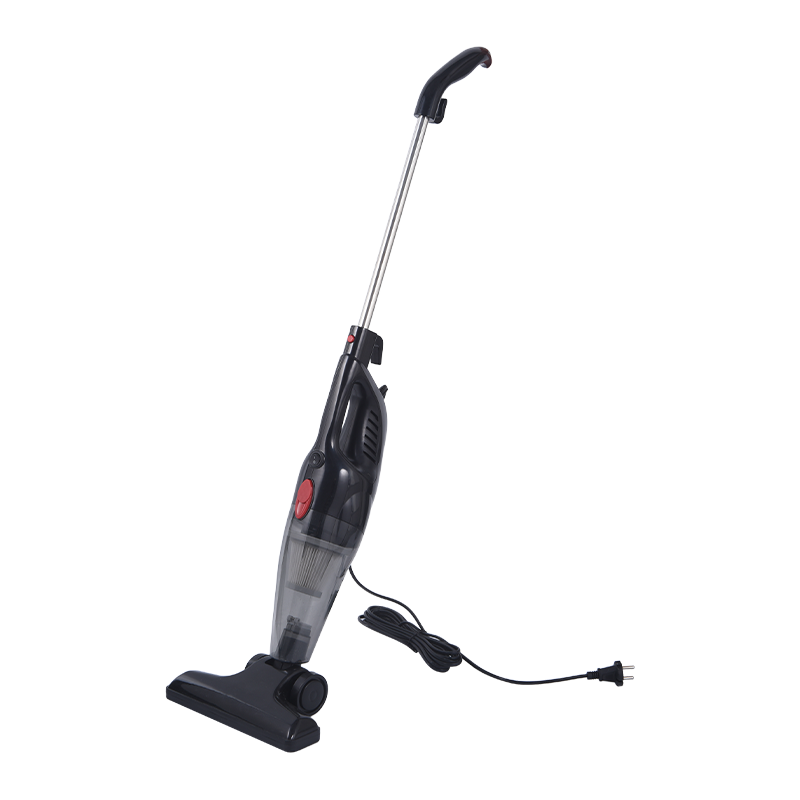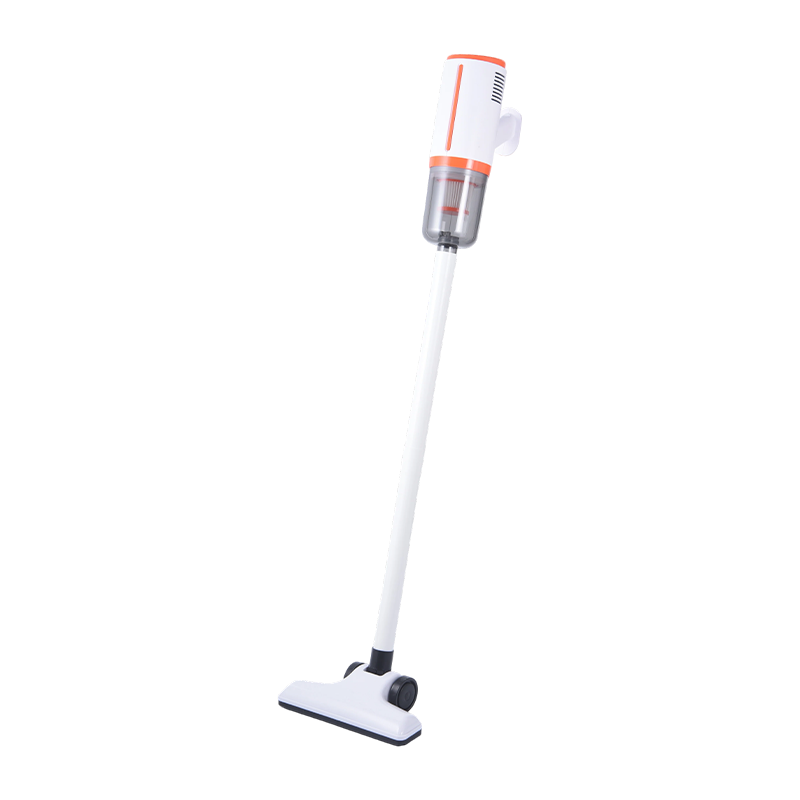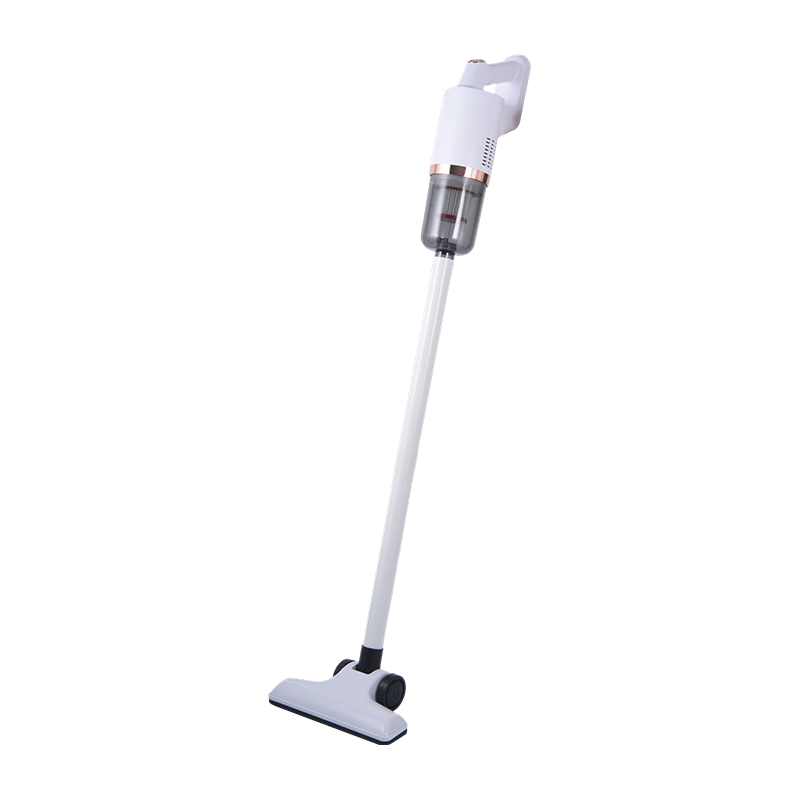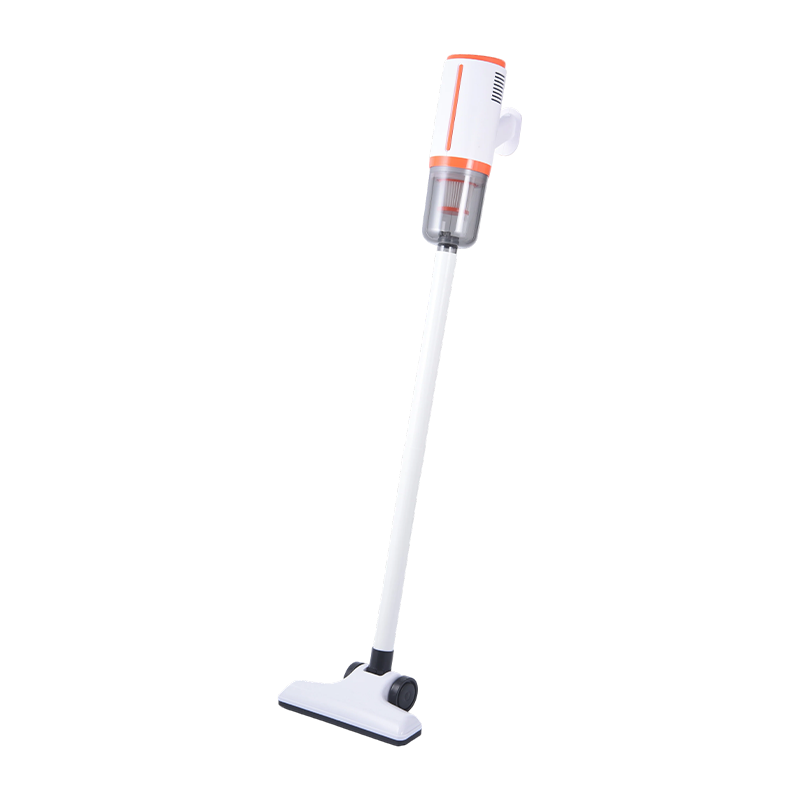
 English
 Español
 عربى
عربىContent
- 1 Upright Stick Vacuum Cleaner Manufacturer: Direct Answer for B2B Sourcing Teams
- 2 Common Types of Upright and Cordless Stick Vacuum Cleaners
- 3 Working Principle and Structural Design of Upright Stick Vacuum Cleaners
- 4 Application Scenarios and Selection Criteria for B2B Buyers
- 5 Detailed Comparison: Upright Corded, Cordless Stick, and 2-in-1 Convertible Vacuum Cleaners
- 6 Partnering with an Experienced Upright Stick Vacuum Cleaner Manufacturer
- 7 Maintenance and Care Guidance for Upright Stick Vacuum Cleaners
- 8 Frequently Asked Questions
- 8.1 What is the main difference between an upright vacuum cleaner and a stick vacuum cleaner?
- 8.2 How long does a cordless stick vacuum battery typically last per charge?
- 8.3 Can an upright stick vacuum cleaner be customized for private-label or OEM branding?
- 8.4 What filtration level should B2B buyers look for in a stick vacuum cleaner?
- 8.5 How do lead times and minimum order quantities typically work with a stick vacuum cleaner manufacturer?
Upright Stick Vacuum Cleaner Manufacturer: Direct Answer for B2B Sourcing Teams
For distributors, private-label brands, and wholesale buyers evaluating suppliers, the most dependable way to source an upright stick vacuum cleaner is to work with a manufacturer that controls injection molding, motor assembly, and battery-pack integration in-house rather than relying on scattered subcontracted workshops. This structure shortens lead times, keeps quality consistent across production runs, and gives OEM and ODM partners more flexibility to adjust suction settings, battery capacity, and accessory kits for different retail markets. The upright stick vacuum cleaner category sits at the intersection of two long-established product lines, traditional upright vacuum cleaners and lightweight cordless stick vacuum cleaners, and understanding how these two formats differ in structure and performance is the first step toward choosing the right manufacturing partner and the right product configuration.
Demand for this category has grown steadily as households and light-commercial users move away from bulky corded upright cleaners toward cord-free, multi-surface machines that store upright against a wall or in a compact charging dock. According to a market report by Fortune Business Insights, the global stick vacuum cleaner market was valued at approximately USD 4.23 billion in 2025 and is projected to reach roughly USD 7.53 billion by 2034, a compound annual growth rate of close to 6.7 percent over that period. This kind of steady, multi-year growth pattern matters to sourcing teams because it signals a category that rewards manufacturers who can scale production reliably, rather than one built around short-lived trends.
Market Growth Trajectory for Stick Vacuum Cleaners
Before comparing individual product types, it helps to see the broader demand curve that upright and stick vacuum cleaners are riding. Market growth affects how manufacturers plan tooling investment, raw material sourcing, and production capacity, which in turn shapes lead times and minimum order quantities for buyers. A market expanding at a mid-single-digit to high-single-digit compound annual rate typically supports steadier component pricing and fewer supply interruptions than a market experiencing sudden spikes. The chart below plots published market-size estimates for the global stick vacuum cleaner category across three reference years. Reviewing this trend before requesting samples or quotations gives buyers useful context for supplier capacity planning and production scheduling.
The chart shows the global stick vacuum cleaner market rising from an estimated USD 4.23 billion in 2025 to about USD 4.47 billion in 2026, according to Fortune Business Insights, before continuing on a longer upward path toward roughly USD 7.53 billion by 2034. This translates to a compound annual growth rate of close to 6.7 percent across the forecast window, which is a moderate but consistent pace rather than a boom-and-bust pattern. A steady growth curve like this generally reflects a mix of replacement-cycle demand and first-time adoption in markets where corded upright or canister vacuums are still common. For manufacturers, this kind of trend supports longer-term investment in tooling, motor research, and battery supply agreements, since demand is not expected to plateau sharply within the forecast period. For B2B buyers, a growing addressable market also leaves more room for differentiated private-label positioning, since the category is still expanding rather than fully saturated by a small number of dominant designs. Different market research firms sometimes publish differing absolute figures depending on how they define the stick vacuum category, so the values above are best read as directional estimates rather than fixed universal numbers. Even so, most published forecasts agree on the same underlying direction, with cordless and lightweight formats continuing to gain share relative to older corded upright designs. This directional agreement across independent research firms is generally a more useful signal than any single absolute figure. Buyers evaluating a new manufacturing partner can use this backdrop to ask suppliers about production scaling plans, battery cell sourcing arrangements, and whether current tooling capacity can support growing order volumes over a multi-year relationship. Suppliers who can speak concretely to these questions are typically better positioned for long-term OEM and ODM partnerships than those focused only on a single production run.
Global demand for upright and cordless stick vacuum cleaners has grown at a mid-to-high single-digit pace for several consecutive years, making production scalability and supply chain stability a key evaluation factor when selecting a manufacturing partner.
Common Types of Upright and Cordless Stick Vacuum Cleaners
The broader stick vacuum cleaner category is generally split into four recognizable formats, each with a different balance of power, weight, and runtime. Buyers sourcing for a specific retail channel or price tier usually start by narrowing down which of these formats fits their target customer before moving on to detailed specification discussions with a manufacturer.
Traditional Corded Upright
Fixed floor-standing motor unit, mains-powered, continuous runtime, generally higher suction consistency for large carpeted areas. Cordless Stick Vacuum
Slim body, lithium-ion battery pack, cord-free maneuverability, suited to daily quick cleanups and multi-room homes. 2-in-1 Convertible Stick
Detachable handheld unit separates from the floor wand, useful for stairs, upholstery, and car interiors. Lightweight Multi-Surface Stick
Motorized floor head tuned for mixed hardwood and carpet, typically the lightest overall product weight class.
| Type | Power Source | Typical Weight | Typical Runtime |
|---|---|---|---|
| Corded Upright | AC mains | 4.5 - 7 kg | Continuous |
| Cordless Stick | Li-ion battery | 1.5 - 3 kg | 30 - 55 minutes |
| 2-in-1 Convertible | Li-ion battery | 1.8 - 3.2 kg | 25 - 45 minutes |
| Lightweight Multi-Surface | Li-ion battery | 1.3 - 2.5 kg | 25 - 50 minutes |
Within the wider stick vacuum category, the split between cordless and corded formats has shifted noticeably over the past several years. This shift affects which product configuration a buyer should prioritize when planning a new product line or expanding an existing catalog. It also affects component sourcing, since cordless models depend heavily on stable battery cell supply while corded models depend more on motor and cable component supply. The donut chart below breaks down the projected 2026 market share between these two formats, based on a published industry estimate. This split is a useful starting reference point before narrowing down to a specific product configuration with a manufacturer.
Cordless stick vacuum cleaners - 68.5% projected share Corded stick vacuum cleaners - 31.5% projected share
According to a market report by Coherent Market Insights, cordless stick vacuum cleaners are projected to capture around 68.5 percent of the overall stick vacuum cleaner market in 2026, leaving corded formats with the remaining share. This gap has widened steadily as battery energy density has improved and charging times have shortened, making cordless models practical for whole-home cleaning rather than only quick touch-ups. For manufacturers, this shift means battery pack engineering, cell sourcing, and thermal management have become as important to product quality as motor design itself. For B2B buyers, it means that a catalog weighted heavily toward cordless stick vacuum cleaners is more likely to match current retail demand patterns than one built primarily around corded upright models. That said, corded upright vacuum cleaners still hold a meaningful share of the market, particularly in commercial cleaning, larger households, and price-sensitive segments where continuous runtime and lower unit cost matter more than cord-free convenience. Buyers targeting a broad multi-channel retail strategy often maintain a mixed catalog that includes both formats rather than committing entirely to one side of this split. It is also worth noting that some manufacturers offer convertible platforms that share components across corded and cordless variants, which can reduce tooling costs when a buyer wants to test both formats without commissioning two entirely separate product lines. Reviewing a supplier's existing product range for this kind of platform-sharing capability is a practical way to gauge engineering flexibility before committing to a larger order.
Cordless stick vacuum cleaners account for roughly two-thirds of the global stick vacuum cleaner market, which makes battery engineering and cell sourcing a central factor in supplier evaluation.
Working Principle and Structural Design of Upright Stick Vacuum Cleaners
An upright stick vacuum cleaner works by pulling air through a floor head and tube using a high-speed digital motor, separating debris from that airflow, and trapping fine particles before releasing filtered air back into the room. While the outer shape varies between corded upright and cordless stick formats, the core functional groups are broadly similar, which is why understanding the structure helps buyers ask more precise questions during supplier evaluation.
Air and Filtration System
|
Power and Drive System
|
Labeled Structural Diagram
This simplified structural diagram illustrates how the major functional groups connect in a typical cordless upright stick vacuum cleaner, from the motor housing at the top down to the motorized floor head. The layout follows the same general sequence in most designs, with air entering through the floor head, passing up through the tube, moving through cyclone separation and filtration, and exiting through vents near the motor housing. Understanding this flow helps buyers evaluate technical drawings or sample units more efficiently during factory audits, since each stage corresponds to a specific set of components that can be discussed individually with an engineering team, such as motor RPM ratings, filter media type, or battery cell configuration.
A clear understanding of the motor, filtration, and battery structure allows buyers to ask more specific technical questions during supplier evaluation rather than relying only on marketing specification sheets.
Application Scenarios and Selection Criteria for B2B Buyers
Choosing the right upright stick vacuum cleaner configuration starts with matching the product to its intended use case. A model built for daily light cleanups in a small apartment needs a different balance of weight, runtime, and dust capacity than one intended for households with pets or for light-commercial settings such as short-term rental properties.
Where These Machines Get Used
|
What Buyers Should Check First
|
| Scenario | Priority Spec | Suggested Weight Class |
|---|---|---|
| Small apartment daily use | Low weight, quick storage | Under 2 kg |
| Pet hair and allergen homes | HEPA-grade filtration | 2 - 3 kg |
| Mixed carpet and hard floor | Adjustable suction modes | 2 - 3 kg |
| Car and stair cleaning | Detachable handheld unit | 1.5 - 2.5 kg |
| Light-commercial spaces | Larger dust capacity, longer runtime | 2.5 - 3.5 kg |
Regional Distribution of Stick Vacuum Cleaner Demand
Selection criteria are not only about product specifications, they are also shaped by where a manufacturer's end markets are concentrated. Regional demand patterns influence which certifications, plug types, and voltage configurations a supplier is already familiar with, which can shorten qualification time for a new buyer. Understanding roughly how global unit sales are distributed across major regions also helps buyers benchmark their own target market against established demand centers. The chart below summarizes regional unit sales for stick vacuum cleaners based on a published industry estimate. This regional context is a useful reference point before finalizing a product specification with a manufacturing partner.
Based on data referenced in an industry market report, Asia-Pacific accounted for the largest share of stick vacuum cleaner unit sales at roughly 28 million units, followed by North America at around 25 million units and Europe at approximately 21 million units. This distribution reflects a combination of large population bases, rising disposable income in parts of Asia-Pacific, and long-established replacement-cycle demand in North America and Europe. For manufacturers based in Asia, proximity to the largest regional market can support shorter logistics chains and faster response times for regional retail partners, while exports to North America and Europe typically involve longer shipping lead times and additional compliance planning. Buyers targeting North America or Europe should factor these longer logistics windows into inventory planning, particularly around seasonal demand peaks. The relatively balanced three-way split across these regions also suggests that no single market dominates the category entirely, which supports manufacturers that maintain flexible export documentation and packaging options for multiple destinations rather than a single home market. It is worth noting that unit sales figures like these are typically rounded estimates drawn from customs and retail-panel data, so they should be treated as general proportional guidance rather than exact totals. For a buyer building a new product line, comparing a supplier's existing export markets against this regional breakdown is a practical way to judge whether that supplier already has relevant experience shipping to the buyer's target region. A manufacturer with an established track record across more than one of these regions is generally better prepared to handle multi-market packaging, labeling, and voltage variations than one focused on a single domestic market.
Demand for stick vacuum cleaners is fairly balanced across Asia-Pacific, North America, and Europe, so a manufacturer's existing export experience across these regions is a practical indicator of readiness for a new market launch.
Detailed Comparison: Upright Corded, Cordless Stick, and 2-in-1 Convertible Vacuum Cleaners
Once a buyer understands the general category landscape, the next step is a closer side-by-side comparison of the three most commonly requested formats. Each format carries distinct trade-offs across suction consistency, portability, maintenance, and how easily it can be customized for OEM or ODM programs.
| Attribute | Upright Corded | Cordless Stick | 2-in-1 Convertible |
|---|---|---|---|
| Power Source | AC mains cord | Li-ion battery pack | Li-ion battery pack |
| Suction Consistency | Stable, unaffected by charge level | Gradually decreases as battery drains | Gradually decreases as battery drains |
| Average Weight | 4.5 - 7 kg | 1.5 - 3 kg | 1.8 - 3.2 kg |
| Typical Runtime | Continuous while plugged in | 30 - 55 minutes per charge | 25 - 45 minutes per charge |
| Maintenance Needs | Bag or bin change, cord storage | Filter rinse, battery care | Filter rinse, dual-unit charging care |
| Storage Footprint | Larger, freestanding | Compact, wall-mountable | Compact, wall-mountable |
| OEM/ODM Customization | Housing color, bag or bagless system | Battery capacity tiers, accessory kits | Handheld attachment sets, dock design |
Comparative Performance Profile
Numbers on a specification sheet do not always convey how two product formats feel in practical use across different rooms and surfaces. A visual comparison across several performance dimensions at once can make trade-offs easier to communicate to a retail buyer or product team. The radar chart below presents a general performance profile comparing a typical corded upright vacuum cleaner against a typical cordless stick vacuum cleaner, based on common product specifications across the category rather than any single model. Each axis is scored on a relative scale rather than an absolute unit of measurement. This kind of comparison is intended to support conversations about product positioning rather than to represent a certified test result.
Upright Corded Cordless Stick
The radar comparison illustrates that corded upright vacuum cleaners tend to score higher on suction power and continuous runtime, since they are not limited by battery capacity and can run for as long as needed during a single cleaning session. Cordless stick vacuum cleaners, by contrast, tend to score higher on portability, maneuverability, and storage ease, reflecting their lighter overall weight and slimmer body design. Maintenance ease is fairly close between the two formats, though cordless models generally require somewhat more attention to battery care alongside routine filter cleaning. This kind of trade-off pattern is typical across most vacuum cleaner categories, where no single format maximizes every performance dimension simultaneously. For B2B buyers, this profile is useful when writing product descriptions or comparison content for end customers, since it helps set realistic expectations rather than positioning either format as universally superior. A retail buyer targeting renters and small-space households will often prioritize the portability and storage strengths of the cordless stick format, while a buyer targeting larger households or light-commercial cleaning may lean toward the continuous runtime strength of a corded upright design. Manufacturers that produce both formats, or a convertible platform that borrows components from each, can give buyers more flexibility to serve multiple customer segments from a single supplier relationship. When reviewing a radar-style comparison like this with a manufacturer, it is useful to ask which specific test conditions, if any, were used to establish suction and runtime figures for their own product line, since specification sheets can vary in how they define terms such as maximum suction mode or eco mode runtime. Clarifying these definitions early helps avoid mismatched expectations later in the sampling and certification process.
Neither format outperforms the other across every dimension, so matching product format to end-user habits is generally more effective than defaulting to a single configuration across an entire catalog.
Partnering with an Experienced Upright Stick Vacuum Cleaner Manufacturer
Beyond product specifications, the manufacturer behind an upright stick vacuum cleaner program has a direct effect on consistency, lead times, and how easily a design can evolve over multiple production cycles. Buyers evaluating a new supplier generally look for vertically integrated production, meaning the ability to produce plastic housings, assemble motors and battery packs, and complete final testing within the same facility rather than coordinating across several unrelated subcontractors.
Cixi Xiaochao Electrical Appliance Co., Ltd. is one example of a manufacturer built around this kind of integrated structure. The company is based in Cixi City, Zhejiang Province, a region widely recognized within China's household appliance industry as a long-established manufacturing base for small household appliances, and it has developed over more than two decades of operation across research and development, manufacturing, and sales. Its cleaning product range covers household vacuum cleaners, car vacuum cleaners, cordless stick and handheld vacuum cleaners, mite removers, and a number of multi-functional cleaning devices, alongside related small appliance categories such as table lamps, ultraviolet disinfection lamps, and mini fans. This kind of broad small-appliance manufacturing background is relevant to buyers who want a single supplier capable of supporting more than one product category within a private-label catalog.
On the production side, the company operates from an 18,000 square meter facility equipped with 28 injection molding machines and 8 production lines, supporting an independent, large-scale process from component molding through to finished-product assembly. This kind of in-house tooling and assembly capacity is generally what allows a manufacturer to offer flexible OEM and ODM cooperation, since design changes, housing colors, and accessory configurations can be adjusted without depending on multiple external subcontractors. The company's manufacturing processes are structured around recognized international quality management practices, and its products are exported to a range of overseas markets, including Europe, North America, Japan, South Korea, and Southeast Asia. Guided by a stated focus on innovation-driven development and cleaner everyday living, the company continues to refine its production processes and product range to serve global household appliance buyers, without positioning any single product as a universal solution for every use case.
A manufacturer that combines in-house molding, assembly, and a broad small-appliance product range is typically better equipped to support flexible OEM and ODM programs than one relying on scattered third-party subcontractors.
Maintenance and Care Guidance for Upright Stick Vacuum Cleaners
Routine maintenance has a direct effect on how long an upright stick vacuum cleaner maintains its original suction performance and battery runtime. Sharing clear maintenance guidance with end customers also tends to reduce warranty-related return volume, which is a practical consideration for any brand building a long-term product catalog.
- Empty the dust cup after every use, or once debris reaches the marked maximum fill line
- Rinse washable cyclone and HEPA filters regularly and allow them to dry fully before reinserting
- Remove hair and thread wrapped around the roller brush on a weekly basis for households with pets
- Check the tube and floor head for blockages if suction noticeably weakens during use
- Avoid leaving the battery pack fully depleted for extended periods to help preserve lithium-ion cell life
- Store the unit on a wall-mounted dock or upright stand away from direct heat and moisture
- Periodically inspect brush roll bearings and wheels for wear, particularly on hard flooring
| Component | Suggested Frequency |
|---|---|
| Dust cup | After each use |
| Washable filters | Every 2 - 4 weeks |
| Roller brush | Weekly for pet households |
| Battery pack check | Monthly |
Consistent filter and brush roll maintenance is generally the single most effective way to preserve suction performance and extend battery service life over the product's working lifespan.
Frequently Asked Questions
What is the main difference between an upright vacuum cleaner and a stick vacuum cleaner?An upright vacuum cleaner typically has a fixed, heavier motor unit mounted directly above the floor head and is often corded, while a stick vacuum cleaner has a slimmer body, is usually cordless, and often includes a detachable handheld section for stairs and upholstery. |
How long does a cordless stick vacuum battery typically last per charge?Runtime generally ranges from about 25 to 55 minutes depending on suction mode. Industry research indicates average cordless vacuum runtime has increased from roughly 28 minutes in 2018 to around 52 minutes in 2025 as lithium-ion battery technology has improved. |
Can an upright stick vacuum cleaner be customized for private-label or OEM branding?Yes, common customization areas include housing color and finish, accessory and attachment kits, battery capacity tiers, packaging design, and branded user manuals, depending on the manufacturer's existing tooling and product platform. |
What filtration level should B2B buyers look for in a stick vacuum cleaner?HEPA-grade filtration paired with a sealed dust system is increasingly common in this category. One industry report noted that around 39 percent of new cordless stick vacuum launches in 2024 featured HEPA filtration and sealed dust containers, reflecting rising buyer expectations around allergen control. |
How do lead times and minimum order quantities typically work with a stick vacuum cleaner manufacturer?Lead times and minimum order quantities vary by manufacturer and depend on factors such as whether new tooling is required, current production line capacity, and the level of customization requested. Buyers should discuss these details directly with a manufacturing partner early in the sourcing process. |