 English
 Español
 عربى
عربىWhat Makes A Household Handheld Stick Vacuum Cleaner Practical For Everyday Home Cleaning
A household handheld stick vacuum cleaner is practical for everyday cleaning because it combines two cleaning modes in one lightweight unit, letting a single device handle both whole floor cleaning and detailed spot cleaning without switching tools. In stick mode, the unit efficiently cleans hardwood floors, tiles, and short pile carpets throughout the house, while detaching the stick section converts the same unit into a compact handheld vacuum cleaner suited to sofas, mattresses, curtains, car interiors, and high corners. This two in one approach is central to how an upright stick vacuum cleaner manufacturer designs a multi function stick vacuum, since the same motor and filtration system supports both use cases through a simple mechanical disassembly step. Most current designs pair a brushless motor with cyclone separation and HEPA filtration, which helps trap fine dust and pet dander while keeping the body lightweight enough for extended one handed use. The sections below look at how the stick and handheld modes work together, what the attachment system offers, and how filtration and ergonomics support daily use across different household types.
How Stick Mode And Handheld Mode Work Together In A Two In One Design
The core idea behind a two in one upright stick vacuum cleaner is that the main motor and dust collection unit remain the same regardless of mode, with only the extension tube and floor nozzle being added or removed to switch between stick and handheld configurations. In stick mode, the extended body and floor nozzle allow a user to clean large areas while standing upright, which is generally more comfortable for covering hardwood floors, tiles, and shorter pile carpets across multiple rooms. Detaching the stick section exposes the compact handheld body, which retains the same suction source but becomes easier to angle into tight spaces such as sofa crevices, stair corners, or vehicle footwells. Because both modes share the same brushless motor and filtration system, switching between stick and handheld operation does not require recharging separately or carrying two different devices, which is a key convenience factor for a household handheld stick vacuum cleaner. This shared architecture is also why many manufacturers describe this format as a multi function stick vacuum rather than treating the stick and handheld versions as separate products.
Typical Steps To Switch Between Modes
- Release the stick tube locking mechanism at the base of the handheld body.
- Remove the extension tube and floor nozzle assembly.
- Attach a specialized tool, such as a crevice tool, mattress brush, or soft brush, directly to the handheld body.
- Use the compact handheld configuration for targeted cleaning tasks.
- Reattach the stick tube and floor nozzle to return to upright floor cleaning mode.
Comparing Stick Mode And Handheld Mode Across Common Cleaning Tasks
Stick mode and handheld mode on the same upright stick vacuum cleaner are generally suited to different surfaces and cleaning tasks, which is why a multi function stick vacuum is often marketed as covering both whole home floor cleaning and detailed spot cleaning within one product. Stick mode is generally the more efficient choice for larger, open floor areas such as hardwood floors, tiles, and short pile carpets, where the extended reach and upright posture reduce the physical effort required to cover a room. Handheld mode becomes more practical for surfaces that stick mode cannot easily reach or clean effectively, including upholstery, mattress seams, curtains, stair corners, and vehicle interiors, particularly when paired with a crevice tool or soft brush attachment. Households with pets or young children often rely more heavily on handheld mode, since pet hair on furniture and dust mites in bedding are generally better addressed with a dedicated mattress brush or soft brush attachment than with the floor nozzle alone. The table below summarizes general task suitability across both modes.
| Cleaning Task | Recommended Mode | Common Attachment |
|---|---|---|
| Hardwood floors and tiles | Stick Mode | Floor nozzle |
| Short pile carpet | Stick Mode | Floor nozzle |
| Sofa crevices and upholstery | Handheld Mode | Crevice tool |
| Mattress dust mites | Handheld Mode | Mattress brush |
| Curtains and car interiors | Handheld Mode | Soft brush |
Brushless Motor Cyclone Separation And HEPA Filtration Working Together
A brushless motor is generally more efficient than a brushed equivalent, converting a larger share of electrical energy into suction airflow while producing less internal friction and heat during extended operation. Cyclone separation works alongside the motor by spinning incoming air at high speed, which throws larger dust and debris particles outward against the dust cup wall before the air reaches the filter stage. HEPA filtration then addresses the finer particles that pass through cyclone separation, capturing very small dust and pet dander particles before exhaust air is released back into the room. This combination of a brushless motor, cyclone separation, and HEPA filtration is specifically intended to reduce secondary pollution, where dust captured during cleaning would otherwise be released back into the air rather than staying contained within the unit. The chart below presents an illustrative comparison of relative filtration effectiveness across different filter stage combinations.
This bar chart presents an illustrative comparison of relative fine dust capture across three general filter stage combinations rather than a certified laboratory test result for a specific product. A basic filter alone generally captures the least fine dust in this illustration, since it relies solely on filter media without the benefit of an upstream cyclone separation stage to remove larger particles first. Adding cyclone separation ahead of a standard filter improves relative performance, since larger debris is removed before reaching the filter, which also helps the filter maintain airflow for longer between cleanings. The combination of cyclone separation with HEPA filtration generally achieves the highest relative fine dust capture in this illustration, consistent with HEPA media being designed specifically to trap very small particles that would otherwise pass through a standard filter. Readers should note that actual filtration performance depends on the specific filter media, maintenance schedule, and unit design, so this chart should be read as a general orientation rather than a certified test result for any single product.
Weight And Ergonomics During Extended Cleaning Sessions
A lightweight body is one of the more important practical factors in a household handheld stick vacuum cleaner, since extended use in stick mode generally requires holding and maneuvering the unit with one or two hands for the full duration of a cleaning session. Ergonomic design elements, such as a balanced center of gravity and a comfortably shaped handle grip, help reduce wrist and arm fatigue during longer sessions compared with a heavier or less balanced unit. Because the same motor and battery or cord assembly is shared between stick and handheld modes, manufacturers generally aim to keep the overall body weight low across the entire product rather than only optimizing one mode at the expense of the other. A lighter unit with good weight distribution is generally easier to use comfortably for both whole home stick mode cleaning and more precise handheld tasks such as reaching high corners or cleaning car interiors. The chart below presents an illustrative relationship between unit weight and reported comfort during extended use.
This area chart shows a general upward trend in relative comfort as unit weight decreases from a heavier baseline toward a lighter design, based on general ergonomic principles rather than a specific measured study. Heavier units toward the left of the chart generally require more sustained arm and wrist effort during extended stick mode cleaning, which can lead to earlier fatigue during longer sessions. As relative weight decreases moving right along the chart, comfort tends to improve, consistent with less physical strain being required to hold and maneuver the unit over the same cleaning duration. This general pattern is one reason a lightweight body and ergonomic handle design are commonly highlighted features in a household handheld stick vacuum cleaner intended for daily use across an entire home. Comfort also depends on handle shape and weight distribution, not weight alone, so this chart should be read as a general tendency rather than a precise measurement for any specific model.
Wall Mounted Storage And Everyday Household Suitability
Many household handheld stick vacuum cleaners are designed with a corded wall mounted storage option, allowing the unit to be kept upright against a wall between uses rather than stored flat in a closet or cupboard. This storage approach saves floor space in smaller homes and keeps the unit visible and accessible, which can encourage more frequent quick cleaning sessions rather than the unit being left in storage. Because the design already supports both stick and handheld modes with a shared motor and filtration system, the wall mounted storage bracket typically accommodates the assembled stick configuration while still allowing quick detachment into handheld mode when needed. This combination of two in one functionality and convenient wall mounted storage is a common reason an upright stick vacuum cleaner manufacturer positions this format as a highly adaptable choice for ordinary households, pet owning families, and families with children. The donut chart below presents an illustrative breakdown of common household types that rely on this type of multi function stick vacuum.
This donut chart presents an illustrative breakdown of the general household types that commonly rely on a household handheld stick vacuum cleaner, based on typical usage patterns rather than a single verified survey. Ordinary households make up the largest illustrative share, reflecting the general everyday utility of a two in one stick and handheld design for routine floor and surface cleaning. Pet owning families represent a substantial share as well, consistent with the added value of HEPA filtration and dedicated attachments for capturing pet hair and dander from furniture and floors. Families with children make up a smaller but still meaningful portion, often relying on the mattress brush and soft brush attachments to manage dust and allergens in bedrooms and play areas. Across all three household types, the shared motor, filtration system, and attachment set are what allow a single multi function stick vacuum to address several different cleaning priorities within the same home. As with earlier charts, these proportions are illustrative and intended to describe general usage tendencies rather than a precise market statistic.
Product Reference A Household Handheld Stick Vacuum Cleaner Model
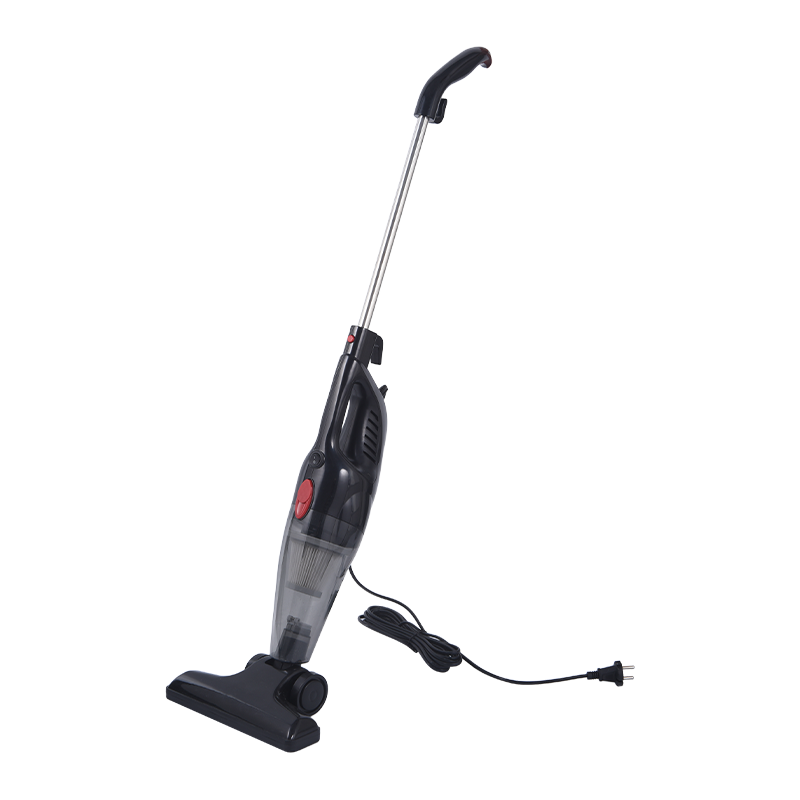
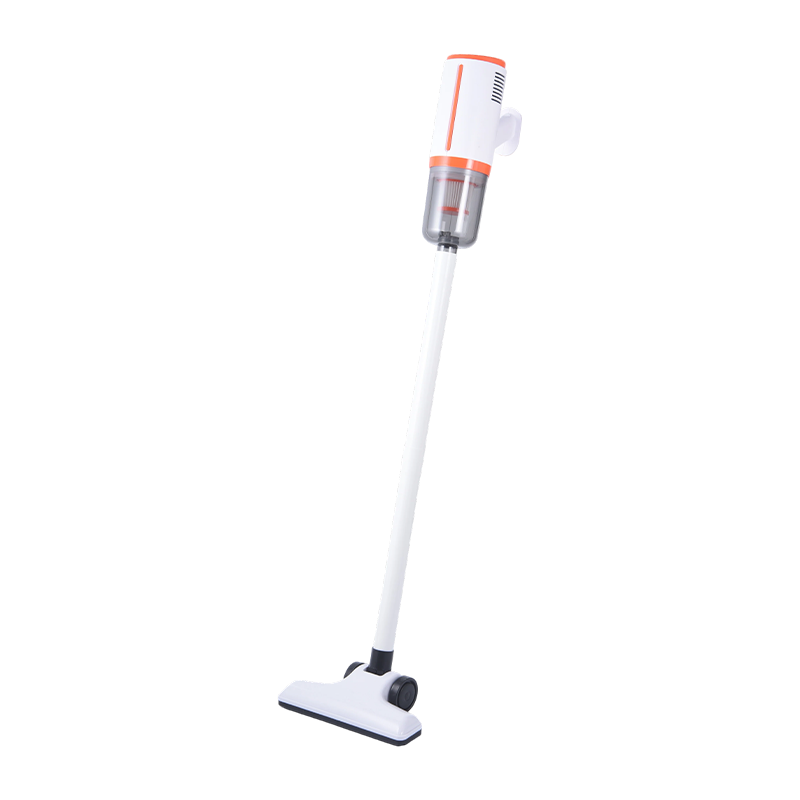
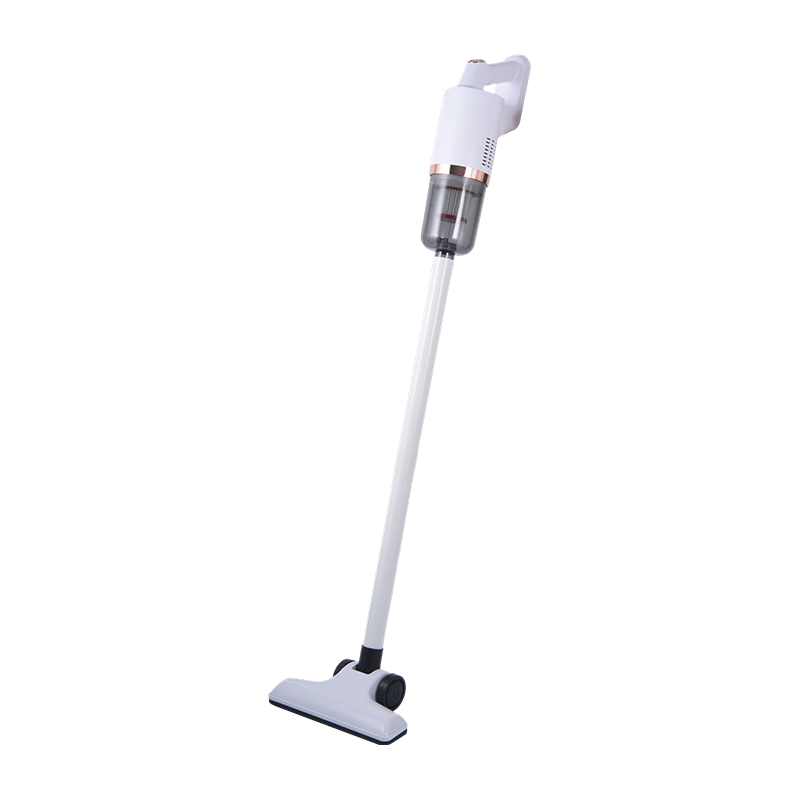
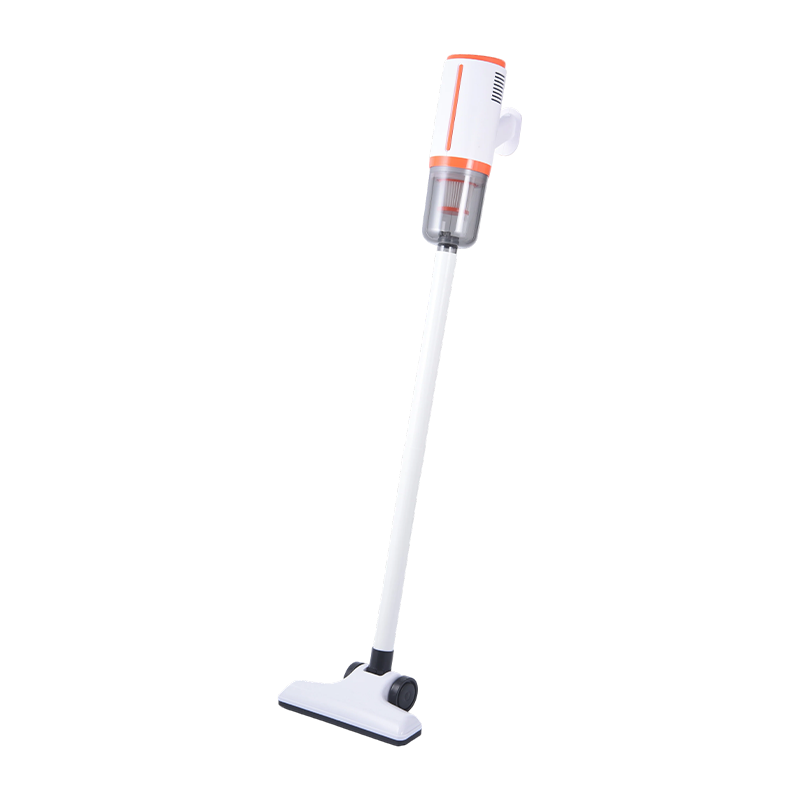
The image below shows a representative household handheld stick vacuum cleaner model, identified as XC-V01, illustrating the general two in one design described throughout this article. The unit combines an upright stick body with a floor nozzle for whole home floor cleaning, while the corded design supports convenient wall mounted storage between cleaning sessions. This type of model is commonly featured within a broader upright stick vacuum cleaner manufacturer product catalog as an example of how the stick and handheld modes are integrated into a single, practical household cleaning tool. The transparent dust cup visible on the unit allows users to monitor fill level without disassembling the device, which is a common design feature intended to simplify routine maintenance and emptying.
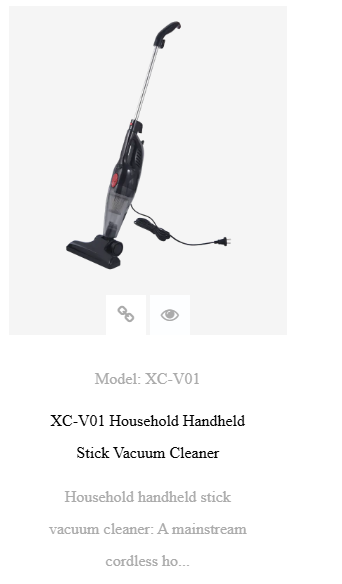
As shown, the XC-V01 model presents a slim stick body with an angled handle grip, a transparent dust cup positioned along the main body, and a floor nozzle attached at the base for direct floor contact. The corded power connection visible near the base is consistent with the wall mounted storage approach described earlier in this article, allowing the unit to remain plugged in and ready between uses. This model reflects the general household handheld stick vacuum cleaner category discussed throughout this article, combining stick mode floor cleaning with the option to detach into a more compact handheld configuration for targeted cleaning tasks.
Isometric Structure View Of A Two In One Stick And Handheld Vacuum Cleaner
The isometric diagram below outlines the general structure of a two in one upright stick vacuum cleaner, showing the detachable stick tube and floor nozzle on one side and the compact handheld body with motor and dust cup on the other. The handheld body section contains the brushless motor, dust cup, and filtration stage, which remain the same regardless of whether the unit is used in stick or handheld mode. The detachable stick tube extends the reach of the unit for upright floor cleaning, connecting to the floor nozzle at the base for contact with hardwood floors, tiles, and short pile carpets. Removing the stick tube exposes the handheld body directly, allowing a crevice tool, mattress brush, or soft brush to be attached in its place for detailed spot cleaning tasks. Viewing the unit in this simplified three dimensional form helps clarify how the shared motor and filtration section supports two distinct cleaning configurations within the same household handheld stick vacuum cleaner.
This isometric SVG illustration is a simplified representation intended to communicate function rather than to serve as a manufacturing drawing. The blue toned section on the left represents the handheld body, containing the motor housing and dust cup that remain constant across both stick and handheld modes. The red toned section on the right represents the detachable stick tube, shown separated with a dashed line to indicate how it connects to and disconnects from the main body. The dark component at the base of the stick tube represents the floor nozzle used for direct contact with hardwood floors and carpets during stick mode cleaning. Actual product dimensions, attachment mechanisms, and component layouts should always be confirmed against the current specification sheet for the specific household handheld stick vacuum cleaner model being referenced.
About Cixi Xiaochao Electrical Appliance Co Ltd
Cixi Xiaochao Electrical Appliance Co., Ltd., rooted in Cixi City, Zhejiang Province, known as the capital of small household appliances in China, is a comprehensive household appliance manufacturer with over two decades of development history, integrating research and development, manufacturing, and sales. The company operates as a China home cleaning appliance supplier and an OEM and ODM rechargeable handheld vacuum cleaner factory, functioning as an upright stick vacuum cleaner manufacturer focused on providing efficient, convenient, and intelligent cleaning solutions and small household appliances for users around the world. The company's cleaning product line covers household vacuum cleaners, car vacuum cleaners, cordless vacuum cleaners, mite removers, and various multi function stick vacuum and handheld vacuum cleaner devices, with the product range also extending to table lamps, ultraviolet disinfection lamps, mini fans, and other small household appliances. The company covers an area of 18,000 square meters, equipped with 28 types of injection molding machines and 8 modern production lines, supporting independent, large scale production from components through finished products, along with professional OEM and ODM cooperation capabilities for flexible one stop production solutions. Having passed ISO9001 quality management system certification and product certifications including GS, CE, ROHS, CB, EMC, LVD, ERP, and CCC, the company exports its products to markets including Europe, America, Japan, South Korea, and Southeast Asia, guided by a mission the company describes as innovation driven and focused on a cleaner future.
Frequently Asked Questions
Q1: What is the difference between stick mode and handheld mode on this type of vacuum cleaner.
A1: Stick mode uses an extended tube and floor nozzle for whole home floor cleaning, while handheld mode detaches the stick tube to expose a compact body suited to upholstery, mattresses, and other detailed spot cleaning tasks.
Q2: What does a brushless motor add compared with a standard motor.
A2: A brushless motor generally offers improved energy efficiency and produces less internal friction during extended operation compared with a brushed motor of similar output.
Q3: How does cyclone separation work alongside HEPA filtration.
A3: Cyclone separation removes larger debris from the airflow before it reaches the filter, while HEPA filtration then captures the finer dust particles that remain, together reducing how much dust is released back into the room.
Q4: Is this type of vacuum cleaner suitable for households with pets.
A4: Yes, the combination of HEPA filtration and attachments such as a soft brush is generally well suited to capturing pet hair and dander from furniture and floors.
Q5: Can the unit be stored without taking up floor space.
A5: Many models support corded wall mounted storage, allowing the assembled unit to be kept upright against a wall between cleaning sessions rather than stored flat on the floor.
Q6: What attachments are commonly included with a multi function stick vacuum.
A6: Common attachments include a crevice tool for narrow gaps, a mattress brush for bedding, and a soft brush for delicate surfaces such as curtains and car interiors.