 English
 Español
 عربى
عربىContent
- 1 What Makes a Handheld Vacuum Cleaner the Right Choice for Quick Cleaning
- 2 Common Types of Handheld Vacuum Cleaners and Their Features
- 3 Working Principle and Internal Structure
- 4 Application Scenarios and Selection Points
- 5 Detailed Comparison: Cordless vs Corded Handheld Vacuum Cleaners
- 6 How Battery Capacity Relates to Cleaning Coverage
- 7 Filter Maintenance and Suction Performance
- 8 Maintenance Guidance for Longer Product Life
- 9 Working with a Handheld Vacuum Cleaner Manufacturer and OEM/ODM Partner
- 10 Frequently Asked Questions
- 10.1 Q1. What is the main difference between a handheld vacuum cleaner and a stick vacuum?
- 10.2 Q2. How often should the filter in a handheld vacuum cleaner be cleaned?
- 10.3 Q3. Is a cordless handheld vacuum cleaner suitable for cleaning a car interior?
- 10.4 Q4. Can a manufacturer support OEM or ODM customization for handheld vacuum cleaners?
What Makes a Handheld Vacuum Cleaner the Right Choice for Quick Cleaning
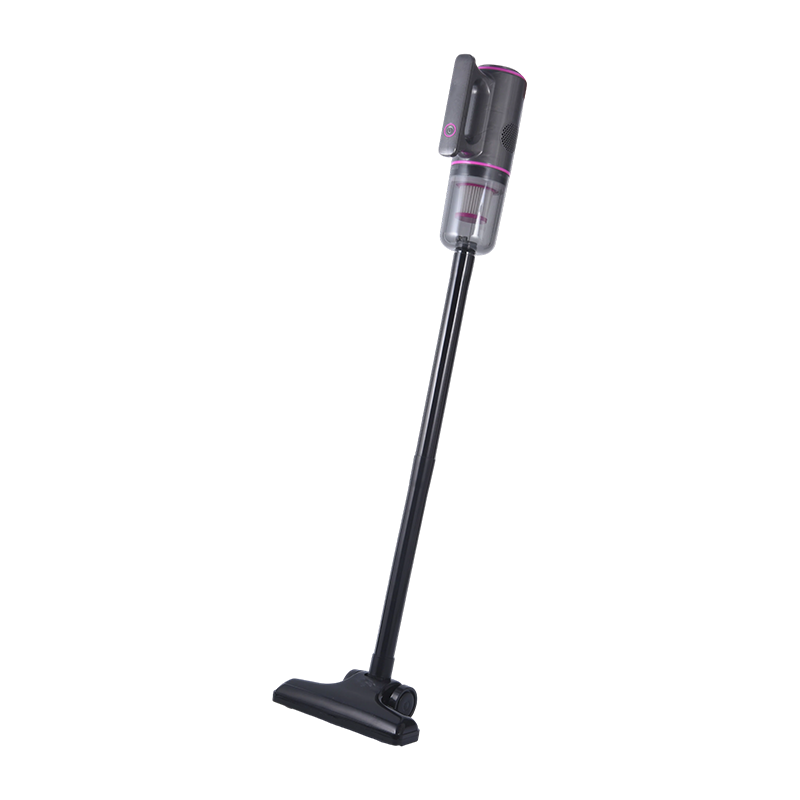
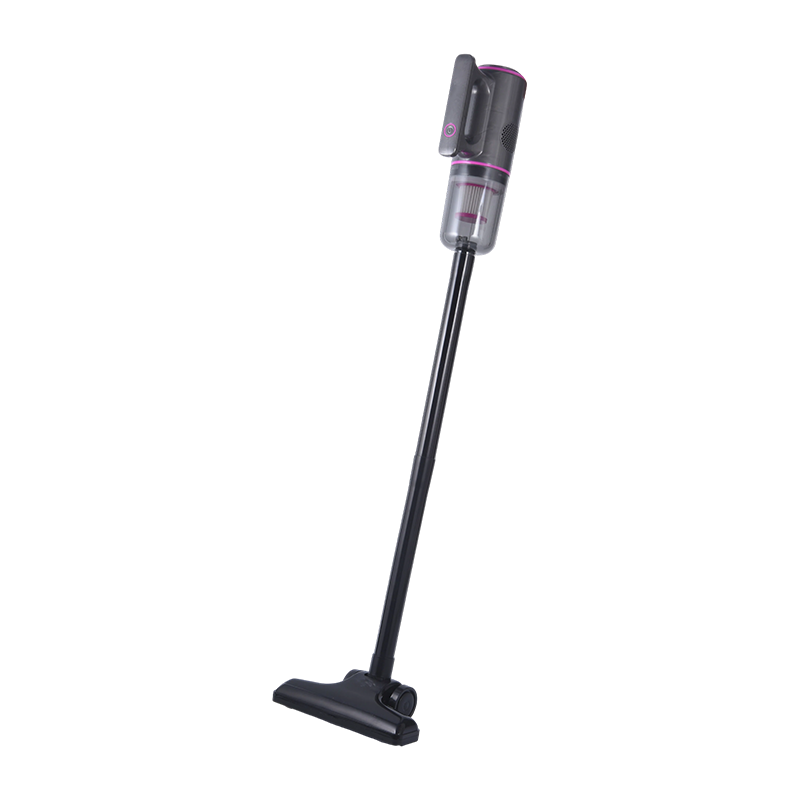
A handheld vacuum cleaner is the right choice whenever the cleaning task is small, localized, or needs to happen fast, such as crumbs on a car seat, dust on a keyboard, or pet hair on a sofa, because its compact body and cordless or corded suction unit let a user clean a spot in seconds without setting up a full-size vacuum. Compared with an upright or canister vacuum, a handheld unit trades large-area coverage for portability, low weight, and instant readiness, which is exactly what most spot-cleaning situations call for.
This guide walks through the common types of handheld vacuum cleaners on the market, how they are built internally, where each type fits best, how the main options compare side by side, how to keep one running efficiently, and the questions buyers and distributors most often ask. The goal is to give a household appliance buyer, retailer, or OEM/ODM partner a practical reference for evaluating handheld vacuum cleaner options rather than a general product overview.
Common Types of Handheld Vacuum Cleaners and Their Features
Handheld vacuum cleaners are generally grouped by power source and intended use case, and understanding these categories helps a buyer or wholesaler match the right unit to the right customer segment.
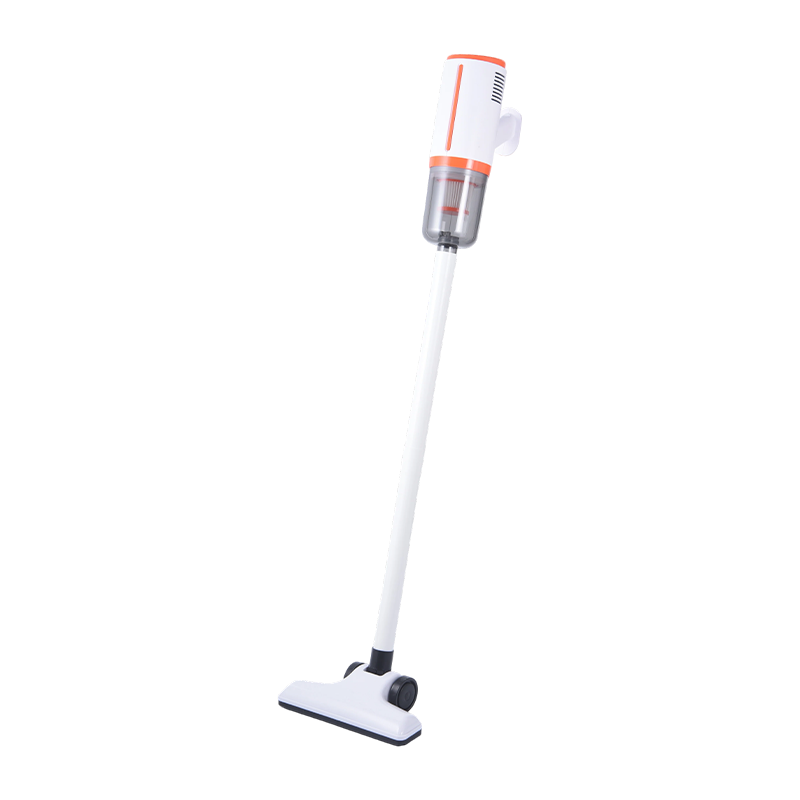
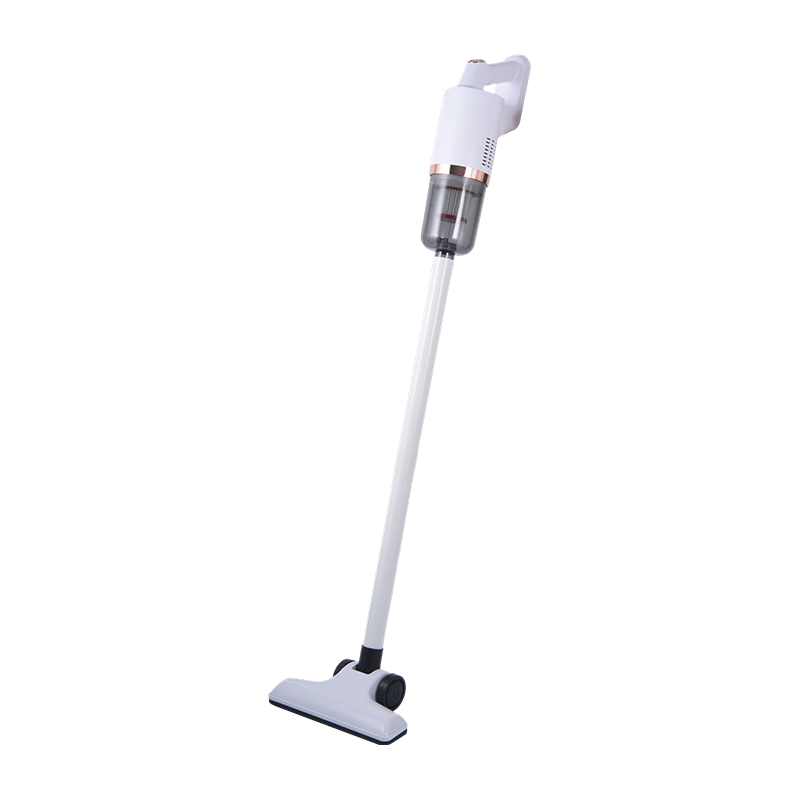
Cordless Handheld VacuumPowered by a rechargeable battery pack, offering full mobility for car interiors, stairs, and furniture without needing an outlet nearby. |
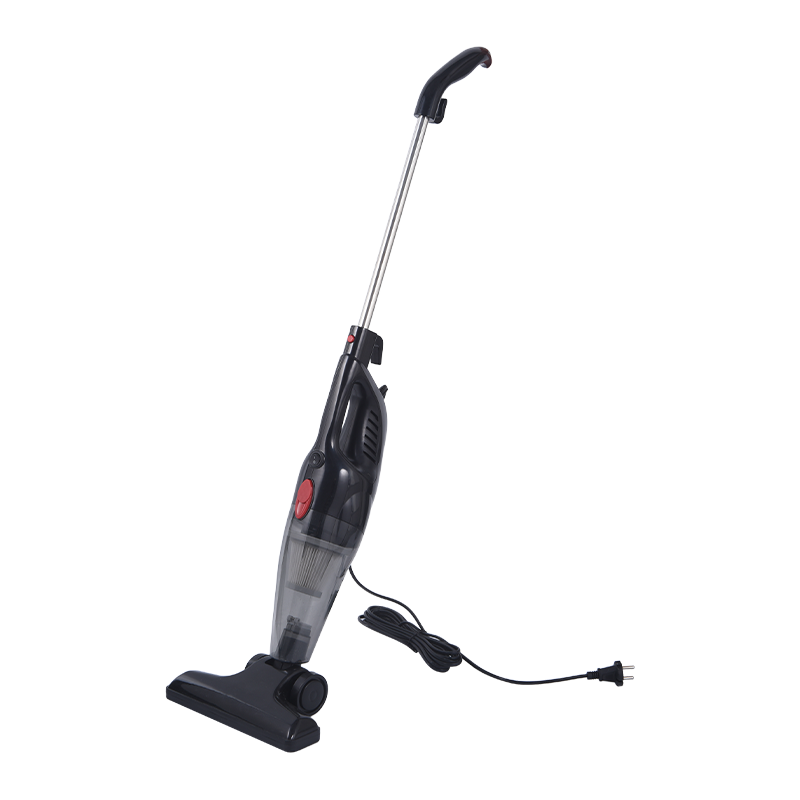
Corded Handheld VacuumPlugs directly into a wall outlet, delivering steady suction power without battery run-time limits, suited to longer indoor cleaning sessions. |
Car Vacuum CleanerCompact body and narrow nozzle attachments designed to reach seat gaps, footwells, and cup holders inside a vehicle cabin. |
Mite Remover / UV Handheld UnitCombines suction with a vibrating or UV-assisted head for mattresses, cushions, and upholstery to remove dust mites and allergens. |
Across these types, common features that distinguish a well-built handheld vacuum cleaner include a washable or easily emptied dust cup, a HEPA-grade or multi-layer filter, interchangeable nozzle attachments, and, for cordless models, a lithium-ion battery with a visible charge indicator. Lightweight handheld models in particular are engineered to keep total weight low enough for one-handed, overhead, or under-furniture use without arm fatigue during extended cleaning sessions.
Working Principle and Internal Structure
A handheld vacuum cleaner works by using a compact motor to spin an impeller at high speed, which creates a pressure difference that draws air, along with dust and debris, in through the nozzle. The air-dust mixture then passes through a dust cup or bag where larger particles are separated by cyclonic action or a mesh barrier, and the air continues through a filter that captures fine particles before the cleaned air exits through the exhaust vents.
The table below outlines the core internal components found in most cordless and corded handheld vacuum cleaners.
| Component | Function |
|---|---|
| Motor and impeller | Generates the airflow and suction that draws in dust and debris |
| Dust cup or cyclone chamber | Separates and collects larger debris from the airstream |
| Filter assembly | Captures fine dust particles before exhaust air is released |
| Battery pack (cordless models) | Stores and supplies power to the motor for cordless operation |
| Nozzle and attachments | Direct airflow and adapt the vacuum to different surfaces and gaps |
| Housing and grip | Encloses internal parts and provides an ergonomic, one-handed hold |
The isometric diagram below illustrates how these components are generally arranged inside a typical cordless handheld vacuum cleaner body.
Application Scenarios and Selection Points
Handheld vacuum cleaners are used across a wide range of everyday scenarios, from household cleaning to vehicle interiors and workshop cleanup, and the right selection depends on matching the unit's design to the specific task at hand.
| Application Scenario | Main Selection Point |
|---|---|
| Car interior cleaning | Prioritize a slim body and narrow crevice nozzle for tight seat and console gaps |
| Household quick clean-ups | Look for a lightweight body and a large enough dust cup to avoid frequent emptying |
| Pet hair removal on furniture | Choose a model with a motorized brush head and anti-tangle bristle design |
| Mattress and upholstery dust mite cleaning | Select a unit with a dedicated mite-removal or UV-assisted head |
| Workshop or garage debris | Favor a corded model for sustained suction during longer cleaning sessions |
For retailers, distributors, and OEM/ODM buyers sourcing handheld vacuum cleaners in bulk, additional selection points include battery run-time consistency across units, filter replacement availability, noise level during operation, and whether the manufacturer can support private-label packaging and certification requirements for the destination market.
Detailed Comparison: Cordless vs Corded Handheld Vacuum Cleaners
The choice between a cordless and corded handheld vacuum cleaner is one of the most common decisions buyers face, and the table below summarizes how the two typically compare across the factors that matter most in daily use.
| Factor | Cordless Handheld | Corded Handheld |
|---|---|---|
| Mobility | Higher | Limited by cord length |
| Continuous run time | Limited by battery capacity | Unlimited while plugged in |
| Typical weight | Slightly higher due to battery | Slightly lower |
| Best fit | Car interiors, stairs, quick spot cleaning | Workshops, longer indoor sessions near an outlet |
To make the trade-off between mobility and sustained suction easier to visualize, the stacked bar chart below breaks down how a typical cleaning session's time is generally distributed between active suction and pauses for cordless versus corded use, based on general usage patterns rather than a single measured test. This comparison is meant to be illustrative rather than a laboratory benchmark from a specific product. It focuses on session composition, not raw suction power, since power figures vary widely by motor design. The stacked format was chosen here because it shows how the two time components add up to a full session for each type. Readers comparing specific models should still check the manufacturer's stated battery run-time and motor specifications directly.
As the chart illustrates, a cordless session generally includes a visible pause or recharge segment once the battery is depleted mid-task, while a corded session shows almost the entire bar as active suction time since the unit stays powered throughout. This does not mean cordless units are less capable overall, since most quick-clean tasks such as car interiors or stair cleaning finish well within a single battery charge and never reach the pause segment shown here. The comparison instead highlights why corded models remain a practical choice for longer, uninterrupted cleaning sessions such as workshop cleanup, where stopping to recharge would be inconvenient. For typical household spot-cleaning use, many buyers find that the mobility advantage of a cordless model outweighs the limited run-time shown in this illustration, particularly when the unit is recharged between uses rather than during a task.
How Battery Capacity Relates to Cleaning Coverage
For cordless handheld vacuum cleaners, battery capacity is one of the most practical specifications to understand, since it directly affects how much cleaning can be completed before a recharge is needed. The area chart below presents a generalized, illustrative relationship between elapsed cleaning time and cumulative area covered for a typical cordless handheld unit under light household use. It is intended to help buyers reason about run-time expectations conceptually rather than to represent a specific tested product. Actual coverage depends heavily on surface type, debris density, and suction setting used during cleaning. The area format was selected to emphasize the cumulative nature of coverage as cleaning time accumulates.
The curve rises steadily rather than sharply at any single point, reflecting the fact that a cordless handheld vacuum cleaner typically maintains fairly consistent suction across most of its usable charge before output tapers as the battery nears depletion. This pattern is common enough across small appliance categories that it is often referenced in general battery-powered appliance literature discussing lithium-ion discharge behavior. For a household user, the practical implication is that short, frequent cleaning sessions tend to make efficient use of available battery capacity, since most of the curve's useful coverage happens well before the taper near full discharge. Buyers evaluating multiple cordless models are encouraged to compare stated run-time under a consistent test condition, since suction mode, brush head type, and surface all shift where the curve begins to flatten in real-world use.
Filter Maintenance and Suction Performance
Keeping a handheld vacuum cleaner's filter clean is one of the most effective ways to preserve consistent suction performance over the life of the unit, since a partially blocked filter restricts airflow even when the motor and battery are both functioning correctly. The gauge chart below offers an illustrative representation of how suction performance is generally understood to relate to filter condition, expressed as a general performance indicator rather than a measured value from a specific unit.
With a clean filter, the indicator sits toward the higher end of the gauge, representing suction performance close to the unit's designed capability, and this level is generally sustained as long as the filter and dust cup are emptied and cleaned on a regular basis. As dust and fine particles accumulate on the filter surface, airflow resistance increases and the effective suction level gradually declines, which is why manufacturers commonly recommend rinsing or replacing washable filters at regular intervals rather than waiting until suction becomes noticeably weaker. A consistently maintained filter also reduces strain on the motor, which can support more stable performance over repeated charge cycles for cordless models. For households or commercial users cleaning frequently, checking the filter after every few uses is a simple habit that keeps the gauge reading closer to its higher range rather than allowing performance to drift downward unnoticed.
Maintenance Guidance for Longer Product Life
Following a simple maintenance routine helps a handheld vacuum cleaner, whether cordless or corded, maintain steady suction and last longer before parts need replacement. The practices below are broadly applicable across household, car, and mite-removal handheld models.
- Empty the dust cup after each use rather than waiting until it is completely full, since a partially full cup already begins to restrict airflow.
- Rinse washable filters with water where the manufacturer permits, and allow them to dry fully before reinserting to avoid motor damage from moisture.
- Check the nozzle and brush head regularly for tangled hair or fibers, which can restrict airflow at the intake even when the filter is clean.
- For cordless models, avoid leaving the battery fully depleted for extended periods, and follow the manufacturer's guidance on charging cycles to preserve battery capacity.
- Store the unit in a dry location away from direct heat sources to protect both the battery and plastic housing components.
- Inspect the power cord on corded models periodically for wear near the plug and housing entry points.
Working with a Handheld Vacuum Cleaner Manufacturer and OEM/ODM Partner
For retailers, distributors, and brands looking to source handheld vacuum cleaners, working with a manufacturer that controls its own component production and assembly lines generally supports more consistent quality and more flexible customization options than relying on multiple separate subcontractors.
Cixi Xiaochao Electrical Appliance Co., Ltd., based in Cixi City, Zhejiang Province, known in China as the "Capital of Small Household Appliances," is one such manufacturer, with over two decades of development history integrating R&D, manufacturing, and sales. The company operates as a China cordless vacuum cleaner manufacturer and an OEM/ODM lightweight handheld vacuum factory, and its cleaning product line spans household vacuum cleaners, car vacuum cleaners, cordless vacuum cleaners, mite removers, and various multi-functional cleaning devices, alongside small household appliances such as table lamps, ultraviolet disinfection lamps, and mini fans. The company's facility covers 18,000 square meters and is equipped with 28 types of injection molding machines and 8 modern production lines, supporting independent, large-scale production from components through to finished goods, along with OEM and ODM cooperation for customers seeking a one-stop production solution. Its quality management system is ISO9001 certified, and its products have passed a range of international and domestic certifications including GS, CE, ROHS, CB, EMC, LVD, ERP, and CCC, supporting export to markets across Europe, America, Japan, South Korea, and Southeast Asia.
Frequently Asked Questions
Q1. What is the main difference between a handheld vacuum cleaner and a stick vacuum?A handheld vacuum cleaner is a compact, single-hand unit designed for spot cleaning, while a stick vacuum has an extended body meant for walking-height, whole-floor cleaning; some cordless stick vacuums can convert into a handheld mode by detaching the main tube. |
Q2. How often should the filter in a handheld vacuum cleaner be cleaned?Checking the filter after every few uses and rinsing or replacing it once visible dust buildup appears is a widely recommended practice, since a clogged filter is one of the most common causes of reduced suction. |
Q3. Is a cordless handheld vacuum cleaner suitable for cleaning a car interior?Yes, cordless models are commonly used for car interiors because they do not require an outlet, and a narrow crevice nozzle attachment helps reach seat gaps and footwells effectively. |
Q4. Can a manufacturer support OEM or ODM customization for handheld vacuum cleaners?Manufacturers with in-house molding and assembly capability, such as facilities equipped with multiple injection molding machines and production lines, are typically able to support OEM and ODM customization including private-label packaging and design adjustments. |