 English
 Español
 عربى
عربىContent
- 1 Understanding Upright Stick Vacuum Cleaners, Handheld Vacuum Cleaners, and Multi Function Stick Vacuum Designs
- 2 How the XC-V01 Household Handheld Stick Vacuum Cleaner Converts Between Floor and Spot Cleaning
- 3 Suction Power, Battery Runtime, and Weight: Comparing Vacuum Formats Directly
- 4 Cordless Vacuum Cleaner Market Trends: Why Battery Powered Cleaning Keeps Growing
- 5 Matching Vacuum Type to Home Size, Flooring, and Daily Routine
- 6 Runtime and Weight Efficiency: What a Performance Score Actually Captures
- 7 Beyond Vacuums: Complementary Small Household Appliances
- 8 Evaluating an OEM/ODM Cordless Vacuum Cleaner Manufacturer
- 9 Frequently Asked Questions
- 9.1 Q1: What is the main difference between an upright stick vacuum cleaner and a handheld vacuum cleaner?
- 9.2 Q2: What makes a multi function stick vacuum different from owning two separate vacuums?
- 9.3 Q3: How is the XC-V01 Household Handheld Stick Vacuum Cleaner designed to cover different cleaning tasks?
- 9.4 Q4: Can a cordless vacuum cleaner manufacturer support OEM or ODM wholesale orders?
For most households, the most practical cleaning setup combines a lightweight upright stick vacuum cleaner for everyday floor cleaning with a detachable handheld vacuum cleaner for spot cleaning, upholstery, and car interiors, rather than owning two completely separate machines. A multi function stick vacuum that converts between an upright body and a compact handheld unit removes the need to store, charge, and maintain two devices, which is one of the main reasons this format has become a common recommendation for smaller homes and apartments. Suction power, battery runtime, and overall weight are the three specifications that most directly determine whether a stick vacuum feels effortless or frustrating during actual daily use, more so than styling or accessory count. Models such as the XC-V01 Household Handheld Stick Vacuum Cleaner are built specifically around this dual format idea, aiming to cover hard floors, carpets, stairs, upholstery, and tight spaces with a single cordless unit. The sections below walk through how these formats compare, what buyers should weigh when choosing between them, and how the wider cordless vacuum cleaner market has been trending in recent years.
Understanding Upright Stick Vacuum Cleaners, Handheld Vacuum Cleaners, and Multi Function Stick Vacuum Designs
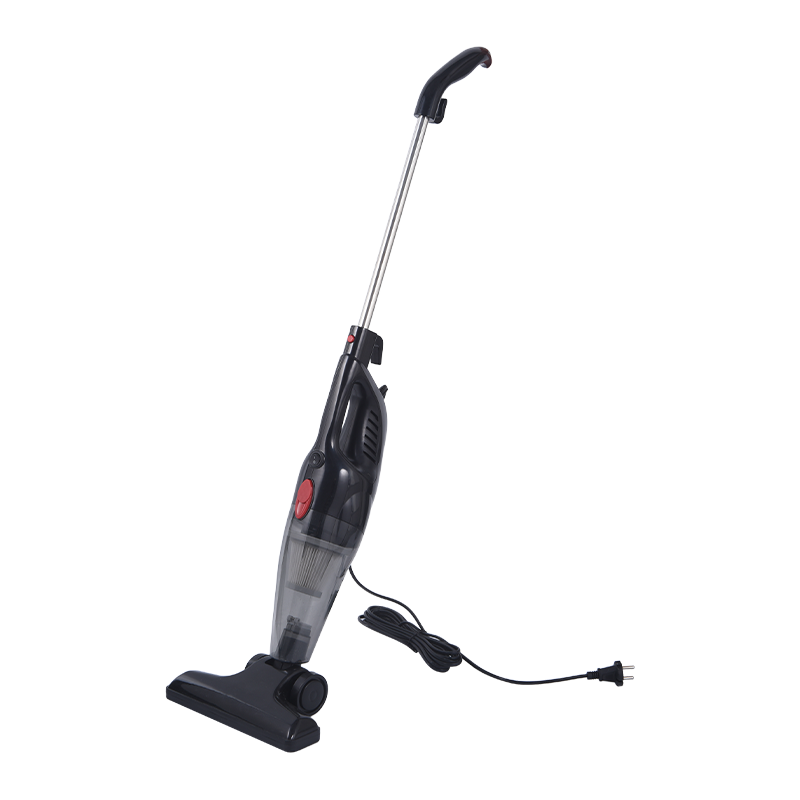
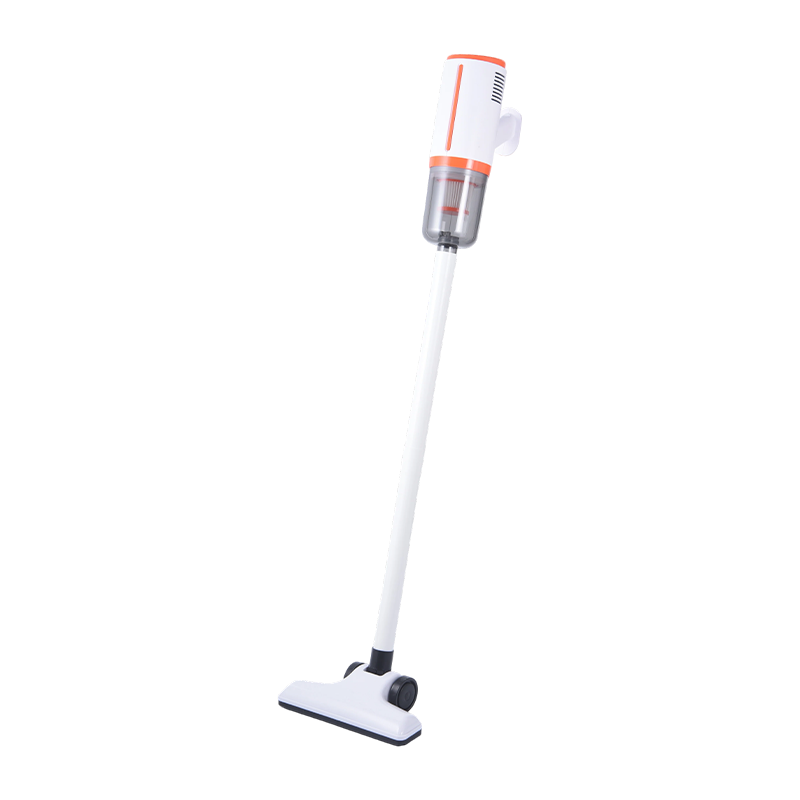
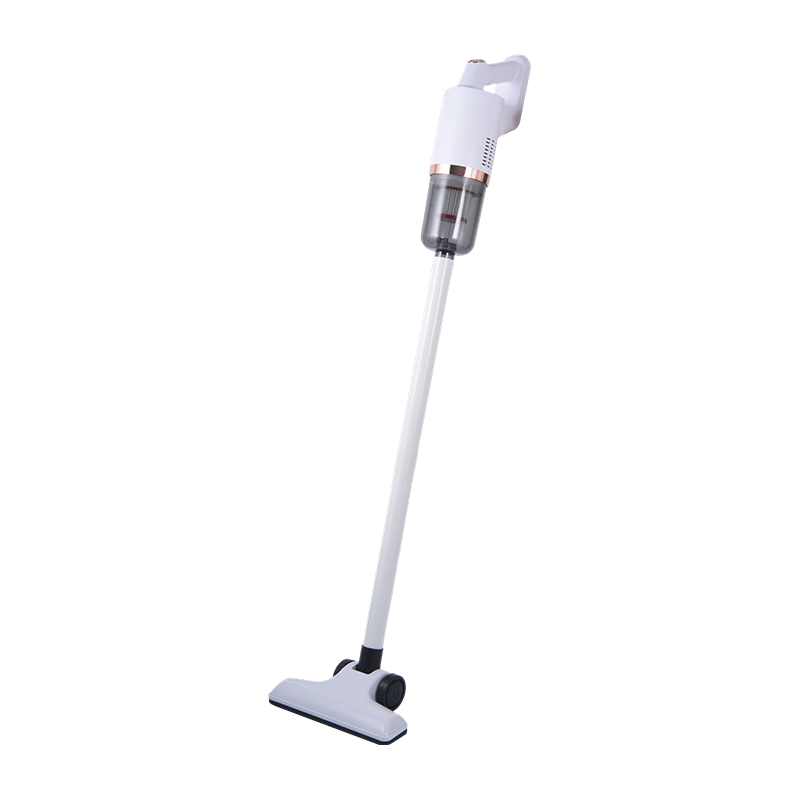
An upright stick vacuum cleaner is generally built around a tall, slim body with a motorized floor head, designed primarily for walking cleaning across hard floors, carpets, and rugs across an entire home in one continuous pass. A handheld vacuum cleaner takes the opposite approach, compact and light enough to hold in one hand, aimed at short, targeted cleaning tasks such as car interiors, upholstery, stairs, and tight corners where a full sized upright body cannot easily reach. A multi function stick vacuum sits between these two ideas structurally, since it is built as an upright stick unit with a smaller handheld portion that detaches from the main body, letting one motor and one battery pack serve both cleaning modes rather than requiring two separate appliances.
The practical difference between these three formats becomes clearest when mapped against common household cleaning tasks, since no single format is equally well suited to every task on its own. Buyers comparing an upright stick vacuum cleaner against a handheld vacuum cleaner should think in terms of task coverage rather than which single product performs best in isolation. The table below summarizes how these three formats typically compare across some of the most common household cleaning scenarios.
| Cleaning Task | Upright Stick Vacuum Cleaner | Handheld Vacuum Cleaner | Multi Function Stick Vacuum |
|---|---|---|---|
| Whole home hard floors and carpets | Well suited | Limited | Well suited |
| Car interior and tight spaces | Limited | Well suited | Well suited |
| Stairs and upholstery | Limited | Well suited | Well suited |
| Storage in small apartments | Moderate | Well suited | Well suited |
Because household cleaning is rarely limited to just one of these task types, it helps to look at how a typical week of home cleaning tends to split across floors, carpets, upholstery and stairs, and car or tight space cleaning. Understanding this general task split is useful context before comparing specific vacuum formats, since it explains why a format covering more of these task categories at once tends to reduce the total number of appliances a household needs to own and store. The donut chart below presents an illustrative breakdown of how cleaning time in a typical household tends to divide across four common task categories, based on the general cleaning patterns referenced across home appliance industry commentary rather than a single named survey. It is meant to give a quick visual sense of task distribution before the following sections dig into how each vacuum format performs against these tasks individually.
The donut chart above splits a typical week of household cleaning into four task categories, with hard floors representing the largest single share at roughly thirty percent, reflecting how much of everyday cleaning still centers on walking floor passes across kitchens, hallways, and living areas. Carpets and rugs make up the second largest share at around twenty five percent, which is a meaningful portion of total cleaning time and one of the main reasons floor head design and suction power matter so much for an upright stick vacuum cleaner specifically. Upholstery and stairs together represent about twenty percent, a smaller but still significant share that highlights why a purely upright format without any handheld capability tends to leave a real gap in whole home cleaning coverage. Car interiors and other tight spaces round out the remaining twenty five percent, a category that has grown in relevance as more households treat routine car interior cleaning as part of general home upkeep rather than a separate occasional task. Reading the chart as a whole, roughly forty five percent of total cleaning time falls into categories, upholstery, stairs, car interiors, and tight spaces, that a pure upright stick vacuum cleaner without a detachable component generally cannot address well on its own. This is precisely the gap that a handheld vacuum cleaner is designed to fill, and it is also the core argument behind a multi function stick vacuum, since combining both formats into one appliance means a single device can realistically address close to the full one hundred percent of typical household cleaning tasks shown in this chart. The donut format was chosen specifically for this comparison because the open center leaves room for a clear label while still making it easy to compare the four arc lengths visually, which works well for this kind of task allocation breakdown. For a buyer deciding between formats, this chart is a useful reminder to think about total task coverage across a full week of cleaning rather than judging a vacuum purely on how well it performs during a single floor cleaning session. It also explains why product design for something like the XC-V01 Household Handheld Stick Vacuum Cleaner deliberately targets both the hard floor and carpet share and the upholstery, stairs, and car share within one convertible unit, rather than optimizing narrowly for only one task category. The next section looks specifically at how a multi function stick vacuum achieves this conversion between upright and handheld modes in practice.
How the XC-V01 Household Handheld Stick Vacuum Cleaner Converts Between Floor and Spot Cleaning
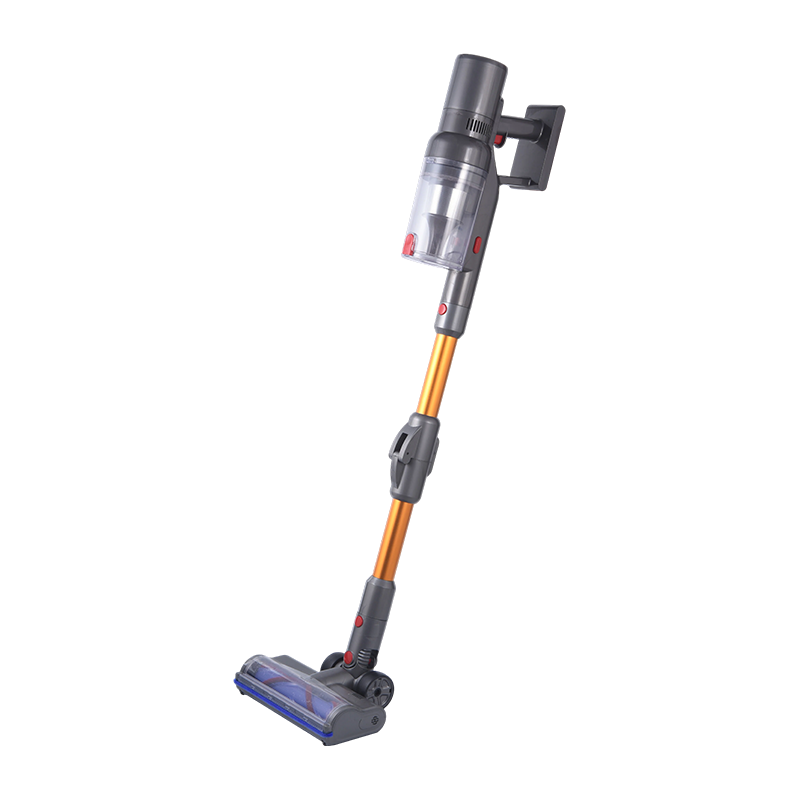
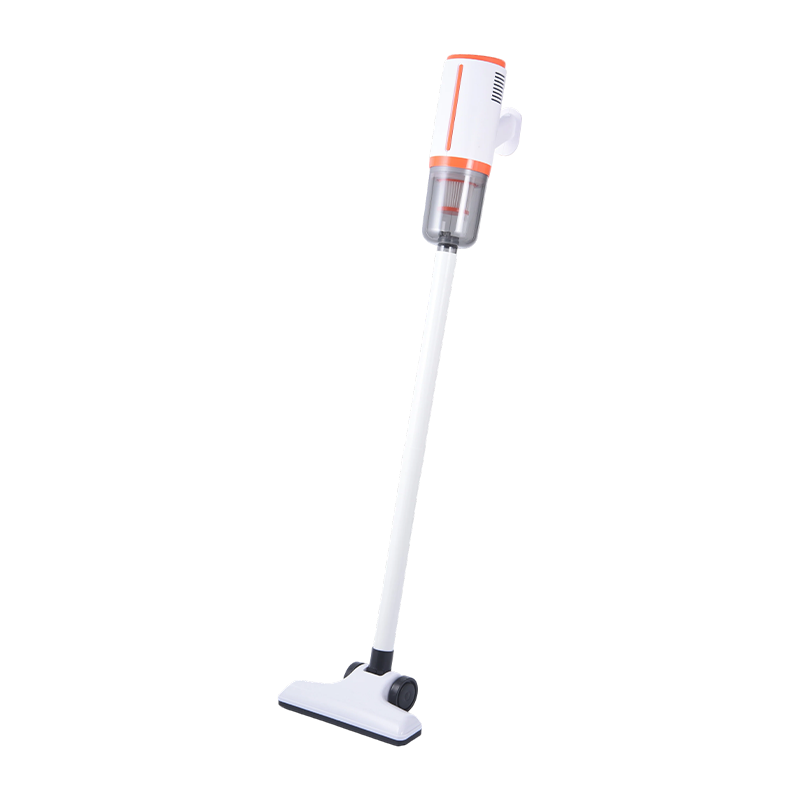
The XC-V01 Household Handheld Stick Vacuum Cleaner is built around the multi function stick vacuum concept described in the previous section, using a detachable main body so the same motor and battery pack can serve either a full length upright cleaning session or a shorter, more targeted handheld session. In upright configuration, the unit extends into a stick format with an extension tube and a floor cleaning head intended for hard floors and carpets across a full room or home. Once the main handheld unit is released from the extension tube and floor head, it becomes a standalone handheld vacuum cleaner sized for one handed use, suited to car interiors, sofas, stairs, and other confined areas that a full length stick format cannot reach comfortably.
This kind of conversion mechanism generally relies on a small number of design details that determine how convenient the switch actually feels in daily use. A secure but tool free locking mechanism between the handheld unit and the extension tube is one of the most important details, since a connection that is either too loose or too difficult to detach undermines the entire convertible design concept. Battery placement also matters, since housing the battery within the handheld unit itself, rather than in the floor head or a separate base, allows the same charge to power either configuration without any additional switching step. Attachment storage is another practical factor, and models built with dedicated slots or clips for crevice tools and upholstery brushes tend to keep small accessories from being misplaced between cleaning sessions, which matters more for a convertible design than for a single fixed format appliance.
- Detachable handheld unit that separates cleanly from the stick extension tube
- Shared battery pack that powers both upright and handheld configurations without a separate charging step
- Interchangeable cleaning heads suited to hard floors, carpets, upholstery, and crevices
- Compact folded or wall mounted storage footprint suited to smaller households and apartments
Industry commentary covering compact home cleaning appliances has increasingly noted growing consumer interest in convertible stick and handheld formats of this kind, since they address the practical reality that most households need to cover several different cleaning surfaces without owning several separate machines. A multi function stick vacuum such as the XC-V01 Household Handheld Stick Vacuum Cleaner reflects this broader shift toward consolidated, space efficient cleaning appliances rather than single purpose devices.
Suction Power, Battery Runtime, and Weight: Comparing Vacuum Formats Directly
Beyond format alone, three specifications tend to matter most across upright stick vacuum cleaners, handheld vacuum cleaners, and multi function stick vacuum designs, suction power, battery runtime, and overall weight, alongside two related factors, day to day versatility across surfaces and how compactly the unit stores between uses. Suction power determines how effectively debris and fine dust are lifted from carpets and upholstery fibers rather than simply pushed around the surface. Battery runtime determines how much continuous cleaning is possible on a single charge before a pause is needed. Weight and balance determine how tiring an extended cleaning session feels, particularly when reaching overhead for curtains or under furniture. Versatility captures how well a single unit adapts across hard floors, carpets, upholstery, and tight spaces, while storage footprint captures how much closet or wall space the unit occupies when not in use. The radar chart below scores three general vacuum formats against these five dimensions at once, making it easier to compare trade offs across formats without reading five separate bar charts.
The radar chart above plots three vacuum formats, shown in blue for an upright stick vacuum cleaner, red for a handheld vacuum cleaner, and violet for a multi function stick vacuum, across the five dimensions introduced earlier, with three faint gray pentagons in the background acting as reference rings for relative scale. The blue upright shape extends furthest along the suction power and battery runtime spokes, which matches the practical reality that a full sized upright motor and larger battery pack generally deliver stronger sustained cleaning performance across open floor areas than a smaller handheld unit can. The red handheld shape extends furthest along the portability and storage footprint spokes, reflecting how a compact, one handed unit is inherently easier to maneuver in tight spaces and easier to tuck into a small drawer or cabinet than a full length stick vacuum. The violet multi function shape does not lead on any single spoke by the widest margin, but it sits comfortably in the upper half of the scale across all five dimensions at once, and it clearly leads on the versatility spoke specifically, which is the direct result of combining upright and handheld capability into one convertible unit. This pattern is worth sitting with for a moment, since it shows that a multi function stick vacuum is not simply an average of the other two formats, it is a deliberate trade off that sacrifices a small amount of peak suction power and peak portability in exchange for meaningfully broader task coverage. For a buyer with a small apartment, a car, and a mix of hard flooring and rugs, this kind of balanced profile is often more useful in practice than a format that scores highest on one axis but leaves entire cleaning tasks uncovered. The overlapping shaded areas where the blue and violet shapes intersect near the top of the chart also illustrate that a well designed multi function stick vacuum can approach upright level suction and runtime without fully sacrificing the compactness associated with handheld designs. As with any illustrative comparison of this kind, these specific scores represent a general pattern drawn from how these three formats are typically engineered and marketed, rather than results from testing any single specific product model in a controlled lab setting, and actual performance will vary between individual products within each format category. The next section shifts from comparing formats directly to looking at how the broader cordless vacuum cleaner market has been trending over recent years.
Cordless Vacuum Cleaner Market Trends: Why Battery Powered Cleaning Keeps Growing
Zooming out from individual product comparisons, it is useful to understand why cordless vacuum cleaners, including both upright stick vacuum cleaner and handheld vacuum cleaner formats, have become such a large part of the overall home cleaning appliance category in the first place. Several independent market research publications tracking this sector report differing absolute market size figures, largely because each defines the cordless vacuum category slightly differently, some including robotic vacuums and commercial units and others focusing narrowly on consumer stick and handheld models. Despite these differences in scope, a recurring theme across these reports is a compound annual growth rate that commonly falls somewhere in a high single digit to low double digit percentage range looking out toward the early to mid 2030s. Several of these reports also point to lithium ion battery adoption becoming close to standard across new cordless models, alongside meaningful improvements in average runtime per charge compared with older cordless generations. The area chart below illustrates what a market index following a representative growth rate within this reported range would look like projected across a ten year span from an indexed base year.
The area chart above starts at an indexed value of 100 in Year 1 and rises to roughly 237 by Year 11, consistent with compounding at approximately nine percent annually, a rate chosen as a representative midpoint within the range commonly reported across the cordless vacuum market research referenced earlier for this sector. The shaded region under the line is used deliberately here because an area chart communicates cumulative growth more intuitively than a plain line, since the visual weight of the filled region grows along with the underlying trend rather than leaving the reader to judge slope alone. Each marker point corresponds to a two year interval, and the increasing vertical gap between consecutive points, even at a constant growth rate, is a direct visual demonstration of compounding, since a fixed percentage applied to a larger base produces a larger absolute increase over time. According to the general direction described across several published cordless vacuum cleaner market reports, this sustained growth has been attributed to a combination of factors, including rising consumer preference for cordless convenience over corded designs, continued lithium ion battery improvements that have measurably extended average runtime per charge compared with earlier cordless generations, and smaller average living spaces in many urban markets that favor compact stick and handheld formats over large upright corded machines. E commerce and online retail channels are also frequently cited across these reports as an increasingly important distribution channel for cordless vacuum cleaners, since online comparison shopping makes it easier for buyers to evaluate suction power, runtime, and weight specifications across a wide range of models before purchasing. It is worth being direct that the specific index values in this chart are illustrative rather than a reproduction of any single published dataset, since absolute market size estimates vary considerably between sources depending on category scope, but the general upward growth direction, and the high single digit to low double digit percentage growth range, recur consistently across the market research reviewed for this article. For manufacturers and OEM or ODM partners producing cordless stick and handheld vacuum models, a sustained growth environment of this kind is generally the basis for continued investment in production capacity and battery supply chain relationships, since sustained demand growth supports the case for scaling manufacturing lines rather than treating cordless models as a short term trend. Retailers and distributors evaluating which cordless formats to prioritize on shelf or online can also use this general growth context as supporting evidence that upright stick vacuum cleaner and multi function stick vacuum categories are likely to remain a durable, rather than temporary, part of the home appliance category going forward. The next section moves from market level trends back to a specific product level question, looking at how runtime and weight efficiency can be represented as a single combined performance indicator.
Matching Vacuum Type to Home Size, Flooring, and Daily Routine
Beyond specifications alone, the practical decision between an upright stick vacuum cleaner, a handheld vacuum cleaner, and a multi function stick vacuum often comes down to matching the appliance to a household's actual living situation rather than choosing based on a single feature in isolation. A smaller apartment with mostly hard flooring and limited storage space generally benefits most from a compact multi function stick vacuum, since it minimizes both the number of appliances owned and the closet space required. A larger home with extensive carpeting across multiple rooms may still benefit from a dedicated upright stick vacuum cleaner as the primary floor cleaning tool, paired with a separate or detachable handheld unit for stairs and upholstery. Households with a vehicle used regularly for family transport, pets, or outdoor activities tend to place a higher premium on strong handheld performance specifically, since car interior cleaning is one of the task categories a purely upright design struggles to address.
- Estimate the mix of hard floors versus carpeted or rugged areas across the home, since heavier carpet coverage generally favors stronger, dedicated upright suction performance
- Consider available storage space, since a multi function stick vacuum typically occupies a smaller footprint than maintaining two separate full sized appliances
- Factor in car interior or upholstery cleaning frequency, since regular use of these tasks favors a format with strong handheld or detachable capability
- Weigh typical cleaning session length against battery runtime, since larger homes generally require longer continuous run times per charge
This kind of situational matching is generally more useful for buyers than treating the decision as a simple ranking of upright versus handheld versus multi function stick vacuum designs in the abstract, since the right choice depends heavily on home size, flooring mix, and how cleaning tasks are actually distributed throughout a typical week, echoing the task allocation pattern shown in the donut chart earlier in this article.
Runtime and Weight Efficiency: What a Performance Score Actually Captures
Suction power tends to get most of the attention in vacuum cleaner marketing, but runtime and weight efficiency together often have a larger effect on how a cleaning session actually feels from start to finish. A vacuum with strong peak suction but a heavy body and short runtime can still leave a user tired and interrupted partway through a larger cleaning session. Conversely, a lighter unit with a well managed battery discharge curve can complete a full home cleaning pass more comfortably even if its peak suction figure is not the highest on paper. Runtime efficiency specifically refers to how much usable cleaning time a unit delivers relative to its battery capacity and weight, rather than battery capacity or weight considered separately. The gauge chart below presents an illustrative combined runtime and weight efficiency score, intended to represent how a well balanced multi function stick vacuum design, in the general style of the XC-V01 Household Handheld Stick Vacuum Cleaner, might score on this kind of combined measure.
The semicircular gauge above uses a needle position to represent an illustrative combined score of 82 out of 100, with the scale running from 0 at the far left of the arc through 50 at the top and up to 100 at the far right, and the blue filled arc visually representing how far along that scale the current score sits. This type of gauge is a common way to communicate a single combined performance indicator, and here it represents how well a design balances battery runtime against overall body weight, rather than measuring either factor by itself, since a heavy unit with long runtime and a light unit with short runtime can both underperform on this combined measure despite excelling on one individual specification. A score positioned toward the right side of the arc, as shown here, indicates a design that delivers a meaningful amount of continuous cleaning time without adding excessive body weight, which is the general engineering goal behind a well designed multi function stick vacuum intended for full home use. The thin needle line pointing to the exact position along the arc gives a precise reference point, while the colored arc fill gives a quicker at a glance impression of overall standing, and together the two elements let a reader absorb the same information in either a fast glance or a more careful reading. It is important to be direct that this score represents an illustrative combined benchmark used to explain how runtime and weight interact as design priorities, rather than a certified third party laboratory test result or a formal industry wide rating standard, since no single universal number currently exists across the cordless vacuum sector that combines these two factors in exactly this way. That said, the underlying design principles behind the score, meaningful continuous runtime paired with a manageable overall body weight, are widely referenced across cordless vacuum cleaner product commentary and map directly onto the practical, day to day usability concerns raised earlier in the radar chart comparison across upright, handheld, and multi function formats. Buyers evaluating any specific upright stick vacuum cleaner, handheld vacuum cleaner, or multi function stick vacuum model can apply this same two part lens themselves, checking stated runtime figures against stated weight figures together rather than looking at either specification in isolation. Runtime deserves particular attention for larger homes, since a unit that runs out of charge partway through a cleaning pass forces an interruption that a smaller apartment cleaning routine might never encounter. Weight deserves particular attention for handheld and overhead cleaning tasks specifically, such as reaching curtains, ceiling corners, or vehicle interiors, since even a relatively light unit can feel considerably heavier after several minutes of extended arm use. Manufacturers who treat runtime and weight as a combined design target, rather than optimizing each independently, are generally better positioned to deliver a consistently comfortable cleaning experience across an entire product line rather than only on a single flagship model. This closes out the specification and performance focused portion of the article, and the sections that follow move into complementary household appliances and supplier evaluation before the closing frequently asked questions.
Beyond Vacuums: Complementary Small Household Appliances
Cleaning appliances rarely exist in isolation within a household, and manufacturers focused on cordless vacuum cleaners frequently extend into related small household appliance categories that support similar day to day convenience goals. Table lamps are a common adjacent category, since lighting and cleaning appliances are often sourced together by retailers building out a general home goods assortment. Ultraviolet disinfection lamps have also become a more frequently requested category alongside cleaning appliances, reflecting continued household interest in hygiene focused products beyond vacuuming alone. Mini fans round out this adjacent category group, offering a similarly compact, portable design philosophy to handheld vacuum cleaners, and appealing to buyers who value small, space efficient appliances generally.
For retailers and distributors, sourcing cleaning appliances and these adjacent small household appliance categories from a single manufacturer can simplify supply chain management considerably, since it reduces the number of separate supplier relationships needed to stock a broad small appliance assortment.
Evaluating an OEM/ODM Cordless Vacuum Cleaner Manufacturer
Retailers and distributors sourcing upright stick vacuum cleaners, handheld vacuum cleaners, and multi function stick vacuum products at wholesale volume generally look beyond product specifications alone when evaluating a manufacturing partner. Production scale and equipment depth matter because a manufacturer with dedicated injection molding capacity and multiple assembly lines can generally maintain more consistent build quality across large orders than a smaller workshop relying on outsourced components. Certification coverage is another key evaluation point, since compliance with recognized international and regional standards indicates a manufacturer has invested in formal quality and safety testing rather than relying on informal internal checks alone. OEM and ODM cooperation capability is particularly relevant for cordless vacuum cleaners specifically, since brands and private label buyers often need a partner that can support both contract manufacturing to an existing design and original design development for a new product line.
Cixi Xiaochao Electrical Appliance Co., Ltd. is one example of a manufacturer structured around this kind of category focus. Rooted in Cixi City, Zhejiang Province, an area widely recognized as a center of small household appliance manufacturing in China, the company is a comprehensive household appliance manufacturer with more than two decades of development history, integrating research and development, manufacturing, and sales under one operation. The company operates as a China cordless vacuum cleaner manufacturer and OEM/ODM lightweight handheld vacuum factory, and its cleaning product line covers household vacuum cleaners, car vacuum cleaners, cordless vacuum cleaners, mite removers, and various multi function cleaning devices, alongside a broader small appliance range that includes table lamps, ultraviolet disinfection lamps, and mini fans. The company covers an area of 18,000 square meters and operates 28 types of injection molding machines across 8 modern production lines, supporting independent, large scale production from individual components through to finished products. It maintains ISO9001 quality management system certification, and its products carry multiple international and domestic certifications including GS, CE, RoHS, CB, EMC, LVD, ERP, and CCC, reflecting compliance with recognized market access standards across the regions it serves. The company's products are exported to numerous countries and regions, including Europe, the Americas, Japan, South Korea, and Southeast Asia. Guided by a stated mission built around innovation and cleaner everyday living, the company describes lean manufacturing and a customer first approach as central to how it develops and refines its cordless vacuum cleaner and small household appliance lines, including designs in the style of the XC-V01 Household Handheld Stick Vacuum Cleaner.
Buyers evaluating a potential OEM or ODM manufacturing partner along these lines are generally encouraged to request specific detail on battery cell sourcing, motor specifications, certification documentation, and production line capacity, since these concrete details, rather than general marketing language, are what actually reveal whether a manufacturer is prepared to support a wholesale cordless vacuum cleaner order at consistent quality and scale.
Frequently Asked Questions
Q1: What is the main difference between an upright stick vacuum cleaner and a handheld vacuum cleaner?
An upright stick vacuum cleaner is built for full home floor cleaning across hard floors and carpets, while a handheld vacuum cleaner is a compact, one handed unit designed for targeted tasks such as car interiors, upholstery, and stairs.
Q2: What makes a multi function stick vacuum different from owning two separate vacuums?
A multi function stick vacuum uses one shared motor and battery pack across both an upright and a detachable handheld configuration, which reduces the number of appliances a household needs to buy, charge, and store.
Q3: How is the XC-V01 Household Handheld Stick Vacuum Cleaner designed to cover different cleaning tasks?
The XC-V01 uses a detachable handheld unit combined with an extension tube and floor head, allowing it to switch between full length upright floor cleaning and compact handheld cleaning for cars, upholstery, and tight spaces.
Q4: Can a cordless vacuum cleaner manufacturer support OEM or ODM wholesale orders?
Manufacturers with dedicated production lines, in house injection molding, and recognized quality certifications are generally well positioned to support both OEM contract manufacturing and ODM original design development for wholesale buyers.