 English
 Español
 عربى
عربىContent
- 1 Why a Lightweight Handheld Vacuum Fits Modern Small Space Living
- 2 Where a Cordless Vacuum Cleaner Gets Used Most in Daily Life
- 3 Ranking Everyday Scenarios: Where a Battery Powered Vacuum Cleaner Adds the Most Value
- 4 Weight Versus Noise: Does a Lighter Handheld Vacuum Have to Be Louder?
- 5 Which Features Matter Most in Each Cleaning Scenario
- 6 Maintenance Made Simple: Dust Cup Emptying and Filter Care
- 7 About the Manufacturer Behind the XC-V03C
- 8 Frequently Asked Questions
- 8.1 Q1: How much space does the XC-V03C need for storage?
- 8.2 Q2: Can this lightweight handheld vacuum switch between floor and handheld cleaning without tools?
- 8.3 Q3: Is a cordless vacuum cleaner like the XC-V03C suitable for nighttime cleaning?
- 8.4 Q4: Can the dust cup and filter be washed and reused?
For small apartments, rental housing, desktops, and car interiors, a lightweight handheld vacuum generally covers daily cleaning needs more practically than a full sized upright machine, because it stores in a fraction of the space and can be picked up for a short cleaning task without any setup. The XC-V03C Minimalist White Portable Cordless Handheld Household Vacuum Cleaner is built specifically around this idea, combining a lightweight body, a tool free two in one handheld and upright design, and a compact storage footprint smaller than a sheet of A4 paper. Cordless operation removes the need to manage a power cord across rooms, which matters most in exactly the spaces where a lightweight handheld vacuum tends to be used, kitchens, bedrooms, balconies, desktops, and car interiors. This article looks directly at how a lightweight handheld vacuum cleaner performs across these common scenarios, compares the trade offs buyers should weigh between weight, noise, and suction, and closes with background on the manufacturer behind this cordless vacuum cleaner design.
Why a Lightweight Handheld Vacuum Fits Modern Small Space Living
Living spaces in many urban markets have been trending smaller for years, and this shift has changed what buyers actually want from a household vacuum cleaner. A bulky upright machine that requires a dedicated closet is often a poor fit for an apartment where every square meter of storage matters, while a lightweight handheld vacuum that stands upright in a corner or mounts to a wall occupies a footprint that is easy to fit into an entryway or a narrow hallway. The XC-V03C reflects this shift directly, using a minimalist white body designed to blend into varied home decoration styles rather than standing out as bulky cleaning equipment, and a compact storage profile that its manufacturer describes as taking up less space than a standard sheet of A4 paper.
Below is a labeled isometric style diagram of the XC-V03C, highlighting the main functional sections of a typical lightweight handheld vacuum cleaner of this kind, the motor and handle housing, the transparent dust cup, the extension wand, and the floor cleaning head.
The diagram above is a simplified schematic rather than an exact engineering drawing, and it is included to show how the main functional sections of a two in one handheld and upright cordless vacuum cleaner typically relate to each other physically. The handle grip and motor housing sit at the top of the unit and remain the same single piece whether the vacuum is used in handheld mode or attached to the extension wand for upright floor cleaning. The transparent dust cup sits directly beneath the motor housing, positioned specifically so a user can see dust capacity at a glance without opening the unit, which lines up with the visible dust cup and hands free emptying feature described for the XC-V03C. The extension wand connects and detaches without tools, which is the mechanical basis for the one step switching between handheld and upright modes that a lightweight handheld vacuum of this design relies on. The detachable floor head at the base is intended for hard floor and shallow carpet cleaning once the wand is attached, while removing the wand and floor head leaves the compact handheld unit alone for desktops, upholstery, and car interiors.
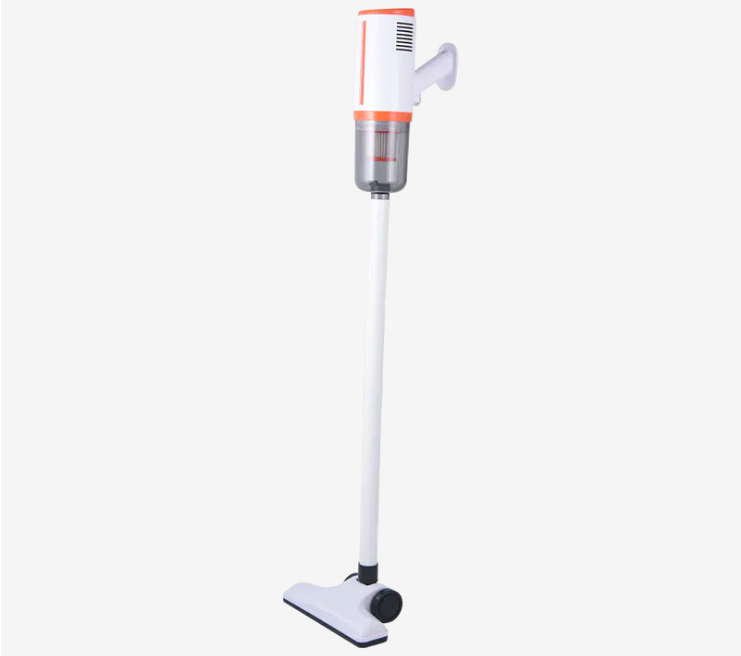
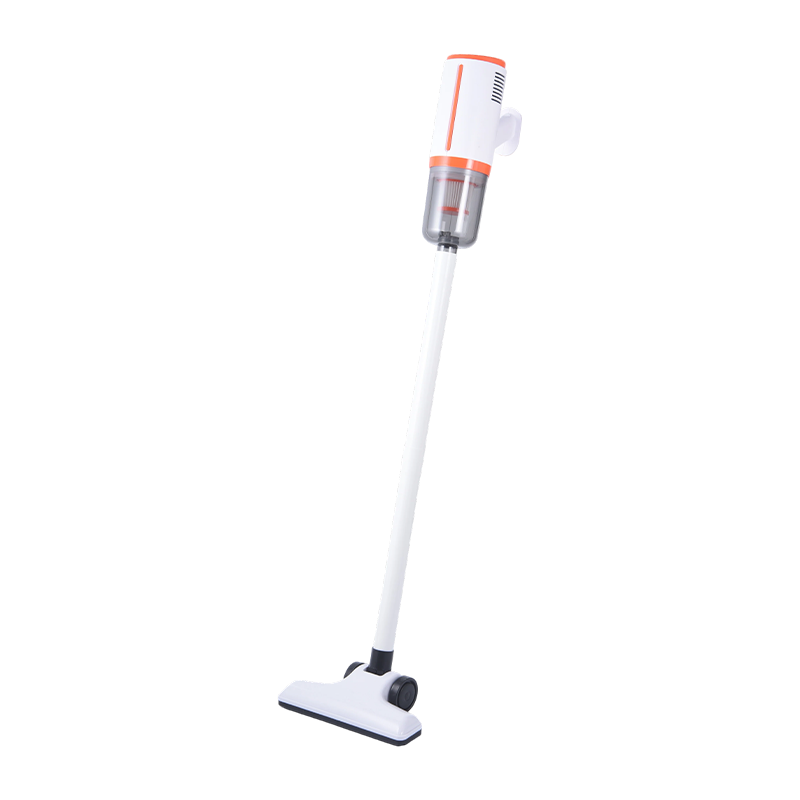
The product photo above shows the XC-V03C in its upright configuration, with the extension wand and floor cleaning head attached to the main handheld unit. The slim white body and compact dust cup visible here reflect the minimalist aesthetic and space saving storage profile discussed throughout this article, and the same handheld unit shown at the top of the wand detaches independently for spot cleaning tasks around a desktop, sofa, or car interior.
Where a Cordless Vacuum Cleaner Gets Used Most in Daily Life
Before comparing specifications, it helps to understand where a cordless vacuum cleaner of this compact type actually gets used across a typical week, since usage pattern shapes which features matter most. A lightweight handheld vacuum built around whole apartment cleaning, desktop and electronics dust removal, in car cleaning, and quick tidying in rental housing or dormitories tends to divide its use fairly evenly across these four common scenarios rather than concentrating on just one. Recognizing this spread matters because a design optimized narrowly for one scenario, for example only heavy carpet cleaning, would leave meaningful gaps for the desktop, car, and rental housing scenarios that make up a large share of how this category of vacuum is actually used day to day. The donut chart below presents an illustrative breakdown of how usage of a compact cordless vacuum cleaner of this kind tends to split across these four common scenarios, based on the scenario patterns described across household cleaning appliance product literature rather than a single named survey. It sets up the more detailed feature discussion that follows in the next section.
The donut chart above splits typical usage of a compact cordless vacuum cleaner into four common scenarios, with small apartment daily cleaning representing the largest single share at roughly thirty five percent, which reflects how much of this category's use centers on routine floor, window sill, and skirting line cleaning across a full living space of around fifty to ninety square meters. Desktop and electronics cleaning and in car cleaning each represent about twenty percent, two scenarios that a bulky upright vacuum generally cannot address at all, which is precisely why the handheld portion of a two in one design carries so much practical weight despite being physically the smaller of the two components. Rental housing and dormitory tidying makes up the remaining twenty five percent, a scenario defined less by floor area and more by the need for simple, tool free operation without complicated installation, which matters for temporary living situations where a resident may not want to commit closet space or setup effort to a large machine. Reading the chart together, roughly sixty five percent of typical usage falls outside the traditional whole apartment floor cleaning category entirely, spread across desktops, car interiors, and rental or dorm tidying, which is a meaningful reminder that a compact handheld capable design addresses the majority of how this category of vacuum actually gets used rather than a minority edge case. This donut format is well suited to this kind of comparison because the four arc lengths can be read at a glance without needing exact figures, and the open center keeps the visual light rather than heavy, matching the minimalist design language associated with the XC-V03C itself. For a buyer comparing a cordless vacuum cleaner primarily on whole home cleaning power alone, this chart is a useful prompt to also weigh how well a given unit handles the other roughly two thirds of realistic usage, desktop dust, car interiors, and quick tidying tasks that a heavier, floor focused design was never built to reach comfortably. The scenario sections later in this article walk through each of these four use cases in more specific detail, starting with small apartment daily cleaning and moving through desktop, car, and rental housing scenarios in turn. Understanding this usage split also explains several of the specific design choices described earlier for the XC-V03C, including the crevice nozzle and brush head attachments intended for desktop and electronics cleaning, and the compact body sized to fit into car door storage slots or a glove box. The next section moves from usage patterns to a direct comparison of how strongly buyers tend to weigh these four scenarios against each other in practice.
Ranking Everyday Scenarios: Where a Battery Powered Vacuum Cleaner Adds the Most Value
Understanding usage share, as shown in the donut chart above, is a useful starting point, but it does not by itself tell a buyer which scenario a battery powered vacuum cleaner tends to add the most practical value in relative to alternatives already available in most homes, such as a broom, a dustpan, or a larger household vacuum. Rental and dormitory tidying tends to score particularly well on this kind of relative value measure, since temporary living situations often lack storage space or justification for a large dedicated vacuum, making a compact cordless unit disproportionately useful there. Small apartment daily cleaning also scores strongly, given the whole home cordless coverage a two in one design provides without repeated cord switching between rooms. In car cleaning and desktop or electronics cleaning both score somewhat lower on this relative measure only because a determined user has more improvised alternatives available for those tasks, such as a car specific vacuum or compressed air, even though a dedicated handheld unit still performs these tasks considerably more conveniently. The horizontal bar chart below presents an illustrative relative value score across these four scenarios, intended to show where a lightweight handheld vacuum tends to matter most in practical, everyday terms.
The horizontal bar chart above lists four everyday scenarios from top to bottom in descending order of relative value, with bar length representing an illustrative relative value score out of 100 rather than any absolute unit of measurement. Rental and dormitory quick tidying scores highest, which reflects how few reasonable alternatives exist in a temporary living situation for a resident who wants effective cleaning without installing or storing a large machine, making a compact cordless vacuum cleaner disproportionately valuable in that specific context. Small apartment daily cleaning follows closely behind, consistent with the largest usage share shown in the earlier donut chart, and reflects the everyday convenience of whole home cordless coverage without needing to switch outlets between rooms. In car cleaning scores moderately high, since a compact handheld unit that fits into a door pocket or glove box offers a level of convenience for car interiors that most households do not otherwise have readily available. Desktop and electronics dust removal scores lowest of the four, not because it is unimportant, but because it is a narrower, more occasional task compared with the other three broader scenarios, and moderate suction combined with a crevice nozzle is what makes this scenario practical rather than raw cleaning power alone. Reading the bars together, all four scores sit comfortably above the midpoint of the scale, which indicates that a lightweight handheld vacuum built around this two in one design adds meaningful value across every scenario considered here rather than excelling in only one and underperforming in the others. This kind of relative ranking is useful for a manufacturer or retailer writing product copy, since it suggests leading with rental, dormitory, and small apartment use cases in marketing language while treating desktop and car cleaning as supporting, still valuable, secondary use cases. It is worth being direct that these specific scores represent an illustrative synthesis built from common patterns described across household cleaning appliance scenario literature, rather than results from one specific named consumer survey instrument, since granular, scenario level survey data of this kind is not consistently published at this level of detail across the sector. Even so, the general ordering, favoring space constrained and cordless convenience heavy scenarios over narrower occasional tasks, is a pattern that shows up repeatedly across product literature and cleaning appliance commentary covering this compact vacuum category. The next section looks at a related design question, examining whether a lighter unit necessarily has to compromise on noise level, using a scatter plot to explore that relationship directly.
Weight Versus Noise: Does a Lighter Handheld Vacuum Have to Be Louder?
A common assumption is that reducing the weight of a handheld vacuum cleaner requires a smaller, less refined motor mount, which in turn produces more operating noise rather than less. This assumption does not hold up consistently once motor suspension design and air duct engineering are considered alongside weight itself, since noise level depends heavily on how the motor is mounted and how airflow is routed through the body, not simply on how much the unit weighs. The XC-V03C is described as using suspended motor installation together with optimized air duct noise reduction specifically to keep operating sound well below that of traditional vacuum cleaners despite its lightweight build, which is a direct example of this same design principle in practice. This distinction matters for buyers who want quiet operation for early morning or late night cleaning without necessarily accepting a heavier unit as the trade off. The scatter plot below illustrates this relationship using a set of representative lightweight handheld vacuum designs plotted by relative unit weight against a quietness score, showing why weight and noise should be evaluated as two separate specifications rather than assumed to move together in a fixed direction.
Each point in the scatter plot above represents one illustrative handheld vacuum design, positioned horizontally by its relative unit weight index and vertically by its quietness score, with higher points on the vertical axis indicating quieter operation. If lighter weight necessarily meant louder operation, the points would trend downward moving from left to right across the chart, but the scattered pattern shown here does not follow that clean downward trend. Several lighter designs on the left side of the chart still reach relatively high quietness scores, shown as points sitting high on the vertical axis despite a low weight index, which represents designs that specifically prioritize motor suspension and air duct engineering alongside weight reduction rather than treating them as competing goals. The circled point highlighted in red represents a design using suspended motor installation, positioned toward the lighter end of the weight axis while still achieving one of the higher quietness scores in the chart, which is the specific engineering approach described for the XC-V03C. At the same time, some heavier designs elsewhere in the chart still register only moderate quietness scores, illustrating that added weight does not automatically guarantee quieter operation either, since noise depends on specific internal design choices rather than mass alone. This lack of a clean, simple correlation is the reason a scatter plot rather than a bar or line chart is used here, since a scatter plot is specifically suited to showing whether two variables move together in a predictable pattern or not, and in this case they clearly do not. For a practical buyer, the takeaway is that weight specifications alone should not be used to predict how quiet a handheld vacuum cleaner will be in actual use, and motor mounting and air duct design deserve separate attention when comparing cordless vacuum cleaner options. This also explains why a lightweight handheld vacuum built with deliberate noise reduction engineering can be a genuinely better fit for early morning or late night cleaning than a heavier unit that has not received the same attention to motor suspension, even though intuition might suggest otherwise. Manufacturers that treat noise reduction as its own dedicated design variable, separate from weight reduction, are generally better positioned to deliver both a light, portable unit and comfortably quiet operation at the same time, rather than treating the two goals as mutually exclusive. The next section moves from this weight and noise comparison into a broader feature by scenario matrix, mapping out which specific product features matter most across the four usage scenarios introduced earlier in this article.
Which Features Matter Most in Each Cleaning Scenario
Having established usage patterns and the weight versus noise relationship, the next useful step is mapping which specific product features matter most within each of the four scenarios introduced earlier, since not every feature carries equal weight across every use case. Suction stability matters intensely for small apartment floor cleaning and in car cleaning but somewhat less for light desktop dusting, where moderate, controlled suction is actually more useful than maximum power. Portability matters intensely across nearly every scenario except perhaps stationary apartment floor cleaning, where the wand attached configuration reduces the practical importance of hand carried weight. Noise level matters most for rental and dormitory settings, where shared walls and close neighbors make quiet operation a genuine practical concern rather than a minor preference. Storage footprint matters most in small apartments and rental housing specifically, where every bit of closet or corner space carries real value. Rather than describing these relationships one sentence at a time, a heatmap format makes this pattern easier to absorb visually, since color intensity across a grid can represent varying emphasis levels across features and scenarios simultaneously in a single compact display. The heatmap below maps four product features against four usage scenarios, with darker cells representing scenarios where that feature deserves heavier design emphasis.
The heatmap above arranges four product features as rows, suction stability, portability, noise level, and storage footprint, against four usage scenarios as columns, small apartment cleaning, desktop and electronics cleaning, in car cleaning, and rental or dormitory tidying, with each cell shaded from light to dark on a one to five scale representing how much relative design emphasis that feature deserves in that scenario. Portability stands out as the most consistently dark row across three of the four scenarios, scoring at the highest shading level for desktop, in car, and rental or dorm use, which reinforces how central hand carried convenience is to nearly every scenario this category of vacuum is used in, apart from stationary apartment floor cleaning where the wand supports the unit's weight instead. Noise level is shaded most intensely for rental and dormitory tidying specifically, standing out clearly from the more moderate shading in the desktop and in car columns, which lines up directly with the practical reality that shared walls and nearby neighbors make quiet operation matter considerably more in that setting than in a private car or an isolated desktop cleaning session. Storage footprint is shaded darkest for small apartment cleaning and rental or dormitory tidying, the two scenarios most directly tied to limited living space, while scoring only moderately for desktop and in car scenarios where storage constraints are somewhat less central to the use case itself. Suction stability shows a more even shading pattern across the four columns, with only the desktop column shaded slightly lighter, reflecting that desktop and electronics cleaning specifically benefits from moderate, controlled suction rather than maximum suction power, a detail tied directly to preventing small components from being pulled into the nozzle. Reading down a single column instead of across a row also reveals useful patterns, since the rental and dorm column is shaded darkly across every single feature, suggesting that this scenario places consistently high demands across all four dimensions at once rather than concentrating on just one. A product design or marketing team can use a matrix of this kind as a working reference, prioritizing feature messaging toward the darkest cells for whichever scenario a given marketing channel or retail listing is targeting. As with the earlier charts in this article, the specific one to five scores shown here represent an illustrative design emphasis framework built from the scenario patterns already described throughout this guide, rather than a formally published industry standard, and buyers should still confirm specific feature performance directly against their own intended use case. This closes out the data driven comparison portion of the article, and the sections that follow move into practical maintenance guidance and manufacturer background before the closing frequently asked questions.
Maintenance Made Simple: Dust Cup Emptying and Filter Care
A lightweight handheld vacuum is only genuinely convenient day to day if emptying and cleaning it is equally simple, since a unit that requires complicated disassembly to empty tends to sit unused between cleaning sessions regardless of how well it performs while running. The XC-V03C uses a transparent dust cup specifically so a user can check fill level at a glance without needing to open the unit, and a press button release mechanism that pops the cup cover open for direct emptying into a trash bin with minimal direct contact with collected dust and debris. Both the dust cup and the filter are described as washable, which allows them to be rinsed clean and air dried back to a like new condition rather than requiring replacement filter purchases on an ongoing basis.
| Maintenance Step | Recommended Frequency |
|---|---|
| Empty the transparent dust cup | After each cleaning session |
| Rinse dust cup with water | Every one to two weeks |
| Wash and fully air dry the filter | Every two to four weeks |
| Check nozzle and brush head for tangled hair or debris | Weekly, or whenever suction feels reduced |
Keeping the filter fully dry before reinserting it is a small but important detail, since a damp filter placed back into the motor housing can affect airflow and, over repeated cycles, motor performance, which is a general maintenance principle that applies to nearly any cordless vacuum cleaner with a washable filter design rather than being unique to any single model.
About the Manufacturer Behind the XC-V03C
Cixi Xiaochao Electrical Appliance Co., Ltd. is the manufacturer behind the XC-V03C Minimalist White Portable Cordless Handheld Household Vacuum Cleaner. Rooted in Cixi City, Zhejiang Province, an area widely known as the Capital of Small Household Appliances in China, the company is a comprehensive household appliance manufacturer with more than two decades of development history, integrating research and development, manufacturing, and sales in one operation. The company operates as a China cordless vacuum cleaner manufacturer and OEM and ODM lightweight handheld vacuum factory, committed to providing efficient, convenient, and intelligent cleaning solutions alongside a range of small household appliances for buyers worldwide.
As an enterprise specializing in the research, development, production, and sales of portable handheld vacuum cleaners, the company's cleaning product line covers household vacuum cleaners, car vacuum cleaners, cordless vacuum cleaners, mite removers, and various multi function cleaning devices, alongside table lamps, ultraviolet disinfection lamps, mini fans, and other small household appliances suited to a wide range of everyday scenarios. The company covers an area of 18,000 square meters, equipped with 28 types of injection molding machines and 8 modern production lines, supporting independent, large scale production from individual components through to finished goods. It has professional OEM and ODM cooperation capability, offering flexible one stop production solutions for wholesale and private label customers. The company has passed ISO9001 quality management system certification, and its products carry multiple international and domestic certifications including GS, CE, RoHS, CB, EMC, LVD, ERP, and CCC, reflecting compliance with recognized market access standards. Its products are exported to numerous countries and regions, including Europe, the Americas, Japan, South Korea, and Southeast Asia. Guided by a mission built around innovation driven, cleaner everyday living, the company describes lean manufacturing and a customer first approach as central to how it continues to refine cordless vacuum cleaner designs such as the XC-V03C.
Frequently Asked Questions
Q1: How much space does the XC-V03C need for storage?
The XC-V03C uses a compact storage design that can stand upright in a corner or be wall mounted, with a footprint described as smaller than a standard sheet of A4 paper.
Q2: Can this lightweight handheld vacuum switch between floor and handheld cleaning without tools?
Yes, the main unit and extension wand separate without any tools, allowing one step switching between upright floor cleaning and handheld cleaning for desktops, sofas, and car interiors.
Q3: Is a cordless vacuum cleaner like the XC-V03C suitable for nighttime cleaning?
Its suspended motor installation and optimized air duct design are intended to keep operating sound well below traditional vacuum cleaners, supporting quieter cleaning during early morning or late night hours.
Q4: Can the dust cup and filter be washed and reused?
Yes, both the dust cup and filter are washable and can be restored to a like new condition after thorough air drying before being reinserted into the unit.