 English
 Español
 عربى
عربىContent
- 1 What Makes a Vacuum Cleaner Reliable for Everyday and Commercial Use
- 2 Common Types of Vacuum Cleaners and Their Characteristics
- 3 Working Principles and Internal Structure of a Cordless Vacuum Cleaner
- 4 Application Scenarios and Selection Criteria
- 5 Typical Usage Patterns of Cordless Handheld Vacuum Cleaners
- 6 Detailed Comparison Across Vacuum Cleaner Categories
- 7 Suction Power and Runtime Across Power Modes
- 8 Battery Performance and Longevity Trends
- 9 Maintenance and Care Guidance for Cordless Vacuum Cleaners
- 10 OEM/ODM Manufacturing Capabilities and Global Supply
- 11 Cixi Xiaochao's Household Vacuum Cleaner Product Lineup
- 12 Frequently Asked Questions About Vacuum Cleaners
- 12.1 Q1: How long does a cordless vacuum cleaner battery typically last per charge?
- 12.2 Q2: What should a buyer look for when sourcing from a vacuum cleaner manufacturer?
- 12.3 Q3: Is a cordless vacuum cleaner suitable for both household and car cleaning?
- 12.4 Q4: How often should the filter and dust cup be cleaned for consistent suction?
What Makes a Vacuum Cleaner Reliable for Everyday and Commercial Use
A reliable vacuum cleaner is defined by three measurable factors: consistent suction performance across cleaning modes, a battery or motor system engineered for repeated daily cycles, and a filtration structure that maintains airflow efficiency over time. Buyers and business partners evaluating a China vacuum cleaner manufacturer for household, automotive, or light commercial cleaning devices should prioritize these engineering fundamentals before comparing surface-level features such as color or accessory count. This article breaks down the core vacuum cleaner types, explains how a cordless handheld unit is structured internally, and outlines the selection criteria that matter most when sourcing from a professional factory or supplier.
Portable and cordless vacuum cleaner formats have become increasingly common in both residential and vehicle cleaning scenarios because they remove the constraint of a power cord while still delivering adjustable suction settings suited to different surfaces. Throughout this guide, the comparisons and technical explanations are grounded in general engineering principles that apply broadly across the small household appliance category, helping procurement teams, distributors, and end users make informed, practical decisions rather than relying on marketing claims alone.
Key takeaway: the most dependable vacuum cleaners balance motor efficiency, battery longevity, and filtration design rather than maximizing any single specification in isolation.
Common Types of Vacuum Cleaners and Their Characteristics
Vacuum cleaners sold through wholesale and OEM channels generally fall into four structural categories, each suited to different use cases. Understanding these categories helps a wholesale supplier or retail brand match product lines to the correct target market rather than offering a single generic configuration.
- Corded upright vacuum cleaners deliver continuous, unrestricted power since they draw directly from a wall outlet, making them suited to whole-house deep cleaning sessions without runtime limitations.
- Canister vacuum cleaners separate the motor unit from the cleaning head via a hose, offering strong maneuverability around furniture and stairs at the cost of additional bulk.
- Cordless handheld and stick vacuum cleaners combine a compact motor, a detachable battery pack, and a lightweight body, making them a popular choice for car interior cleaning, quick spot cleaning, and multifunction household use.
- Robotic vacuum cleaners operate autonomously on a scheduled or app-triggered basis, prioritizing convenience over deep-cleaning intensity.
Among these, portable cordless models have seen the fastest adoption in the automotive and multi-surface cleaning segment because they are lightweight, easy to store, and adaptable across several attachment configurations. A professional OEM factory typically offers several configuration tiers within the cordless category to serve different price and performance positioning needs for its brand partners.
Typical Cordless Vacuum Cleaner Configurations Offered by Manufacturers
Basic Stick Configuration
Single-speed motor, standard nozzle, entry-level battery capacity suited to light daily cleaning. 2-in-1 Convertible
Detachable main unit that converts between an upright stick and a handheld device for adjustable use cases. Multi-Attachment Kit
Includes crevice tools, brush heads, and mite-removal attachments for multifunction household use. High-Capacity Battery Version
Extended-runtime battery pack designed for larger living spaces or light commercial settings.
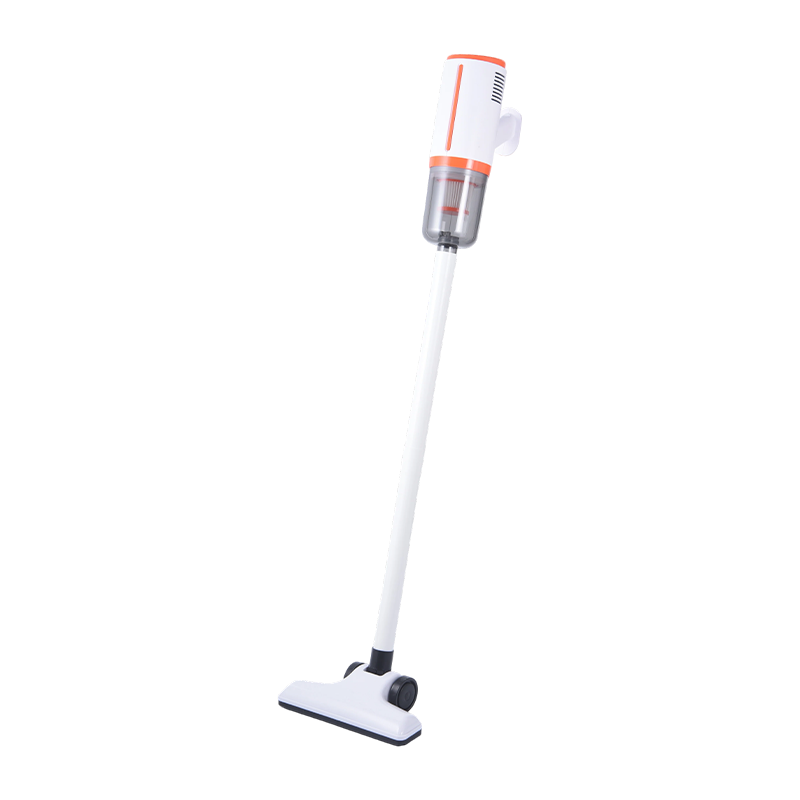
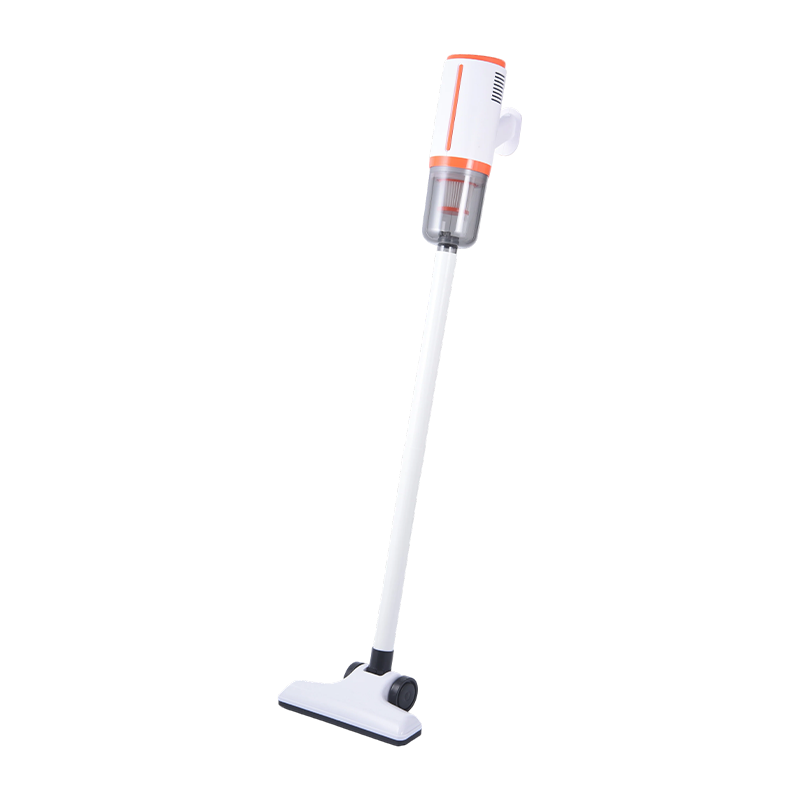
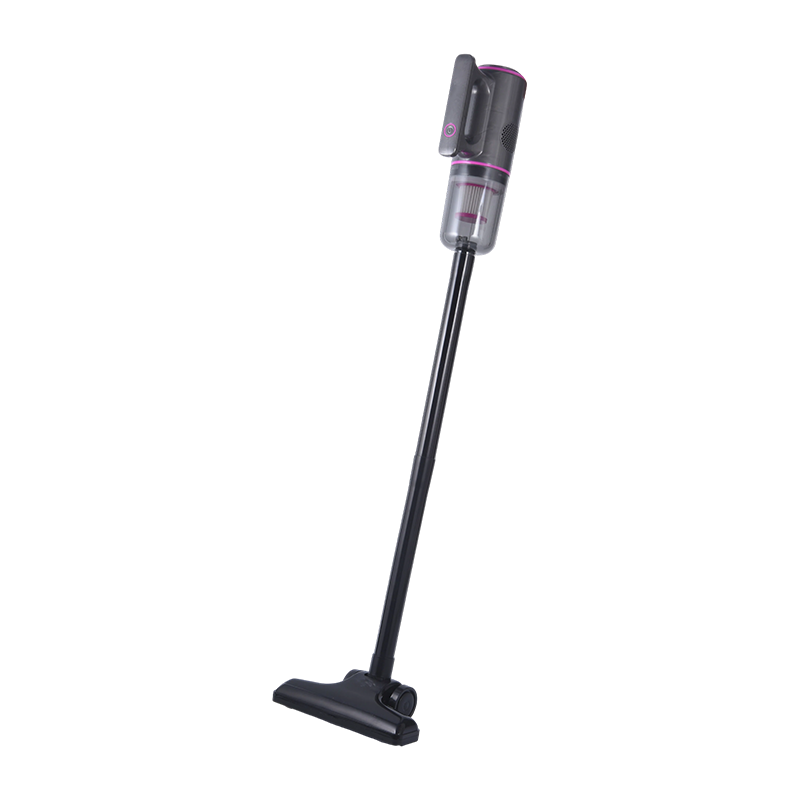
Sourcing teams working with a wholesale supplier should confirm which of these configurations a factory can produce at scale, since tooling and injection molding capacity directly determine how many variants can be manufactured in parallel without extending lead times. As a practical example, Cixi Xiaochao's XC-V01 Household Handheld Stick Vacuum Cleaner follows the 2-in-1 convertible configuration described above, pairing a detachable handheld pod with an extension tube so the same unit can switch between whole-room floor cleaning and spot cleaning on furniture or car interiors.
Working Principles and Internal Structure of a Cordless Vacuum Cleaner
A cordless handheld vacuum cleaner works by drawing air through a nozzle using a high-speed motor-driven impeller, separating dust and debris through a cyclone or filter stage, and exhausting filtered air back into the room. The efficiency of this process depends on how well the motor housing, dust cup, and filtration stage are engineered to work together without restricting airflow.
Simplified isometric structure of a cordless handheld vacuum cleaner, showing the motor housing, dust cup, filter stage, battery pack, and nozzle.
The brushless motor housing sits at the core of the unit and is typically the most engineering-intensive component, since it must generate sufficient airflow while managing heat buildup during continuous operation. Around it, the transparent dust cup uses cyclonic separation to spin heavier particles outward before air reaches the filter, which extends the interval between filter cleanings. The washable filter stage, often built to a HEPA-equivalent standard, captures fine particles such as pollen and dust mite debris, which is why filter design directly affects both suction consistency and indoor air quality claims. The detachable battery pack is positioned near the handle or base for balanced weight distribution, and its cell chemistry determines both runtime and how quickly performance declines as the pack depletes during a single cleaning session. Finally, the motorized floor nozzle uses a rotating brush roll to agitate carpet fibers and hard flooring debris, improving pickup efficiency compared with a static nozzle alone.
Application Scenarios and Selection Criteria
Selecting the right vacuum cleaner configuration depends heavily on where and how the device will be used. A portable, adjustable unit designed for car interiors will differ meaningfully from one optimized for whole-home carpet cleaning, even though both may share a similar cordless platform.
Household Cleaning Scenarios
|
Automotive and On-the-Go Scenarios
|
Beyond the scenario itself, procurement teams and distributors evaluating a vacuum cleaner factory should apply a consistent selection checklist covering suction adjustability, filtration replacement cost, noise level, and after-sales part availability. A durable, well-built unit generally uses metal-reinforced motor mounts and impact-resistant housing plastics rather than relying purely on marketed suction numbers.
Key takeaway: matching the nozzle, attachment set, and power mode to the intended cleaning environment matters more than maximizing a single headline specification.
Typical Usage Patterns of Cordless Handheld Vacuum Cleaners
Understanding how cordless vacuum cleaners are actually used helps explain why manufacturers prioritize certain design elements over others. Usage patterns observed broadly across the portable cleaning device category tend to cluster around four recurring activities rather than being evenly distributed. This clustering directly influences decisions such as battery sizing, nozzle width, and attachment bundling during product development. The chart below illustrates a generalized, illustrative breakdown of how a typical cordless handheld unit is used across common activities. These proportions reflect commonly observed usage tendencies rather than figures from any single audited dataset.
Household floor and carpet cleaning – approximately 40% Car interior cleaning – approximately 25% Upholstery and mattress cleaning – approximately 20% Quick spot and spill cleaning – approximately 15%
Household floor and carpet cleaning remains the largest single use case, which is why most cordless units are still designed around a motorized floor nozzle as the primary attachment rather than a secondary accessory. Car interior cleaning represents the second-largest use case, reflecting the growing overlap between the portable vacuum cleaner category and automotive accessory demand, particularly in markets with high car ownership rates. Upholstery and mattress cleaning, while smaller in overall share, is a driver of premium attachment sales such as UV sterilization or mite-removal heads, since this task is less frequent but more specialized. Quick spot and spill cleaning represents short, high-intensity bursts of use, which explains why many cordless units offer a dedicated boost or max mode rather than relying solely on standard suction. Taken together, these four patterns suggest that a well-rounded product line should not treat attachments as an afterthought, since each usage category effectively demands a distinct nozzle or accessory design. For an OEM or ODM factory, this also means tooling investment is best distributed across nozzle variants rather than concentrated entirely on the main motor unit. Distributors building a private label vacuum cleaner brand can use this pattern to prioritize which accessory bundles to launch first in a new market. It also explains why multifunction kits, which combine several nozzle types in one package, tend to appeal to a broader household buyer than single-attachment models. Ultimately, aligning product configuration with these usage realities helps reduce the mismatch between what a factory manufactures and what end consumers actually use day to day.
Detailed Comparison Across Vacuum Cleaner Categories
Choosing between cordless, corded, and robotic vacuum cleaners requires weighing several attributes simultaneously rather than optimizing for one factor alone. The table below summarizes typical characteristics across the three most common categories sold through wholesale and retail channels.
| Attribute | Cordless Handheld | Corded Upright | Robotic |
|---|---|---|---|
| Portability | Very high | Low | Moderate (self-moving) |
| Typical runtime per session | 15–60 minutes on battery | Unlimited while plugged in | 60–120 minutes with auto-recharge |
| Suction power level | Moderate | High | Lower |
| Noise level | Moderate | Higher | Low to moderate |
| Maintenance ease | Simple, tool-free filter access | Moderate, bag or bin dependent | Requires sensor and brush upkeep |
To visualize these trade-offs more directly, the radar chart below plots each category across five weighted attributes on a common scale, making it easier to see where each format excels and where it compromises.
Cordless Handheld Corded Upright Robotic
The radar chart shows the cordless handheld category forming a wide shape on the portability, noise control, and maintenance ease axes, which reflects its design priority of being light, quiet enough for frequent use, and simple to clean out between sessions. The corded upright profile stretches furthest along the suction power and runtime axes, since a continuous power supply removes the battery capacity constraint entirely, but it pulls inward sharply on portability and noise control, consistent with its heavier body and higher-wattage motor. The robotic profile sits in a more balanced but generally smaller shape overall, trading peak suction power for autonomous operation and moderate runtime through auto-recharge cycles. None of the three shapes dominates across all five axes, which is precisely why product lines are typically built around all three formats rather than treating one as a universal replacement for the others. For a household buyer prioritizing convenience and low daily effort, the cordless handheld or robotic profile will usually align more closely with their needs than a corded design. For a buyer with large carpeted areas requiring maximum debris removal in a single pass, the corded upright's suction and runtime advantage becomes more relevant despite the mobility trade-off. Distributors assembling a multi-tier product catalog can use this type of comparison to explain configuration differences to retail customers without resorting to absolute claims about any one format being universally superior. This structured, attribute-by-attribute view is generally more useful for sourcing decisions than a single aggregated rating, since different buyers weight these five attributes very differently depending on their living situation and cleaning frequency.
Suction Power and Runtime Across Power Modes
Most cordless vacuum cleaners offer at least two or three selectable power modes, allowing the user to trade runtime for suction intensity depending on the cleaning task at hand. This trade-off is one of the most consistent engineering relationships in the portable cleaning device category, driven directly by how quickly the battery discharges at higher motor speeds. The chart below illustrates a typical relationship between power mode selection and available runtime on a single charge. Eco mode is generally intended for light daily maintenance, standard mode for regular full-room cleaning, and max or boost mode for short, high-intensity bursts on heavily soiled areas. These figures are illustrative and intended to demonstrate the general shape of the trade-off rather than a specific product's rated performance.
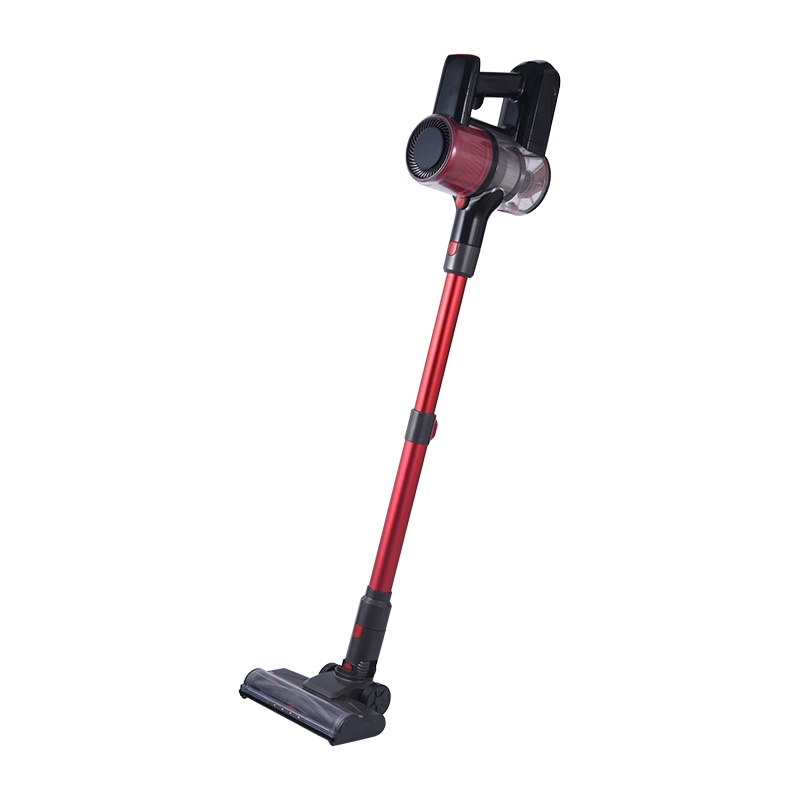
In eco mode, the motor operates at reduced speed, which lowers current draw from the battery and extends usable runtime to roughly an hour in many cordless designs, making it suitable for quick daily touch-ups rather than deep cleaning. Standard mode balances suction and battery consumption, and is generally the default setting most users rely on for routine full-room cleaning sessions. Max or boost mode substantially increases motor speed and airflow to maximize debris pickup on carpets or heavily soiled surfaces, but this comes at the direct cost of significantly shorter runtime, often less than a quarter of the eco mode duration. This inverse relationship between suction intensity and runtime is a fundamental characteristic of battery-powered motor systems rather than a limitation specific to any single brand or factory. Product designers address this trade-off by allowing users to switch modes mid-session, so a single charge can be allocated intelligently across a cleaning task rather than being locked into one setting throughout. For a distributor positioning a product line, clearly communicating these mode-based runtime differences in user documentation helps set realistic expectations and reduces post-sale support inquiries related to battery life. From an engineering standpoint, larger battery packs or more efficient brushless motors can shift this entire curve outward, which is why battery cell quality and motor efficiency are frequently the two most consequential specifications when comparing cordless vacuum cleaner models from different suppliers. Buyers evaluating multiple options should therefore look beyond a single advertised runtime figure and consider how that figure was measured, since a runtime quoted at eco mode will differ substantially from one quoted at max mode. Cixi Xiaochao's XC-V06 Multi-speed Cordless Handheld Vacuum Cleaner for Home Use with Long Battery Life is one example of this approach in practice, using a variable-speed trigger so the same lightweight unit can be set toward longer runtime for daily spot cleaning or toward stronger suction for car interiors and heavier debris.
Battery Performance and Longevity Trends
Lithium-ion battery packs, which power the majority of cordless vacuum cleaners on the market, follow a well-understood degradation pattern as they accumulate charge cycles. Rather than failing suddenly, capacity declines gradually, which affects how long a fully charged unit can run as the product ages. This pattern is a general characteristic of lithium-ion chemistry across consumer electronics, not something unique to vacuum cleaners specifically. The area chart below illustrates a typical capacity retention curve over several hundred charge cycles. Understanding this curve helps set realistic expectations for long-term product performance and informs how battery packs should be designed and specified during development.
At zero charge cycles, a new battery pack typically operates at its full rated capacity, giving the vacuum cleaner its longest available runtime per charge. As the pack passes through the first one to two hundred charge cycles, capacity retention generally remains relatively strong, often staying above roughly ninety percent, which corresponds to only a modest reduction in real-world runtime that many users may not immediately notice. Beyond the two-hundred-cycle mark, the rate of decline typically becomes more noticeable as internal resistance within the cells gradually increases, a well-documented characteristic of lithium-ion chemistry generally. By the four to five-hundred-cycle range, many packs settle toward the eighty percent capacity retention area, which is a commonly referenced general benchmark across the consumer battery industry for meaningful end-of-usable-life performance. This gradual curve, rather than a sudden drop-off, is one reason why detachable battery packs are increasingly offered as replaceable components on cordless vacuum cleaners, allowing the appliance body itself to remain in service well beyond the practical lifespan of a single battery pack. For a manufacturer or brand, offering a compatible replacement battery pack as an accessory extends the useful life of the entire product line and can reduce environmentally driven full-unit disposal, aligning with a broader eco-friendly product design approach. From a technical standpoint, battery management systems that regulate charging current and avoid full depletion before recharging can help moderate the steepness of this decline curve over time. Buyers comparing cordless vacuum cleaner options may find it useful to ask whether the battery pack is user-replaceable, since this single design choice has a meaningful effect on the long-term value and sustainability of the product regardless of its initial runtime specification.
Maintenance and Care Guidance for Cordless Vacuum Cleaners
Routine maintenance is one of the most cost-effective ways to preserve suction performance and extend the operating life of any vacuum cleaner. Neglecting basic upkeep is a common reason why a unit's perceived suction weakens over time even when the motor itself remains in good working condition.
- Empty the dust cup after every one or two cleaning sessions rather than waiting until it reaches maximum capacity, since a partially full cup can already begin restricting airflow.
- Rinse washable filters with water on a regular schedule and allow them to dry completely before reinserting, as a damp filter can affect motor performance and odor over time.
- Remove hair and fiber wrapped around the motorized brush roll periodically, since accumulated debris increases motor load and reduces nozzle contact with the floor surface.
- Store the battery at a partial charge level rather than fully depleted when the unit will not be used for an extended period, which helps preserve long-term lithium-ion cell health.
- Inspect hose and nozzle seals for wear, since even small air leaks at connection points can noticeably reduce effective suction at the nozzle tip.
- Keep the charging contacts and dock free of dust to maintain a reliable, complete charge cycle each time the unit is docked.
Establishing a simple weekly or biweekly maintenance routine helps a household or light commercial user maintain consistent suction performance throughout the appliance's service life. For brands and distributors, including clear, adjustable maintenance guidance in product packaging and instruction manuals reduces avoidable warranty claims and improves overall customer satisfaction with the product line.
Key takeaway: consistent filter and dust cup maintenance has a greater long-term impact on suction performance than any single specification listed at the point of purchase.
OEM/ODM Manufacturing Capabilities and Global Supply
For brands and distributors sourcing vacuum cleaners at scale, working with an established factory that combines in-house tooling, assembly, and quality control offers more consistency than coordinating multiple separate vendors. Cixi Xiaochao Electrical Appliance Co., Ltd. is based in Cixi City, Zhejiang Province, an area widely recognized within China as a long-standing hub for small household appliance production, and the company has built over two decades of experience integrating research and development, manufacturing, and sales under one operation. As a China cordless vacuum cleaner manufacturer and an OEM/ODM lightweight handheld vacuum factory, the company focuses on producing efficient, portable, and multifunction cleaning solutions alongside a broader range of small household appliances.
The company's product range extends across household vacuum cleaners, car vacuum cleaners, cordless vacuum cleaners, mite removers, and a variety of multi-functional cleaning devices, in addition to table lamps, ultraviolet disinfection lamps, and mini fans that serve adjacent small appliance categories. Operating from an 18,000 square meter facility equipped with 28 types of injection molding machines and 8 production lines, the factory is positioned to manage component production and finished assembly internally, which supports both large-scale manufacturing and flexible OEM or ODM cooperation for partner brands. This level of vertical integration is particularly relevant for wholesale buyers who need dependable lead times across multiple product variants rather than a single fixed configuration.
Quality processes are organized around an ISO9001-aligned quality management approach, and products are developed with reference to a range of international and domestic compliance requirements relevant to the small appliance category, including markets across Europe, North America, Japan, South Korea, and Southeast Asia. As a professional exporter and wholesale supplier, the company works with retail brands, distributors, and private-label partners seeking a dependable China factory partner for portable, adjustable, and multifunction cleaning products. Guided by an approach centered on continuous product innovation and lean manufacturing practices, the company aims to support global partners in bringing durable, well-engineered cleaning technology to a wide range of markets, without positioning any single claim as absolute or guaranteed.
Cixi Xiaochao's Household Vacuum Cleaner Product Lineup
Beyond general category comparisons, it can help to see how these design principles translate into an actual production lineup. Cixi Xiaochao Electrical Appliance Co., Ltd. organizes its household vacuum cleaner range into three product lines that mirror the selection criteria discussed above: a two-in-one handheld and stick format, a cordless handheld series for home use, and a higher-power corded series for continuous suction.
The Household handheld stick vacuum cleaner line is represented by the XC-V01, which separates into a handheld pod and an extension tube around a digital brushless motor and washable filter. The cordless handheld vacuum cleaner series spans several positioning tiers: the XC-V06 multi-speed model emphasizes long battery life and car-interior versatility, the XC-V03C and its upgraded XC-V03C Pro variant focus on a minimalist, space-saving body, the XC-V05C and XC-V05C Pro variants are positioned toward larger battery capacity and faster charging, and the XC-V07C and XC-V07C Pro extend the format into a larger-capacity cordless barrel configuration for extended cordless runtime. The high-powered corded vacuum cleaner series, including the XC-V02, XC-V03, XC-V05, and XC-V07 models, is built for households or facilities that prioritize continuous, unrestricted suction over cordless portability.
| Product Category | Format | Representative Models |
|---|---|---|
| Household handheld stick vacuum cleaner | Two-in-one handheld and stick | XC-V01 |
| Convenient cordless handheld vacuum cleaner for home use | Cordless handheld and barrel | XC-V06, XC-V02C, XC-V03C / XC-V03C Pro, XC-V05C / XC-V05C Pro, XC-V07C / XC-V07C Pro |
| High-powered household vacuum cleaner with cord | Corded upright and canister | XC-V02, XC-V03, XC-V05, XC-V07 |
Mapping these actual models against the selection criteria discussed earlier can help a buyer or distribution partner translate an abstract requirement, such as extended cordless runtime or continuous corded suction, into a concrete starting point within the current product lineup rather than comparing specifications in the abstract.
Frequently Asked Questions About Vacuum Cleaners
Q1: How long does a cordless vacuum cleaner battery typically last per charge?Runtime varies by power mode, generally ranging from around fifteen minutes on a high-intensity boost setting to roughly sixty minutes on a lower-power eco setting, depending on battery capacity and motor efficiency. |
Q2: What should a buyer look for when sourcing from a vacuum cleaner manufacturer?Key factors include the factory's production capacity and injection molding capability, its OEM/ODM flexibility, quality management practices, filtration and battery specifications, and the ability to support multiple product configurations for different markets. |
Q3: Is a cordless vacuum cleaner suitable for both household and car cleaning?Many cordless, portable units are designed as multifunction devices with interchangeable attachments, making them adaptable to both household floors and confined car interior spaces when paired with the appropriate nozzle. |
Q4: How often should the filter and dust cup be cleaned for consistent suction?The dust cup should generally be emptied after every one or two sessions, while washable filters benefit from regular rinsing and full drying on a consistent schedule to avoid gradual suction loss. |