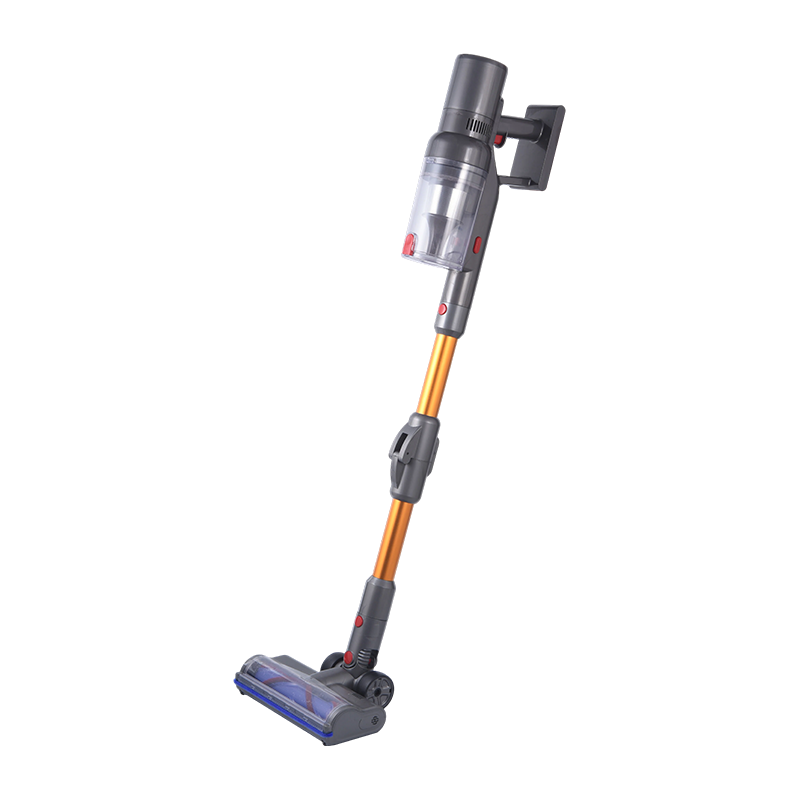
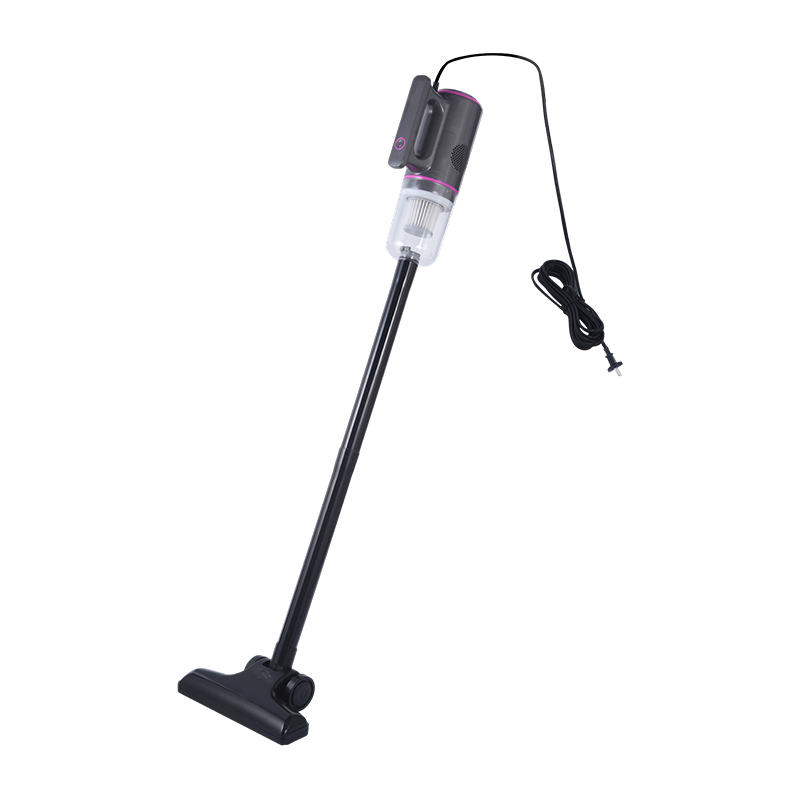
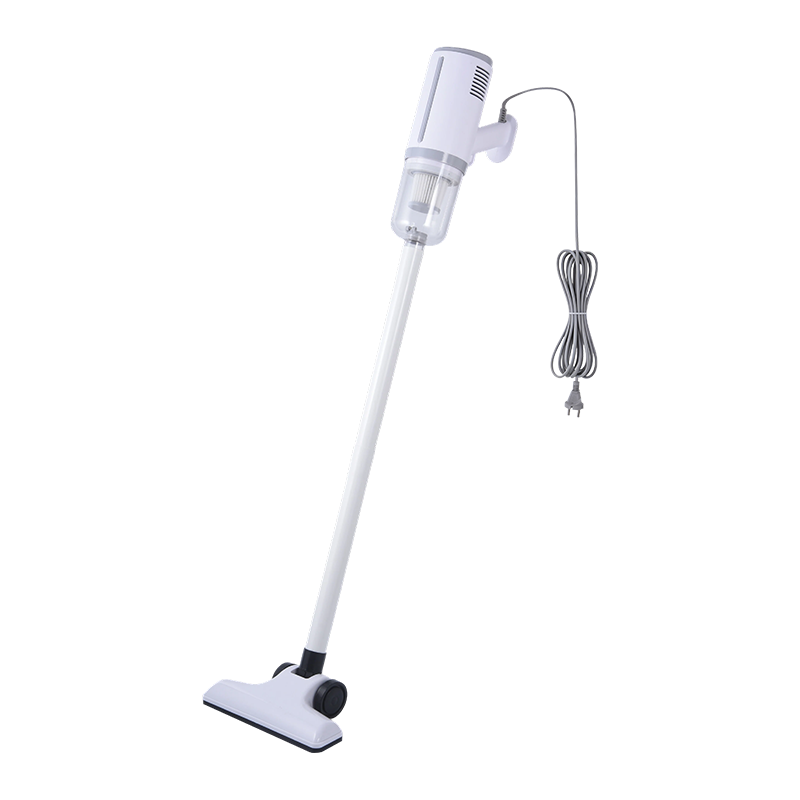
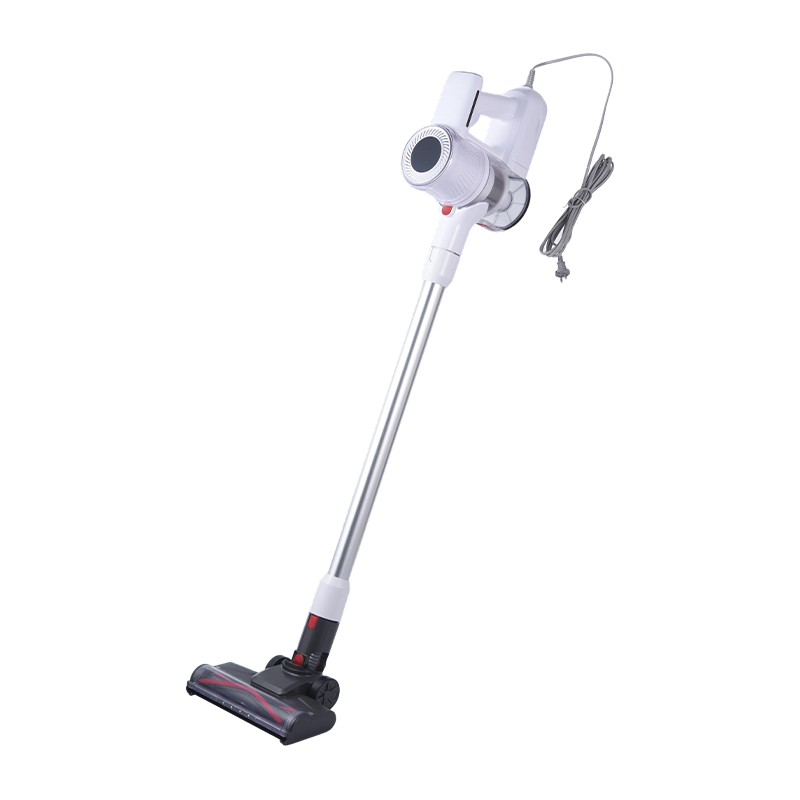
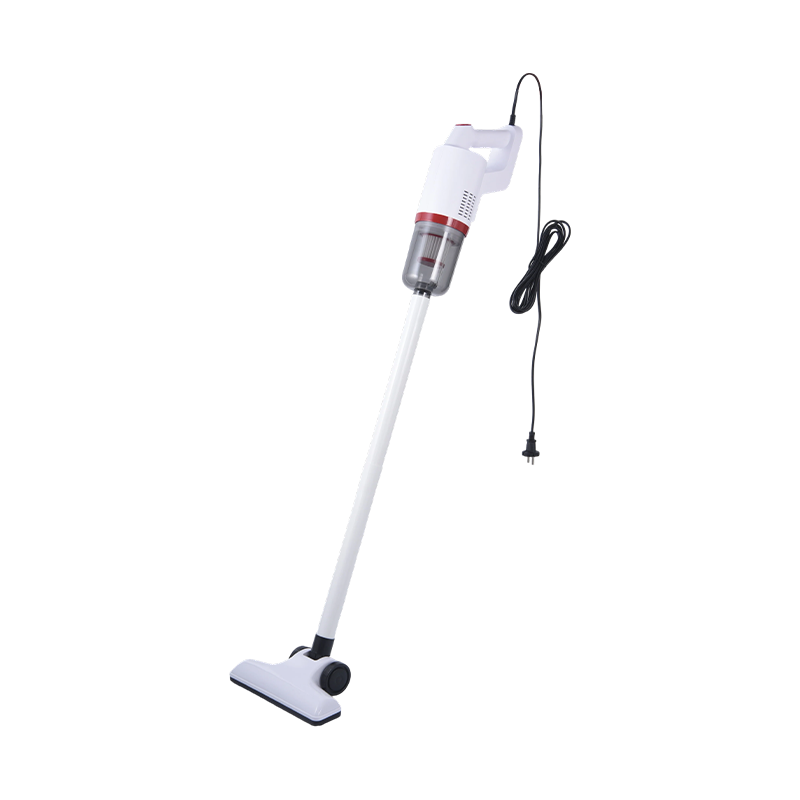
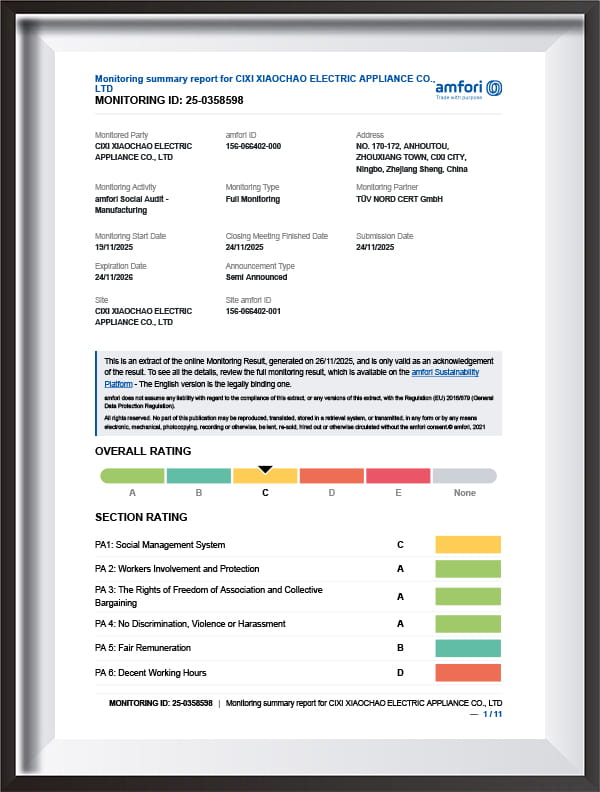
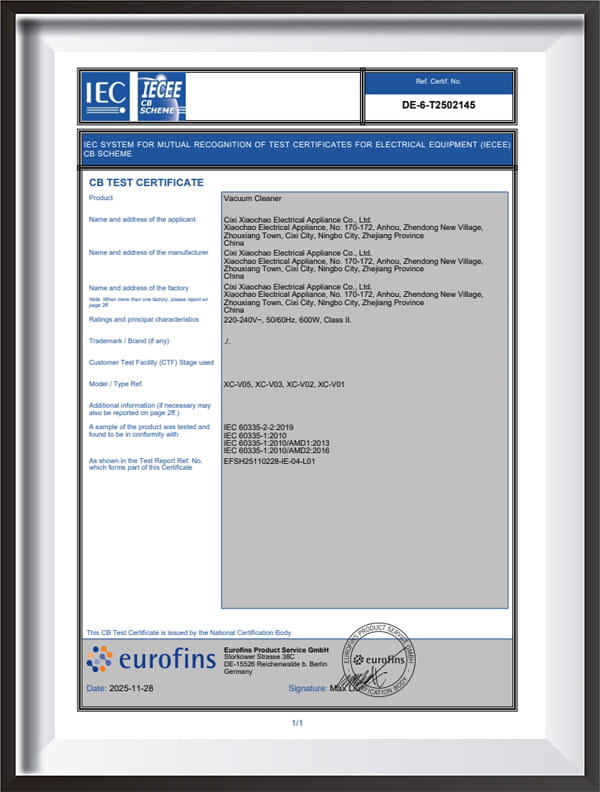
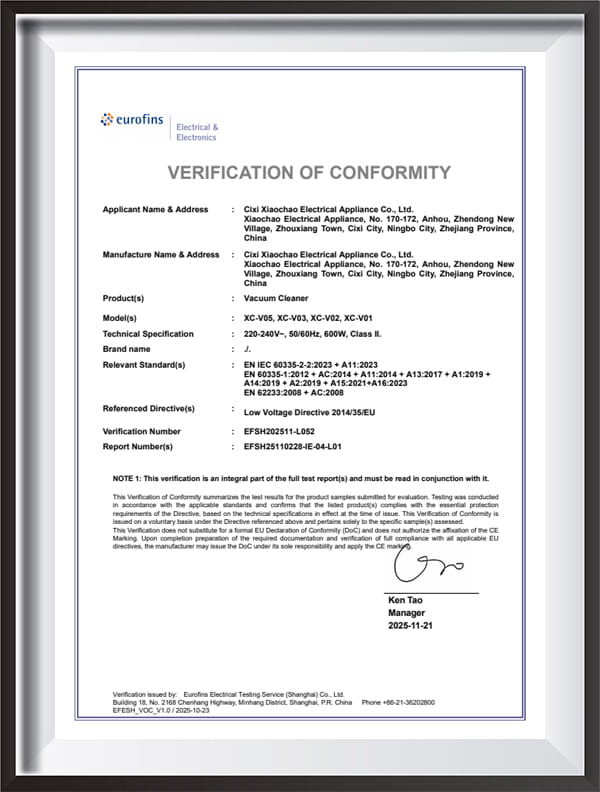
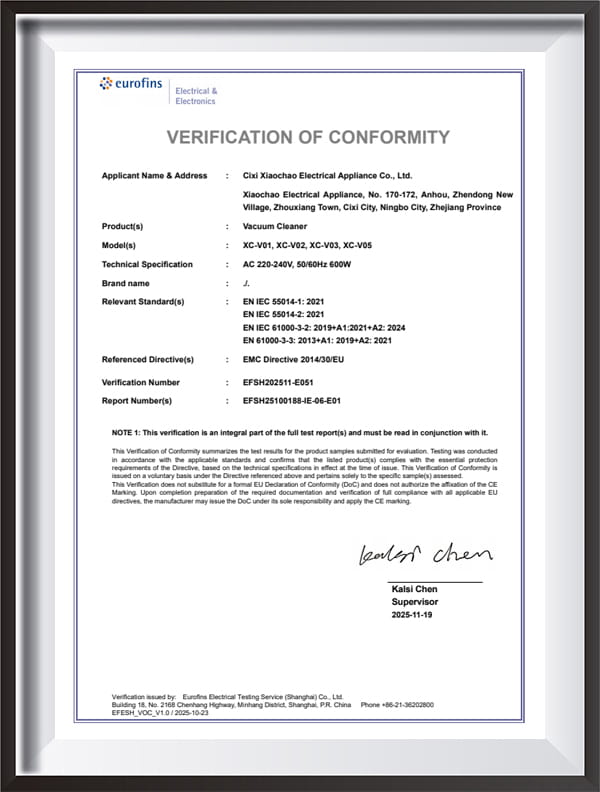
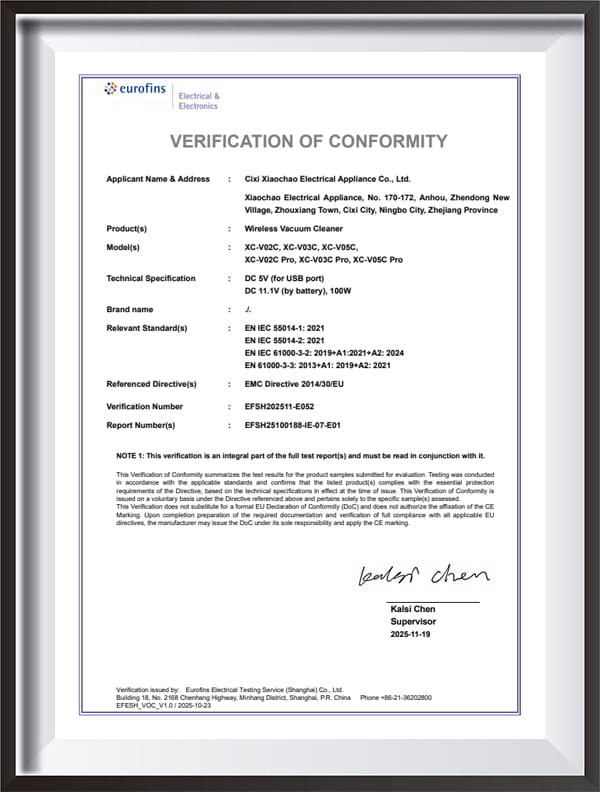
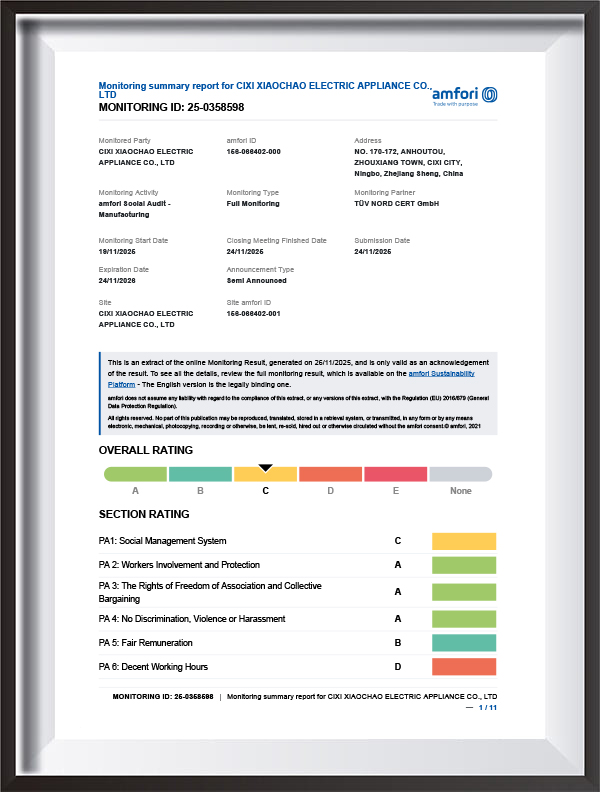
Cixi Xiaochao Electrical Appliance Co.,Ltd., rooted in Cixi City, Zhejiang Province, known as the "Capital of Small Household Appliances" in China, is a comprehensive household appliance manufacturer with over two decades of development history, integrating R&D, manufacturing and sales. The company is a China Corded Vacuum Manufacturer and OEM/ODM Powerful Corded Vacuum Factory, committed to providing efficient, convenient and intelligent cleaning solutions and small household appliances for global users.
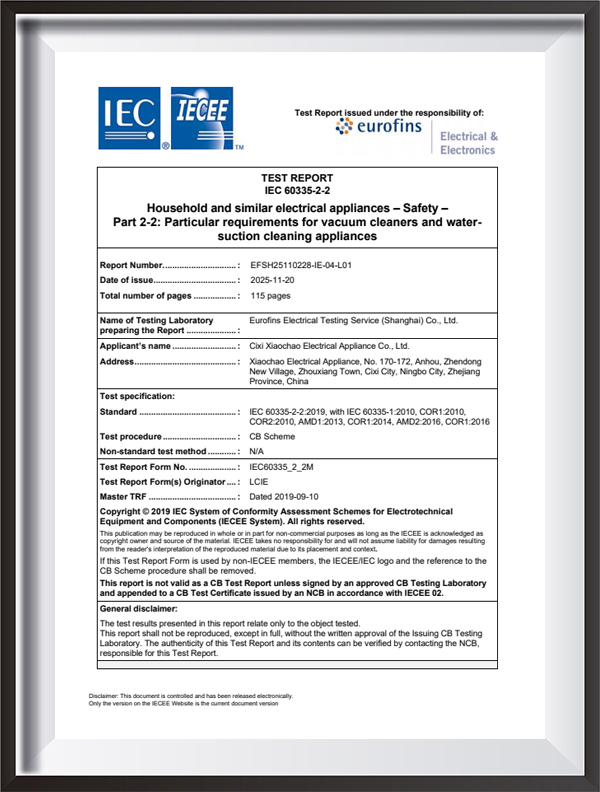
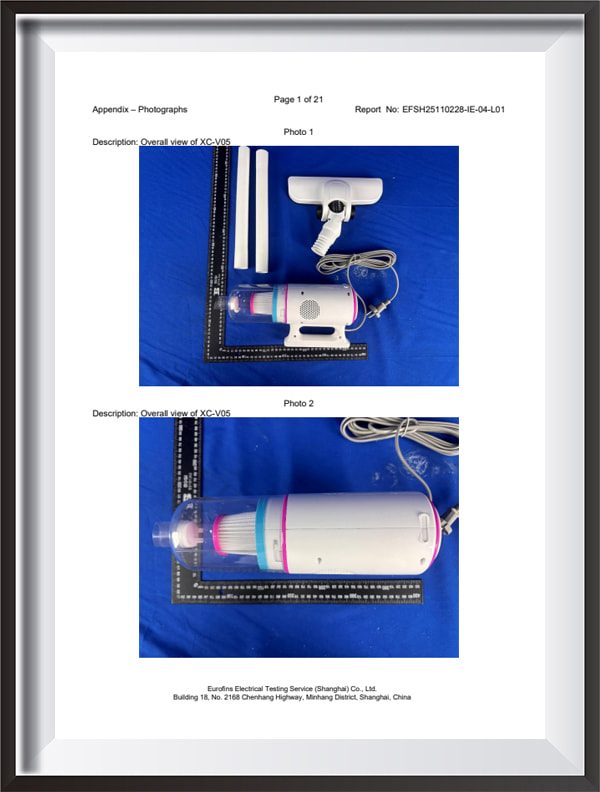
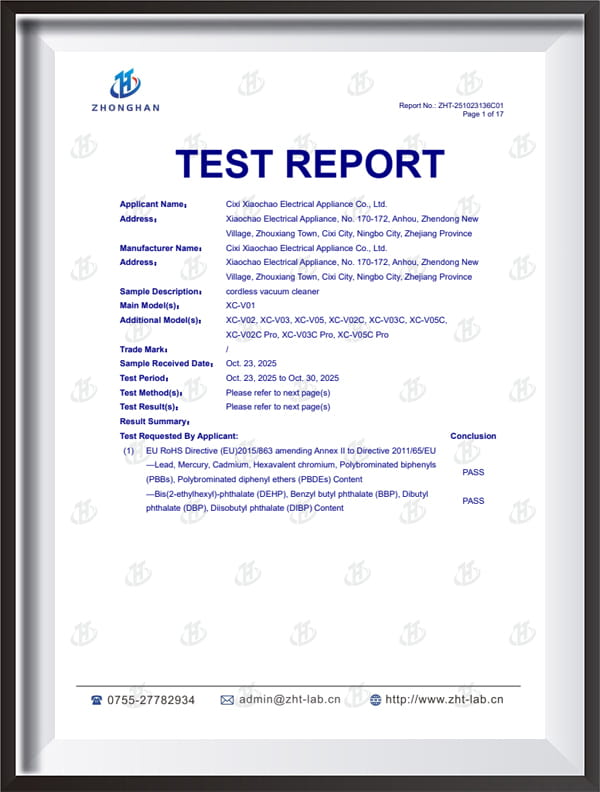
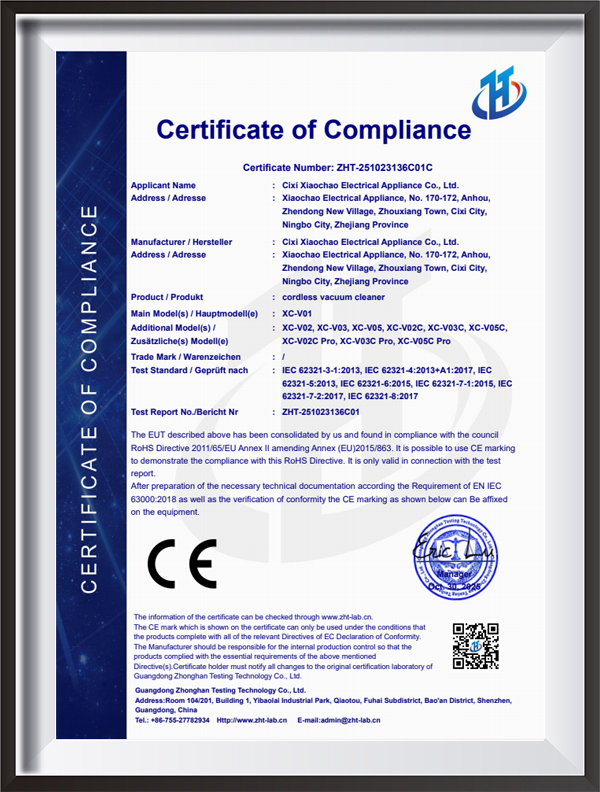
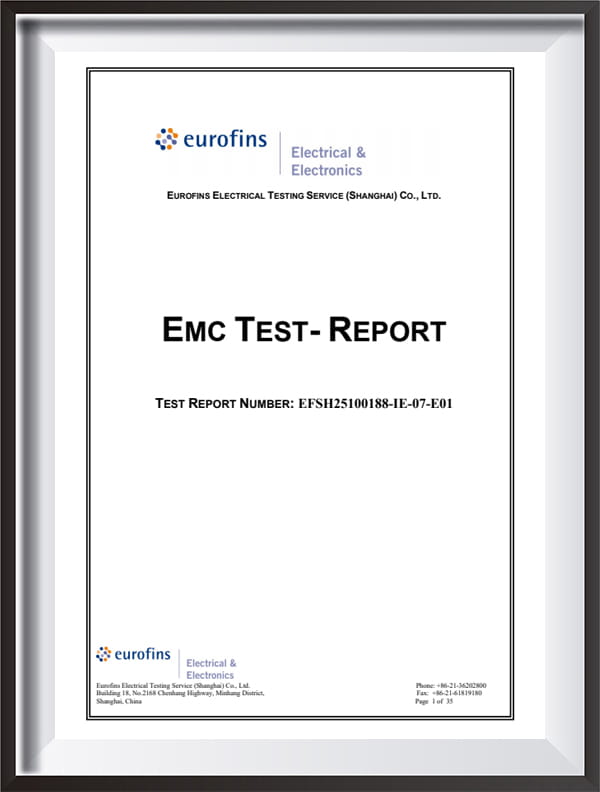
As a enterprise specializing in the R&D, production and sales of portable handheld vacuum cleaners, the company's cleaning product line covers household vacuum cleaners, car vacuum cleaners, cordless vacuum cleaners, mite removers and various multi-functional cleaning devices. The product range also extends to various table lamps, ultraviolet disinfection lamps, mini fans and other small household appliances, widely applicable to various life scenarios. The company covers an area of 18,000 square meters, equipped with 28 types of injection molding machines and 8 modern production lines, ensuring the independent and large-scale production from components to finished products. It has professional OEM and ODM cooperation capabilities and can provide flexible one-stop production solutions for customers. The company has passed the ISO9001 quality management system certification, ensuring the standardization and refinement of the production process. All products have passed multiple international and domestic certifications such as GS, CE, ROHS, CB, EMC, LVD, ERP and CCC, with reliable quality and compliance with global market access standards. With outstanding product quality and innovative design, the company's products are exported to many countries and regions around the world, including Europe, America, Japan, South Korea and Southeast Asia, and are deeply trusted by domestic and foreign markets and consumers.
With the mission of "Innovation-driven, Clean Future", the company adheres to the principles of lean manufacturing and customer first. Through continuous technological iteration and product innovation, it constantly improves the user experience, aiming to become a leading brand in the global cleaning field and striving to create a cleaner and more beautiful life!
Direct Answer: What Makes a Rechargeable Handheld Vacuum Cleaner the Right Home Cleaning Appliance
A Rechargeable Handheld Vacuum Cleaner is the most practical Home Cleaning Appliance for households ...
The most reliable way to pick a silent household vacuum cleaner is to look for a model rated below 70 decibels (dB), since sounds in this range are comparable to a normal conversation rather than a d...
What Makes A Household Handheld Stick Vacuum Cleaner Practical For Everyday Home Cleaning
A household handheld stick vacuum cleaner is practical for everyday cleaning because it combines two cleaning...
Household Vacuum Cleaner Manufacturer
Household vacuum cleaners are indispensable cleaning tools in modern homes, designed to efficiently and conveniently remove dust, allergens, pet hair, and debris...
Rechargeable Handheld Vacuum Cleaners Are Now A Core Category Within Home Cleaning Appliances
A rechargeable handheld vacuum cleaner works as a compact, cordless cleaning tool that draws power from a...
Why A Corded Vacuum Remains A Practical Choice For Deep Cleaning
A corded vacuum draws continuous power from a wall outlet rather than a rechargeable battery, which generally allows a powerful corded vacuum to sustain stronger suction output across longer cleaning sessions without needing to pause for recharging. This makes a corded household vacuum cleaner a common choice for whole home deep cleaning, larger carpeted areas, and households that clean multiple rooms in a single continuous session. The absence of a battery constraint is the main functional advantage a corded vacuum offers over cordless alternatives, particularly when cleaning sessions extend well beyond a typical battery runtime window. This article explains how corded vacuum motors generate sustained suction, what design factors influence real world performance, how corded units compare with cordless alternatives across practical attributes, and what to review when evaluating a corded vacuum manufacturer for sourcing or partnership purposes.
How A Corded Vacuum Sustains Continuous Suction
A corded vacuum relies on a motor powered directly by mains electricity, which removes the discharge curve limitation that affects battery powered units. Because voltage supply remains constant throughout use, motor speed and airflow generation stay steady from the beginning of a cleaning session through to the end, regardless of whether the session lasts ten minutes or well over an hour. This steady power delivery is one reason a powerful corded vacuum is often selected for households with extensive carpeted flooring, since carpet fiber generally requires more sustained airflow to lift embedded dust and debris compared with hard flooring surfaces.
Motor design within a corded household vacuum cleaner typically falls into two broad categories, a standard universal motor suited to general household suction needs, and a higher output motor variant designed for denser carpet pile or larger floor areas. Both categories share the same fundamental principle of converting electrical energy into rotational airflow through an impeller, but output tuning differs based on intended use case.
Motor Type
Typical Output Level
Best Fit Scenario
Standard Universal Motor
Moderate
General hard floor and light carpet
High Output Motor
High
Dense carpet and larger homes
Comparison of common corded vacuum motor categories and their typical use cases
Suction Power Comparison Across Vacuum Categories
Comparing suction output across corded and cordless vacuum categories helps clarify why a powerful corded vacuum remains the preferred choice for certain cleaning scenarios.
This bar chart compares approximate relative suction output across three household vacuum categories using an index scale rather than absolute laboratory measurement. Corded high output units score highest because continuous mains power removes the need to balance suction strength against battery preservation. Standard corded vacuum units follow closely, still benefiting from constant power delivery even without the highest output motor tuning. Cordless handheld units score noticeably lower on this comparison, reflecting the practical tradeoff between portability and sustained suction strength that battery powered designs generally involve. This pattern does not suggest cordless units are unsuitable for daily cleaning, since many households pair a corded household vacuum cleaner for deep cleaning with a cordless unit for quick spot cleaning between sessions. Reading these figures together helps buyers understand why a powerful corded vacuum continues to hold a distinct role within a complete home cleaning routine rather than being replaced entirely by cordless alternatives.
Consistent Performance Across An Extended Cleaning Session
One of the most cited practical advantages of a corded vacuum is its ability to maintain steady performance regardless of session length.
This line chart compares suction performance over time for a corded vacuum, shown as the solid orange line, against a cordless battery powered unit, shown as the dashed yellow line, across an extended cleaning session. The corded vacuum line remains nearly flat throughout the session, reflecting the steady voltage supply that mains electricity provides regardless of how long the motor runs. The cordless line, by comparison, shows a clear downward slope as battery capacity depletes, with performance dropping more noticeably after the twenty minute mark. This comparison illustrates the core reason a corded household vacuum cleaner is often chosen for whole home deep cleaning sessions that extend well beyond a single battery charge cycle. It also explains why many households maintain both a corded and a cordless unit rather than relying on one format exclusively. This behavior pattern is broadly consistent with general appliance testing observations discussed in consumer appliance performance literature comparing corded and battery powered devices.
Where Corded Vacuum Cleaners Get Used Most In The Home
Understanding which rooms and surfaces see the most frequent corded vacuum use helps explain common design priorities such as cord length and attachment selection.
This donut chart illustrates a general distribution of corded vacuum use across common household areas based on typical cleaning routines. Living room and carpeted floor areas represent the largest share since these spaces accumulate dust and foot traffic debris that benefit from sustained suction power. Bedroom cleaning follows as a meaningful secondary segment, often involving carpet edges and under bed areas that require a stable power source for thorough coverage. Hallway and staircase cleaning forms another notable share, where a corded household vacuum cleaner with sufficient cord length allows continuous movement without repeated unplugging. The remaining smaller segment covers occasional whole home tasks such as basement or garage cleaning where extended reach matters. This distribution shows why cord length and attachment variety remain important design considerations for a corded vacuum manufacturer targeting general household use.
Comparing Corded And Cordless Vacuum Attributes Side By Side
Households weighing a corded vacuum against a cordless alternative often consider several attributes beyond suction power alone.
This radar chart compares a corded vacuum, shown in the outer orange shape, against a cordless handheld unit, shown in the inner yellow shape, across four practical attributes rather than suction alone. The corded vacuum scores higher on sustained suction and supported session length, reflecting its ability to maintain performance across longer whole home cleaning sessions without recharging interruptions. The cordless unit scores higher on portability and quick deployment, since its lightweight body and absence of a cord allow immediate use without setup around furniture or door thresholds. Neither profile is universally preferable, since the right choice depends on whether a cleaning task involves a single extended session or several short bursts throughout the day. Many households find that owning both a powerful corded vacuum for periodic deep cleaning and a cordless unit for daily upkeep covers the full range of common cleaning needs. This comparison explains why manufacturers continue offering both categories rather than consolidating around a single format.
Filtration Performance In A Corded Household Vacuum Cleaner
Filtration quality directly affects indoor air cleanliness during and after vacuum use, particularly in households managing dust sensitivity or pet dander.
This gauge chart represents a typical fine particle capture rate reported for corded vacuum units equipped with multi stage filtration, based on general filtration standards referenced by organizations such as the United States Environmental Protection Agency for household air quality equipment. Capture rate depends heavily on filter type, with dense multi layer filters generally trapping a higher share of fine dust and allergens compared with basic single layer filters. Regular filter maintenance also affects this figure over time, since a clogged or worn filter gradually loses capture efficiency even if the underlying filter material remains structurally intact. Sustained motor airflow from a corded power source supports consistent filtration performance throughout a full cleaning session, since airflow does not taper off as it might with a discharging battery. This figure serves as a general reference point for comparing filtration systems rather than a guarantee applicable to every specific unit or usage condition.
What To Look For When Choosing A Corded Vacuum
Selecting a corded vacuum involves reviewing several practical factors that affect day to day cleaning experience.
Check cord length against typical room layout to avoid frequent outlet switching during a cleaning session.
Match motor output to flooring type, since dense carpet generally benefits from a higher output motor variant.
Review filtration stages and filter accessibility for regular cleaning and replacement.
Consider attachment variety for stairs, upholstery, and tight corners within a whole home cleaning routine.
Evaluate body weight and handle design for comfortable extended use across multiple rooms.
Cixi Xiaochao Electrical Appliance Co., Ltd., based in Cixi City, Zhejiang Province, has developed its household vacuum cleaner product line with attention to these practical factors, supporting both corded and cordless configurations suited to a range of household cleaning routines.
Industry Direction For Corded Household Vacuum Cleaners
Household appliance manufacturers continue to refine corded vacuum motor efficiency and filtration design, with recent attention focused on reducing motor noise while maintaining sustained suction output for larger homes. This direction reflects a broader pattern noted in general home appliance industry coverage, where manufacturers balance power output against user comfort factors such as noise level and body weight. Alongside this, cord management features such as retractable cord systems and wider wheel bases for easier maneuvering across multiple rooms have become more common in recent corded household vacuum cleaner designs. This ongoing refinement supports continued demand for a powerful corded vacuum among households that prioritize sustained deep cleaning performance over the portability advantages associated with cordless alternatives.
Inside A Corded Vacuum: Structural Overview
A corded vacuum generally follows a layered internal structure connecting the motor, filtration system, and dust collection chamber into a single body designed for sustained operation.
This isometric style schematic shows the general internal sequence of a corded vacuum, moving from the floor nozzle through the motor unit, filtration stage, and dust collection chamber. The nozzle section draws in air and debris through a narrow opening designed to concentrate suction force at the floor surface. The motor unit, powered continuously through the mains cord, generates the airflow that pulls debris through the nozzle and into the filtration stage. The filtration stage separates fine particles from the airflow before clean air is released, protecting indoor air quality during use. The dust chamber holds collected debris until manual emptying, and this general layout is common across most corded household vacuum cleaner designs regardless of specific brand or model.
About Cixi Xiaochao Electrical Appliance Co., Ltd.
Cixi Xiaochao Electrical Appliance Co., Ltd. is rooted in Cixi City, Zhejiang Province, known within China as the capital of small household appliances. The company brings over two decades of development history integrating research and development, manufacturing, and sales as a China household vacuum cleaner manufacturer and OEM or ODM household cleaning appliance factory serving global customers.
The company specializes in the research, production, and sales of portable handheld vacuum cleaners, with a product line covering household vacuum cleaners, car vacuum cleaners, cordless vacuum cleaners, mite removers, and various multi functional cleaning devices, alongside table lamps, ultraviolet disinfection lamps, mini fans, and other small household appliances. The production facility covers an area of eighteen thousand square meters, equipped with twenty eight types of injection molding machines and eight modern production lines, supporting independent production from components through to finished products with flexible OEM and ODM cooperation capability. Products from Cixi Xiaochao are exported to markets across Europe, America, Japan, South Korea, and Southeast Asia, reflecting the company's ongoing focus on innovation driven cleaning solutions for households worldwide.
Frequently Asked Questions
What is the main advantage of a corded vacuum over a cordless model
A corded vacuum draws continuous power from the mains, allowing it to sustain consistent suction across longer cleaning sessions without the performance decline associated with a depleting battery.
Is a powerful corded vacuum suitable for dense carpet
A high output motor variant within the corded vacuum category is generally better suited to dense carpet pile, since it can maintain stronger airflow needed to lift embedded dust and debris.
How does cord length affect the cleaning experience
A longer cord reduces how often a user needs to switch outlets while moving between rooms, which is a practical consideration when comparing corded household vacuum cleaner models for larger homes.
Does a corded vacuum require more maintenance than a cordless model
Maintenance needs are similar between the two categories, typically involving regular filter cleaning or replacement and periodic dust chamber emptying, though a corded vacuum does not require battery related maintenance.
Can a household use both corded and cordless vacuum cleaners together
Many households pair a corded vacuum for periodic deep cleaning sessions with a cordless unit for quick daily spot cleaning, combining the strengths of both formats.
What should a business consider when working with a corded vacuum manufacturer
Key considerations typically include production capacity, motor and filtration consistency across production batches, OEM and ODM customization flexibility, and export experience across international markets.

 English
 Español
 عربى
عربى